ONT and ONU Devices Price in Kenya
ZTE F680 Dual Band GPON Router in Kenya
KSh 1,700.00
1 available
Continue shoppingZTE F680 Dual Band GPON Router in Kenya
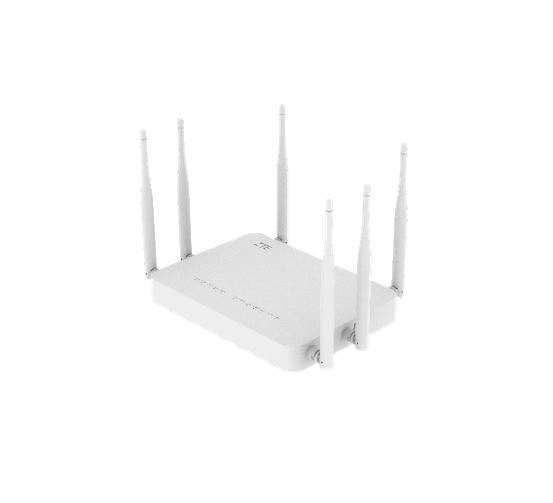
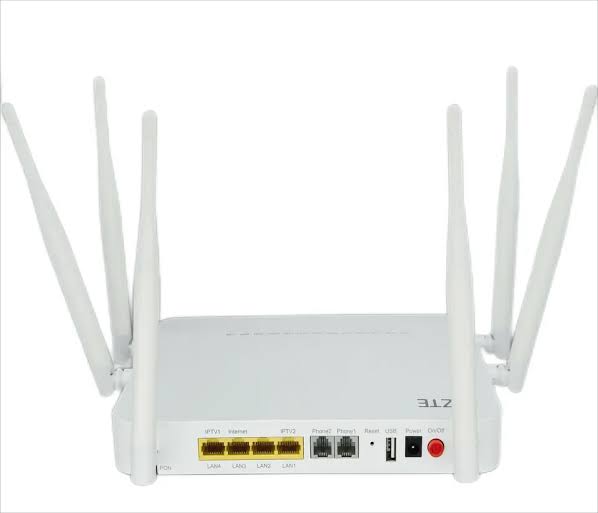
The ZTE F680 Dual Band GPON Router is an integrated GPON Optical Network Terminal designed for FTTH homes, offices, apartments, hotels and ISP subscriber networks. It combines optical fibre termination, routing, dual-band wireless networking, Gigabit Ethernet and voice connectivity in one device.
The F680 is widely used where an ISP wants to provide a more capable subscriber gateway than a basic bridge ONU. Its support for both 2.4 GHz and 5 GHz Wi-Fi makes it more suitable for high-speed fibre packages than older single-band ONTs, particularly where customers use smartphones, smart TVs, laptops and other wireless devices simultaneously.
Depending on the exact hardware and firmware revision, the ZTE F680 can include four Gigabit Ethernet LAN ports, two POTS telephone ports, USB interfaces and dual-band Wi-Fi, together with GPON fibre connectivity. Because F680 variants differ between operators and regional firmware builds, the exact interface configuration should be verified before bulk ISP deployment.
ZTE F680 Key Specifications
| Specification | Typical Details |
|---|---|
| Product Name | ZTE F680 Dual Band GPON Router |
| Device Type | GPON ONT / ONU / Fibre Router |
| Network Technology | GPON |
| Application | FTTH / FTTB / Home / Office / ISP |
| GPON Interface | 1 |
| GPON Downstream Rate | Approx. 2.488 Gbps |
| GPON Upstream Rate | Approx. 1.244 Gbps |
| Wi-Fi | Dual Band |
| 2.4 GHz Wi-Fi | Yes |
| 5 GHz Wi-Fi | Yes |
| Wireless Standard | Commonly 802.11b/g/n/ac |
| LAN Ports | Commonly 4 |
| Gigabit Ethernet | Yes |
| POTS Ports | Commonly 2 |
| USB | Available on common variants |
| Bridge Mode | Supported |
| Router Mode | Supported |
| VLAN Support | Yes |
| IPv6 | Supported on common firmware |
| VoIP | Supported |
| Web Management | Yes |
| TR-069 | Supported on operator firmware |
| Typical Optical Connector | SC/APC |
| Applications | FTTH, Homes, Offices, Hotels, ISPs |
What Is the ZTE F680?
The ZTE F680 is the customer-premises device installed at the end of a GPON fibre link.
A typical network path is:
Internet → Core Router → GPON OLT → PLC Splitter → FTTH Drop Cable → ZTE F680 → Customer Devices
The F680 receives the optical GPON signal and converts it into:
Ethernet
2.4 GHz Wi-Fi
5 GHz Wi-Fi
VoIP telephone
Local routing
USB services
LAN connectivity
This makes it suitable as an all-in-one residential or small-office fibre gateway.
GPON Technology
The ZTE F680 operates on GPON – Gigabit Passive Optical Network infrastructure.
Typical GPON line rates are:
| Direction | GPON Rate |
|---|---|
| Downstream | Approx. 2.488 Gbps |
| Upstream | Approx. 1.244 Gbps |
These are PON-side shared line rates. The customer's actual Internet speed depends on the ISP package, OLT configuration, Ethernet link and Wi-Fi conditions.
Dual-Band Wi-Fi
One of the main advantages of the F680 is support for both:
2.4 GHz Wi-Fi
5 GHz Wi-Fi
| Feature | 2.4 GHz | 5 GHz |
|---|---|---|
| Coverage | Better | Shorter |
| Wall Penetration | Better | Lower |
| Maximum Throughput | Lower | Higher |
| Interference | More Common | Usually Lower |
| High-Speed FTTH | Moderate | Better |
The 5 GHz band is especially useful for customers on high-speed fibre plans because it can deliver substantially better wireless throughput at short and medium distances.
Why Dual-Band Matters
Single-band 2.4 GHz ONTs can become a limiting factor even when the fibre line itself is fast.
Dual-band Wi-Fi provides:
Better wireless speed
Lower interference on 5 GHz
Improved streaming performance
Better video conferencing
Better smart TV connectivity
Improved performance in apartment buildings
More flexibility across different client devices
Gigabit Ethernet Ports
Common ZTE F680 variants provide four Gigabit Ethernet LAN interfaces.
| Port Type | Quantity |
|---|---|
| GE LAN Ports | Commonly 4 |
| Nominal Speed per Port | 1 Gbps |
Gigabit Ethernet is particularly important for:
100 Mbps+ fibre packages
Smart TVs
Desktop computers
Access points
Network switches
CCTV NVRs
Business routers
Why Gigabit Ethernet Matters
| Internet Package | Recommended Connection |
|---|---|
| 20 Mbps | Wi-Fi / GE |
| 50 Mbps | Wi-Fi / GE |
| 100 Mbps | GE or 5 GHz Wi-Fi |
| 200 Mbps | GE / 5 GHz |
| 500 Mbps | GE Preferred |
| 1 Gbps | GE |
Unlike Fast Ethernet ONTs limited to 100 Mbps nominal link speed, Gigabit Ethernet gives the F680 more room for higher-speed packages.
POTS / VoIP Ports
Common F680 versions include telephone ports for VoIP services.
This enables an ISP to provide:
Internet + Wi-Fi + Telephone
through one fibre connection.
Voice functionality depends on:
SIP provisioning
ISP VoIP platform
OLT configuration
Firmware
Regional operator settings
USB Connectivity
Common ZTE F680 variants include USB interfaces.
Depending on firmware, USB can support functions such as:
Storage
File sharing
Printer sharing
Media services
Diagnostics
The exact supported functions should be checked on the specific hardware revision.
Bridge Mode
The ZTE F680 can be used in bridge mode where supported by the ISP firmware.
Typical setup:
GPON OLT → ZTE F680 Bridge → MikroTik Router → Customer Devices
In this arrangement, the F680 handles GPON optical termination while MikroTik handles:
PPPoE
NAT
Firewall
DHCP
VLANs
VPN
Bandwidth management
Hotspot
Wi-Fi
This is useful for advanced residential and business networks.
Router Mode
In router mode, the F680 can function as the customer's primary gateway.
Depending on firmware, it can provide:
PPPoE
DHCP
NAT
Firewall
Wi-Fi
LAN routing
IPv4
IPv6
VLAN configuration
Port forwarding
This allows one device to provide a complete FTTH connection without a second router.
ZTE F680 with MikroTik
The F680 can be integrated into a MikroTik-based ISP network.
A common architecture is:
Internet → MikroTik Core Router → GPON OLT → PLC Splitter → ZTE F680 → Subscriber
or:
GPON OLT → ZTE F680 Bridge → MikroTik Router
The MikroTik can then handle:
PPPoE
RADIUS
Queues
Hotspot
NAT
Firewall
DHCP
VPN
Subscriber billing integration
VLAN Support
VLAN functionality allows an ISP to separate multiple services.
| VLAN | Application |
|---|---|
| Internet VLAN | Broadband access |
| Management VLAN | ONT administration |
| Voice VLAN | VoIP |
| IPTV VLAN | Video services |
| Business VLAN | Enterprise traffic |
Exact VLAN features vary depending on F680 firmware and ISP configuration.
IPv6 Support
Many F680 firmware builds support IPv6.
This can include:
IPv6 WAN
IPv6 LAN
DHCPv6
Router Advertisement
IPv6 firewall functions
IPv6 support is increasingly important for modern FTTH networks.
Web-Based Management
The ZTE F680 commonly provides a browser-based management interface.
Depending on firmware, administrators can configure:
WAN
LAN
WLAN
PPPoE
DHCP
VLANs
Port forwarding
Firewall
VoIP
Device information
Optical signal status
System logs
Operator firmware may restrict some settings to ISP-level credentials.
TR-069 Remote Management
Many ISP-supplied ZTE ONTs support TR-069 remote management.
This allows the service provider to remotely manage:
WAN configuration
Wi-Fi settings
Firmware
Diagnostics
Device parameters
Service provisioning
This is particularly useful in large FTTH deployments where thousands of customer devices must be managed centrally.
LED Indicators
Typical indicators include:
| LED | Meaning |
|---|---|
| POWER | Device powered |
| PON | GPON registration |
| LOS | Loss of optical signal |
| LAN | Ethernet activity |
| WLAN | Wireless activity |
| TEL | Telephone status |
| USB | USB status |
Indicator labels can differ slightly depending on hardware revision.
PON Light
The PON indicator shows the status of registration with the GPON OLT.
If the PON light does not stabilize, possible causes include:
ONT not registered
Wrong serial number
LOID authentication problem
OLT incompatibility
Weak optical signal
Firmware issue
LOS Light
LOS means Loss of Signal.
Possible causes include:
Fibre disconnected
Fibre break
Dirty SC/APC connector
Excessive optical loss
Damaged drop cable
Poor fusion splice
Splitter loss
Fault at FAT box
A red LOS condition is normally an optical issue rather than a Wi-Fi issue.
ZTE F680 vs ZTE GM630 XPON
| Feature | ZTE F680 | GM630 XPON |
|---|---|---|
| PON Technology | GPON | GPON / EPON XPON |
| Dual-Band Wi-Fi | Yes | Yes |
| 5 GHz | Yes | Yes |
| Gigabit LAN | Commonly 4GE | Variant Dependent |
| POTS | Commonly 2 | Variant Dependent |
| USB | Yes | Yes |
| Bridge Mode | Yes | Yes |
| Router Mode | Yes | Yes |
| Mixed GPON/EPON Deployment | No | Better |
| Pure GPON Deployment | Excellent | Excellent |
The F680 is better suited to networks standardized specifically on GPON, while an XPON router may be preferable where the operator uses both GPON and EPON.
ZTE F680 vs Huawei HG8546M
| Feature | ZTE F680 | Huawei HG8546M |
|---|---|---|
| GPON Support | Yes | Yes / XPON variants |
| Dual-Band Wi-Fi | Yes | Variant Dependent |
| 5 GHz | Yes | Not on many common versions |
| Gigabit Ports | Commonly 4GE | Often 1GE + 3FE |
| POTS | Commonly 2 | Commonly 1 |
| USB | Yes | Yes |
| Bridge Mode | Yes | Yes |
| High-Speed Wi-Fi | Better | Depends on variant |
For high-speed residential GPON, the F680 is usually the stronger choice when compared with older single-band HG8546M variants.
ZTE F680 vs Basic 1GE GPON ONT
| Feature | Basic 1GE ONT | ZTE F680 |
|---|---|---|
| GPON Fibre Termination | Yes | Yes |
| Gigabit Ethernet | 1 | Up to 4 |
| Wi-Fi | No | Yes |
| 5 GHz Wi-Fi | No | Yes |
| Voice | No | Available |
| USB | Usually No | Yes |
| Separate Router Needed | Yes | Optional |
| Cost | Lower | Higher |
| Residential Convenience | Basic | Excellent |
ZTE F680 vs Wi-Fi 6 ONT
| Feature | ZTE F680 | Wi-Fi 6 ONT |
|---|---|---|
| 2.4 GHz | Yes | Yes |
| 5 GHz | Yes | Yes |
| Wireless Generation | Usually Wi-Fi 5 / AC | Wi-Fi 6 / AX |
| Gigabit LAN | Yes | Yes |
| Modern Multi-Device Performance | Good | Better |
| Cost | Lower | Higher |
| FTTH Use | Excellent | Excellent |
The F680 remains a good dual-band option, while Wi-Fi 6 ONTs offer better performance for very high device counts and premium wireless packages.
Watch ZTE F680 Dual Band GPON Router
https://youtu.be/dcrp5gJc1AE
The ZTE F680 Dual Band GPON Router is especially well suited to homes and offices where the fibre package is fast enough that a basic 2.4 GHz ONT could become a bottleneck. Its dual-band architecture allows clients to use the 2.4 GHz band for wider coverage and 5 GHz for higher wireless throughput.
For ISPs, the integrated gateway design simplifies customer installations because one device can provide GPON termination, Wi-Fi, Ethernet and voice services. This can reduce the number of separate devices installed at the customer premises while still allowing bridge mode for users who need a MikroTik or other advanced router.
For a complete FTTH deployment, Fiber Optics Kenya can supply the ZTE F680 together with GPON OLTs, PLC splitters, ODFs, FAT boxes, fibre closures, FTTH drop cables, adapters, patch cords, pigtails, fusion-splicing equipment and PON testing tools.
Applications of ZTE F680
Residential FTTH
Provides fibre termination and high-speed dual-band Wi-Fi from one device.
ISP Subscriber Networks
Suitable for ISP customer-premises deployment on GPON networks.
Apartment Networks
Can be deployed per apartment or subscriber unit.
Residential Estates
Suitable for high-density FTTH subscriber rollouts.
Small Offices
Four Gigabit Ethernet ports and dual-band Wi-Fi can support several office devices.
Hotels and Guesthouses
Can provide wired and wireless connectivity with optional voice services.
MikroTik Networks
Can be placed in bridge mode when MikroTik handles subscriber routing and PPPoE.
IPTV Networks
Compatible firmware can support VLAN-based IPTV service separation.
Typical FTTH Architecture
| Stage | Equipment |
|---|---|
| Internet Feed | Upstream ISP |
| Core Router | MikroTik / Enterprise Router |
| OLT | GPON OLT |
| ODF | Fibre Termination |
| Feeder Fibre | Single-Mode Fibre |
| PLC Splitter | 1x8 / 1x16 / 1x32 / 1x64 |
| Fibre Closure | Splice Protection |
| FAT Box | Subscriber Distribution |
| FTTH Drop Cable | Customer Fibre |
| ATB Box | Indoor Termination |
| ONT | ZTE F680 |
| Wi-Fi / LAN | Customer Devices |
What to Check Before Buying ZTE F680
Before purchasing for ISP use, verify:
Exact F680 hardware revision
OLT compatibility
GPON serial/LOID authentication
Firmware version
Number of Gigabit ports
2.4 GHz and 5 GHz Wi-Fi support
POTS port count
USB interface count
Bridge mode support
TR-069 support
Optical connector type
New, refurbished or operator-locked condition
This is particularly important because F680 units are frequently sourced from different operators and regional firmware builds.
Recommended Accessories
| Accessory | Purpose |
|---|---|
| GPON OLT | Controls GPON F680 ONTs |
| PLC Splitters | Optical distribution |
| ODF | Fibre termination |
| FAT Box | Subscriber distribution |
| Fibre Closure | Outdoor splice protection |
| FTTH Drop Cable | Customer connection |
| ATB Box | Indoor fibre termination |
| SC/APC Adapter | Fibre coupling |
| SC/APC Patch Cord | ONT optical connection |
| Fast Connector | Field termination |
| Fusion Splicer | Fibre joining |
| Optical Power Meter | Optical measurement |
| PON Power Meter | GPON testing |
| OTDR | Fibre fault diagnosis |
| External Router | Advanced routing where needed |
Why Buy ZTE F680 from Fiber Optics Kenya?
| Fiber Optics Kenya Solution | Customer Benefit |
|---|---|
| ZTE F680 GPON Routers | High-speed subscriber gateway |
| Dual-Band ONTs | Better wireless performance |
| GPON OLTs | Complete FTTH infrastructure |
| GPON ONTs | Compatible customer equipment |
| PLC Splitters | Passive optical distribution |
| ODFs | Professional fibre termination |
| FAT Boxes | Subscriber distribution |
| Fibre Closures | Outdoor splice protection |
| FTTH Drop Cable | Last-mile fibre |
| Patch Cords & Pigtails | Fibre interconnection |
| Fusion-Splicing Equipment | Professional deployment |
| Testing Equipment | Network commissioning |
| Bulk ISP Supply | Large customer rollouts |
| Technical Guidance | OLT compatibility support |
| Nationwide Delivery | Supply throughout Kenya |
Frequently Asked Questions
What is the ZTE F680?
The ZTE F680 is a dual-band GPON fibre ONT/router designed to provide Ethernet, Wi-Fi and other subscriber services over FTTH networks.
Is ZTE F680 GPON or EPON?
The F680 is primarily a GPON ONT.
Does ZTE F680 support XPON?
The standard F680 should be treated as GPON unless a specific hardware variant explicitly states otherwise.
Does ZTE F680 support dual-band Wi-Fi?
Yes. Common F680 models support both 2.4 GHz and 5 GHz Wi-Fi.
Does ZTE F680 support 5 GHz?
Yes.
Is ZTE F680 Wi-Fi 6?
Most conventional F680 variants are Wi-Fi 5 / 802.11ac rather than Wi-Fi 6.
How many LAN ports does ZTE F680 have?
Common versions provide four LAN ports.
Are the LAN ports Gigabit?
Common higher-spec F680 variants provide Gigabit Ethernet ports, but verify the exact hardware revision.
Does ZTE F680 have telephone ports?
Yes. Many versions provide two POTS ports.
Does ZTE F680 have USB?
Yes, on common variants.
Can ZTE F680 work with Huawei GPON OLT?
Potentially, but compatibility depends on the OLT, OMCI profile, authentication method and firmware.
Can ZTE F680 work with VSOL GPON OLT?
Some third-party GPON ONTs can operate with VSOL equipment, but the exact model should be tested before bulk deployment.
Can ZTE F680 work with HIOSO GPON OLT?
Potentially, provided interoperability is supported and correctly configured.
Does ZTE F680 support bridge mode?
Yes on compatible firmware.
Can ZTE F680 work with MikroTik?
Yes. It can be bridged to a MikroTik router.
Can MikroTik handle PPPoE behind the F680?
Yes, provided the ONT is configured for bridge service.
Can ZTE F680 handle PPPoE itself?
Yes on router-enabled firmware.
Does ZTE F680 support VLANs?
Yes on common operator firmware.
Does ZTE F680 support IPv6?
Yes on many firmware versions.
Does ZTE F680 support VoIP?
Yes. Common variants include POTS interfaces for voice.
Does ZTE F680 support IPTV?
It can support IPTV where the ISP configures the required VLAN and multicast settings.
What does the PON light mean?
It indicates GPON optical registration with the OLT.
What does LOS mean?
LOS means Loss of Signal.
Why is the LOS light red?
Common causes include broken fibre, dirty connectors, weak optical power, faulty splices or disconnected drop cable.
Can a wrong Wi-Fi password cause red LOS?
No. LOS is related to the optical fibre connection.
Can I use ZTE F680 without a separate router?
Yes. It can operate as an integrated Wi-Fi router.
When should I add another router?
Consider an external router if you require Wi-Fi 6, wider coverage, advanced VPN, firewall, MikroTik routing or mesh Wi-Fi.
Is ZTE F680 good for home FTTH?
Yes. Its dual-band wireless capability makes it suitable for modern home fibre connections.
Is ZTE F680 suitable for business Internet?
Yes for small offices; larger businesses may use it in bridge mode with a dedicated firewall or router.
Is ZTE F680 suitable for ISPs?
Yes. It can serve as subscriber CPE in GPON FTTH networks.
Should I test F680 units before buying in bulk?
Yes. Confirm OLT registration, OMCI behaviour, VLANs, bridge mode, Wi-Fi and firmware interoperability first.
Should I factory-reset an ISP-provisioned F680?
Only if you have the required GPON authentication, WAN, VLAN and VoIP settings to restore service afterward.
Can an F680 connect directly to a PLC splitter?
Yes, as part of a properly designed GPON Optical Distribution Network.
Does the F680 require electricity?
Yes. It is active customer-premises equipment.
What connector does ZTE F680 use?
SC/APC is common on GPON versions, but verify the exact unit.
Do you supply GPON OLTs?
Yes. Fiber Optics Kenya can supply GPON OLTs in different PON-port capacities.
Do you supply GPON ONTs?
Yes. Multiple GPON subscriber terminal options can be supplied.
Do you supply dual-band ONTs?
Yes. Dual-band subscriber routers are available for higher-speed FTTH packages.
Do you supply PLC splitters?
Yes. 1x2, 1x4, 1x8, 1x16, 1x32 and 1x64 configurations can be supplied.
Do you supply FAT boxes?
Yes. Empty and loaded FTTH FAT boxes can be supplied.
Do you supply ODFs?
Yes. Rack-mounted and wall-mounted ODFs are available.
Do you supply FTTH drop cables?
Yes. FTTH drop cables and related fibre accessories can be supplied.
Do you supply fibre testing equipment?
Yes. Optical power meters, PON power meters, VFLs and OTDRs can be supplied.
Do you deliver outside Nairobi?
Yes. Fiber Optics Kenya supplies fibre optic equipment and networking accessories throughout Kenya.
Contact Fiber Optics Kenya
Fiber Optics Kenya
Lyric House, 7th Floor Room S9
Kimathi Street, Nairobi
Phone: +254 704 991 492
Email: info@fibreopticskenya.co.ke
The ZTE F680 Dual Band GPON Router is a strong choice for FTTH subscribers who need more than a basic optical terminal. Its combination of GPON fibre connectivity, 2.4 GHz and 5 GHz Wi-Fi, Gigabit Ethernet, VoIP, USB, bridge mode and router functionality makes it suitable for residential, office, apartment and ISP deployments.
Compared with older single-band ONTs, the F680 provides better wireless performance for high-speed fibre connections, particularly when customer devices can use the 5 GHz band. It can also be bridged to a MikroTik or other advanced router where more powerful network management is required.
Contact Fiber Optics Kenya for ZTE F680 Dual Band GPON Router prices in Kenya, GPON ONTs, GPON OLTs, PLC splitters, ODFs, FAT boxes, fibre cables, FTTH accessories, bulk ISP orders, configuration support and nationwide delivery.