OTDR Test Equipment Price in Kenya
ZS-1000A Fibre OTDR Price in Kenya
KSh 28,000.00
1 available
Continue shoppingZS-1000A Fibre OTDR Price in Kenya
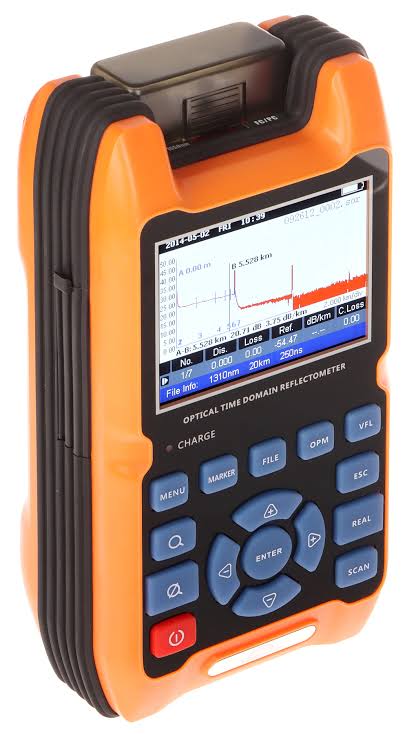
The ZS-1000A Fibre OTDR is a compact multifunctional fibre optic tester designed for installation, troubleshooting, maintenance and certification of optical fibre networks. It combines several essential fibre-testing functions in one portable instrument, including an Optical Time Domain Reflectometer (OTDR), Optical Power Meter (OPM), Optical Light Source (OLS), Visual Fault Locator (VFL) and iOLA intelligent event-analysis function.
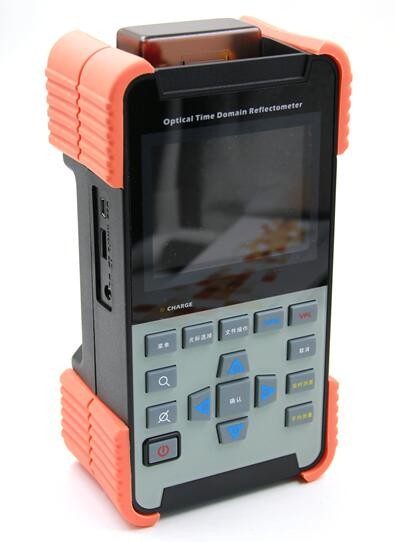
The ZS-1000A supports dual 1310nm and 1550nm OTDR wavelengths, a test range from approximately 100 metres to 80 kilometres, and a 20dB dynamic range. This makes it useful for FTTH networks, ISP fibre infrastructure, PON deployments, backbone links, ODF testing, fibre closures and general fibre maintenance.
Its compact body weighs about 217g and includes a 3.5-inch high-definition touchscreen, making it significantly easier to carry in a technician's field toolkit than larger conventional OTDRs.
ZS-1000A Key Specifications
| Specification | ZS-1000A |
|---|---|
| Product Type | Multifunction Fibre OTDR |
| OTDR Wavelengths | 1310nm / 1550nm ±20nm |
| Dynamic Range | 20dB |
| Test Range | 100m–80km |
| Pulse Width | 5ns–20µs |
| Measurement Time | 5–180 seconds |
| Measurement Modes | Real-Time / Average / Automatic |
| Event Dead Zone | <3m |
| Attenuation Dead Zone | 12m |
| Sampling Points | 8,000 |
| iOLA | Yes |
| Optical Power Meter | Yes |
| OPM Range | -50 to +26dBm |
| Optical Light Source | Yes |
| Visual Fault Locator | 10mW |
| OTDR/OLS Connector | SC/UPC |
| OPM/VFL Connector | 2.5mm Universal |
| Display | 3.5-inch HD Touchscreen |
| Battery | 2000mAh Rechargeable Lithium |
| Charging | USB Type-C |
| LED Light | Yes |
| Self Calibration | Supported |
| Operating Temperature | 0°C–50°C |
| Dimensions | Approx. 117 × 70 × 33mm |
| Weight | Approx. 217g |
These specifications correspond to the current compact ZS1000-A model documented by Signal Fire.
What Is an OTDR?
OTDR stands for Optical Time Domain Reflectometer.
An OTDR sends optical pulses into a fibre and analyses the light reflected and scattered back toward the instrument.
From this information, it can help determine:
Fibre length
Fibre attenuation
Location of fibre breaks
Connector locations
Splice locations
Splice losses
Reflective events
Excessive bends
End of fibre
Distance to a fault
Unlike a Visual Fault Locator, which depends on visible red light, an OTDR provides a graphical trace showing what is happening throughout the fibre link.
1310nm and 1550nm Dual-Wavelength Testing
The ZS-1000A supports two important single-mode testing wavelengths:
1310nm and 1550nm.
Using both wavelengths is useful because fibre behaviour can differ between them.
| Wavelength | Typical Application |
|---|---|
| 1310nm | General single-mode fibre testing |
| 1550nm | Long-distance testing and bend analysis |
A bend that appears relatively minor at 1310nm may produce noticeably greater loss at 1550nm, making dual-wavelength testing useful when diagnosing fibre problems.
Up to 80KM OTDR Test Range
The compact ZS-1000A provides an OTDR measurement range from approximately 100 metres to 80 kilometres.
This makes it suitable for more than short subscriber drop cables.
Applications can include:
FTTH drops
Distribution fibre
Feeder fibre
Metropolitan fibre
Campus fibre
ISP networks
CCTV fibre links
Enterprise networks
Longer point-to-point links
The actual measurable link length depends on fibre attenuation, connector losses, splitters, splices and the total optical loss budget.
20dB Dynamic Range
The ZS-1000A has a specified 20dB OTDR dynamic range.
Dynamic range affects how much optical loss the OTDR can analyse before the returning signal becomes too weak.
For FTTH and access-network technicians, 20dB provides useful capability for many subscriber, distribution and medium-distance testing applications.
iOLA Intelligent Event Analysis
One of the most useful features of the ZS-1000A is iOLA intelligent optical link analysis.
Signal Fire specifies the iOLA function specifically for the ZS1000-A model.
Instead of requiring the technician to interpret only a conventional OTDR waveform, iOLA can simplify the link into identifiable events.
These can include:
Connectors
Splices
Fibre sections
Excessive losses
Fibre bends
End of fibre
Potential faults
This is especially useful for technicians who are still learning how to interpret conventional OTDR traces.
Traditional OTDR Trace vs iOLA
| Traditional OTDR | iOLA |
|---|---|
| Displays waveform | Displays simplified events |
| Requires trace interpretation | Easier to understand |
| Excellent for advanced technicians | Useful for beginners |
| Detailed manual analysis | Faster visual diagnosis |
| Events interpreted by technician | Events automatically identified |
Experienced technicians can still use the conventional trace when detailed analysis is required.
Optical Power Meter
The ZS-1000A also contains a built-in Optical Power Meter.
The specified measurement range is approximately:
-50 to +26dBm
with calibration wavelengths including:
850nm
1300nm
1310nm
1490nm
1550nm
1625nm
This allows technicians to perform basic optical-power measurements without carrying a separate OPM.
Optical Light Source
The ZS-1000A incorporates an Optical Light Source (OLS) using the OTDR/OLS optical interface.
The light source can be used together with an Optical Power Meter when performing fibre loss testing.
A typical workflow is:
Optical Light Source → Fibre Link → Optical Power Meter
This helps technicians determine whether a fibre link has excessive attenuation.
Built-In 10mW Visual Fault Locator
The ZS-1000A also integrates a 10mW Visual Fault Locator using a universal 2.5mm interface.
The VFL sends visible red light through the fibre and can help locate:
Fibre breaks
Severe bends
Broken patch cords
Damaged pigtails
Connector problems
Short-distance continuity faults
This is particularly convenient because technicians can perform quick visual checks without carrying another VFL pen.
3.5-Inch Touchscreen
The ZS-1000A features a 3.5-inch high-definition multi-touch screen.
The interface provides access to functions such as:
OTDR
iOLA
Optical Power Meter
Optical Light Source
VFL
System settings
The touchscreen format helps make the tester easier to operate for technicians accustomed to smartphone-style interfaces.
Compact and Lightweight Design
One major advantage of the ZS-1000A is portability.
| Measurement | Specification |
|---|---|
| Height | 117mm |
| Width | 70mm |
| Depth | 33mm |
| Weight | Approx. 217g |
This makes the unit particularly suitable for technicians working:
On utility poles
Inside customer premises
At FAT boxes
Inside ODF rooms
In fibre chambers
On rooftops
At remote ISP sites
2000mAh Rechargeable Battery

Signal Fire specifies a 2000mAh rechargeable lithium battery for the compact ZS1000 series.
The device charges through USB Type-C, making field charging easier because technicians can use compatible power banks and chargers.
This is useful for fibre technicians who may spend an entire day away from an office or workshop.
Built-In LED Flashlight
The ZS-1000A also includes an LED illumination function.
Although simple, this can be particularly useful when technicians are working:
Inside dark cabinets
At night
Inside fibre chambers
Behind equipment racks
Inside poorly illuminated ODF rooms
Watch the Fibre OTDR Video
Important: the supplied video is titled “FIS Atlas Mini OTDR | Product Highlight,” so it demonstrates OTDR functionality but is not specifically a ZS-1000A product video. It can still be used as an educational OTDR video, but the page should not claim that the unit shown in the video is the ZS-1000A.
The video helps visitors understand the general purpose of an OTDR: analysing an optical fibre link and identifying events along its length. This is useful because OTDR operation is more technical than using a simple VFL or Optical Power Meter.
For the ZS-1000A specifically, the combination of OTDR, iOLA, OPM, OLS and VFL means a technician can perform several common diagnostic tasks using one compact device instead of carrying multiple separate testers.
For FTTH technicians and ISP teams, this is particularly useful during new installations, network acceptance, subscriber troubleshooting and emergency fibre repair.
What Can the ZS-1000A Detect?
An OTDR can help identify several types of events.
| Event | OTDR Detection |
|---|---|
| Fibre Break | Yes |
| End of Fibre | Yes |
| Fusion Splice | Yes |
| Connector | Yes |
| Excessive Splice Loss | Yes |
| Fibre Length | Yes |
| Distance to Fault | Yes |
| Reflective Event | Yes |
| Severe Bend | Often Detectable |
| Optical Power | Via Built-In OPM |
ZS-1000A for FTTH Networks
The ZS-1000A is particularly useful for FTTH networks.
A typical fibre path may be:
OLT → ODF → Feeder Fibre → PLC Splitter → Distribution Fibre → FAT → Drop Cable → ATB → ONU
An OTDR can help technicians investigate faults across sections of this infrastructure.
ZS-1000A for ISP Networks
ISPs can use the tester for:
New fibre deployment
Fibre route verification
Fault location
Backbone maintenance
Distribution network testing
Subscriber troubleshooting
Fibre repair verification
Splice-quality checks
Documentation
Testing Fibre Length
One of the fundamental OTDR functions is measuring the distance through an optical fibre.
This is useful when:
Cable records are unavailable
A route length needs confirmation
A cable breaks underground
Technicians need the distance to a fault
Fibre documentation needs verification
The OTDR trace can indicate both the total link length and the approximate position of individual events.
Finding Fibre Breaks
Suppose a fibre cable is several kilometres long and has been damaged somewhere along the route.
A VFL may not provide enough information.
An OTDR can indicate that the break is, for example:
3.42 km from the test location
rather than forcing technicians to inspect the entire route manually.
This is one of the major reasons OTDRs are essential for professional fibre maintenance.
Testing Fusion Splices
Fusion splices should introduce very little optical loss.
An OTDR can help technicians identify unusually lossy splice events along the fibre.
This is useful when checking work completed inside:
Fibre closures
ODFs
FAT boxes
Joint boxes
Backbone splice points
Testing Fibre Connectors
Connectors can create reflective events on an OTDR trace.
These may include:
SC/UPC
SC/APC
LC/UPC
LC/APC
FC connectors
High reflection or excessive loss may indicate contamination, poor termination or connector damage.
ZS-1000A vs Visual Fault Locator
| Feature | ZS-1000A OTDR | VFL |
|---|---|---|
| Exact Fault Distance | Yes | No |
| Fibre Length | Yes | No |
| Splice Analysis | Yes | No |
| Connector Events | Yes | Limited |
| Visible Red Light | Built-In | Yes |
| Long-Distance Analysis | Yes | Limited |
| OTDR Trace | Yes | No |
| Professional Diagnostics | Excellent | Basic |
ZS-1000A vs Optical Power Meter
| Feature | ZS-1000A | Basic OPM |
|---|---|---|
| Measure Optical Power | Yes | Yes |
| Find Fault Distance | Yes | No |
| OTDR Trace | Yes | No |
| Detect Splices | Yes | No |
| Event Mapping | Yes | No |
| VFL | Built-In | Usually No |
| Light Source | Built-In | Usually No |
The ZS-1000A effectively incorporates an OPM while providing much more advanced fibre diagnostics.
OTDR vs PON Power Meter
A PON meter and OTDR perform different jobs.
| Tool | Primary Function |
|---|---|
| OTDR | Finds and analyses fibre events |
| PON Power Meter | Measures PON optical signal levels |
| OPM | Measures optical power |
| VFL | Visually traces faults |
| OLS | Generates test light |
Professional FTTH teams often use several of these tools together.
Using a Launch Cable with an OTDR

For more accurate testing near the OTDR port, technicians should consider using an OTDR launch cable.
A launch cable helps the OTDR analyse the first connector and reduces the effect of the initial dead zone.
Typical setup:
OTDR → Launch Cable → Fibre Under Test
A receive cable can also be installed at the opposite end when end-connector measurement is required.
ZS-1000A Measurement Modes
The ZS-1000A supports:
Real-time measurement
Average measurement
Automatic measurement
Real-Time Mode
Useful when observing changing fibre conditions.
Average Mode
Multiple measurements are averaged to improve the trace quality.
Automatic Mode
Useful when technicians want the instrument to automatically select suitable parameters.
OTDR Pulse Width
The ZS-1000A supports pulse widths from approximately 5ns to 20µs.
Pulse width affects OTDR testing performance.
Generally:
Shorter pulses provide better resolution for nearby events.
Longer pulses provide greater reach but reduce event resolution.
The correct setting depends on the length and complexity of the fibre under test.
ZS-1000A Fibre OTDR Price in Kenya
The ZS-1000A Fibre OTDR price in Kenya varies depending on supplier, stock, warranty and included accessories.
As a current market reference, one Kenyan listing shows the ZS-1000A at approximately KES 28,000, although that listing is currently marked sold out.
Other suppliers may price the unit differently, so customers should request the current quotation before ordering.
Factors affecting the price include:
Accessories supplied
Launch cable inclusion
Carrying case
Connector adapters
Warranty
Calibration
Supplier
Quantity ordered
Recommended Accessories
| Accessory | Purpose |
|---|---|
| OTDR Launch Cable | Improves near-end event testing |
| SC/APC Adapter | Connector compatibility |
| LC Adapter | LC fibre testing |
| Fibre Cleaning Kit | Keeps test ports clean |
| Optical Power Meter | Additional power testing |
| PON Power Meter | GPON/EPON testing |
| VFL | Quick visual tracing |
| Fusion Splicer | Fibre repair |
| Fibre Cleaver | Splicing preparation |
| Fibre Stripper | Fibre preparation |
How to Use the ZS-1000A OTDR
A basic testing workflow is:
Inspect and clean the OTDR connector.
Connect an appropriate launch cable.
Connect the fibre under test.
Switch on the ZS-1000A.
Select the OTDR function.
Choose 1310nm or 1550nm.
Select automatic testing or configure the range manually.
Start the measurement.
Allow the OTDR to generate the trace.
Review the event table.
Check fibre length.
Identify connectors and splices.
Look for excessive-loss events.
Identify the end of the fibre or break.
Save the results if required.
Frequently Asked Questions
What is the ZS-1000A?
The ZS-1000A is a compact multifunction fibre tester combining an OTDR, OPM, OLS, VFL and intelligent optical-link analysis.
What does OTDR mean?
OTDR stands for Optical Time Domain Reflectometer.
What wavelengths does the ZS-1000A support?
Its OTDR supports 1310nm and 1550nm dual-wavelength testing.
What is the ZS-1000A maximum testing range?
The specified range is approximately 100m to 80km.
What is its dynamic range?
The compact current ZS1000-A specification lists 20dB.
Does the ZS-1000A have an Optical Power Meter?
Yes.
What is the OPM range?
Approximately -50 to +26dBm.
Does it have a VFL?
Yes.
What is the VFL power?
The integrated VFL is specified at 10mW.
Does it have an Optical Light Source?
Yes.
Does it support iOLA?
Yes. The iOLA function is specifically supported by the ZS1000-A.
What does iOLA do?
It simplifies OTDR analysis by presenting fibre events in a more intuitive graphical format.
Can the ZS-1000A locate a fibre break?
Yes. Fault location is one of the main purposes of an OTDR.
Can it tell me the distance to the fault?
Yes. An OTDR measures the approximate distance from the tester to an event or fibre break.
Can it measure fibre length?
Yes.
Can it identify fibre splices?
Yes.
Can it detect bad splices?
It can identify loss events that may indicate excessive splice loss.
Can it detect connectors?
Yes. Reflective connector events can appear on the OTDR trace.
Can it detect fibre bends?
Significant bend losses can often be identified, particularly by comparing measurements at different wavelengths.
Can I test at 1310nm?
Yes.
Can I test at 1550nm?
Yes.
Does it have a touchscreen?
Yes. It has a 3.5-inch HD touchscreen.
Is it portable?
Yes. The compact model weighs approximately 217g.
What battery does it use?
The current compact model has a 2000mAh rechargeable lithium battery.
Does it use USB-C?
Yes. Type-C charging is supported.
Can I charge it using a power bank?
Yes, using compatible USB Type-C power equipment.
Does it have an LED flashlight?
Yes.
Is the ZS-1000A suitable for FTTH?
Yes. It is suitable for FTTH installation, testing and troubleshooting.
Can ISPs use it?
Yes. It is suitable for ISP access, distribution and fibre-maintenance work.
Can I use it on ODFs?
Yes.
Can I use it on FAT boxes?
Yes.
Can I test fibre closures?
Yes.
Can I use it for backbone fibre?
Yes, provided the link loss and distance fall within the instrument's measurement capabilities.
Do I need a launch cable?
A launch cable is strongly recommended when accurate characterization of the first connector and near-end events is required.
Can an OTDR replace a VFL?
The ZS-1000A already includes a VFL, but OTDR and visual fault-location functions serve different purposes.
Can an OTDR replace an Optical Power Meter?
Not entirely, but the ZS-1000A includes a separate built-in OPM function.
Can an OTDR replace a PON Power Meter?
No. A dedicated PON meter is more appropriate for measuring live PON wavelength power.
Can I use the ZS-1000A for GPON networks?
Yes, for appropriate offline fibre characterization and troubleshooting. Live-network testing must follow the instrument's specifications and safe testing procedures.
Can I save test results?
The device supports storage and transfer functionality for test results.
What is the ZS-1000A Fibre OTDR price in Kenya?
Pricing varies. One Kenyan retailer currently lists it at approximately KES 28,000, though that listing is marked sold out.
Do you supply ZS-1000A Fibre OTDRs?
Yes. Fiber Optics Kenya can supply OTDRs and related fibre-testing equipment subject to stock availability.
Do you supply OTDR launch cables?
Yes.
Do you supply Visual Fault Locators?
Yes.
Do you supply Optical Power Meters?
Yes.
Do you supply PON Power Meters?
Yes.
Do you supply fusion splicers?
Yes.
Do you supply fibre cleavers?
Yes.
Do you deliver outside Nairobi?
Yes. Fiber Optics Kenya supplies fibre optic equipment throughout Kenya.
Why Buy ZS-1000A Fibre OTDR from Fiber Optics Kenya?
| Solution | Benefit |
|---|---|
| ZS-1000A OTDR | Advanced fibre diagnostics |
| OTDR Launch Cables | Better event testing |
| VFLs | Visual fibre tracing |
| Optical Power Meters | Signal measurement |
| PON Power Meters | GPON/EPON testing |
| Fusion Splicers | Fibre joining |
| Fibre Cleavers | Precision preparation |
| Fibre Strippers | Fibre preparation |
| Fibre Cleaning Kits | Reliable measurements |
| Patch Cords | Fibre interconnection |
| Pigtails | Fibre termination |
| ODFs | Fibre management |
| FAT Boxes | FTTH distribution |
| Fibre Closures | Splice protection |
| Nationwide Delivery | Supply throughout Kenya |
Contact Fiber Optics Kenya
Fiber Optics Kenya
Lyric House, 7th Floor Room S9
Kimathi Street, Nairobi
Phone: +254 704 991 492
Email: info@fibreopticskenya.co.ke
The ZS-1000A Fibre OTDR is a compact multifunction testing solution for FTTH technicians, ISPs, fibre contractors and telecommunications engineers. Its combination of 1310/1550nm dual-wavelength OTDR testing, 20dB dynamic range, up to 80km measurement range, iOLA intelligent event analysis, Optical Power Meter, Optical Light Source and 10mW VFL allows technicians to perform several important fibre diagnostics using a single device.
Its 3.5-inch touchscreen, approximately 217g weight, USB Type-C charging and 2000mAh rechargeable battery also make it well suited to technicians who need portable testing equipment for customer premises, ODFs, FAT boxes, fibre closures and field maintenance.
Contact Fiber Optics Kenya for ZS-1000A Fibre OTDR prices in Kenya, OTDR launch cables, Visual Fault Locators, Optical Power Meters, PON Power Meters, fusion splicers, fibre cleavers, fibre testing kits, bulk orders and nationwide delivery.