SFP Modules Price in Kenya
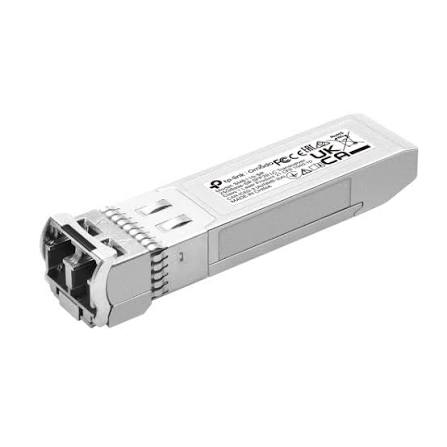
TP-Link SM6110-SR 25GBase-SR SFP28 LC Transceiver Price in Kenya
KSh 8,108.00
1 available
Continue shoppingTP-Link SM6110-SR 25GBase-SR SFP28 LC Transceiver Price in Kenya
The TP-Link Omada SM6110-SR is a high-performance 25GBase-SR SFP28 multimode optical transceiver designed for high-speed data centres, enterprise networks, ISP infrastructure, server connections and network backbones.
It operates at 850nm and supports dual data rates of 25.78Gbps and 10.31Gbps. At 25.78Gbps, TP-Link specifies transmission distances of up to 70 metres over OM3 multimode fibre and 100 metres over OM4 multimode fibre. At 10.31Gbps, it can reach up to 300 metres over OM3 fibre.
The SM6110-SR uses a duplex LC/UPC connector, supports Digital Diagnostic Monitoring (DDM), is hot-swappable, operates from 3.3V and consumes no more than approximately 1W.
TP-Link SM6110-SR Technical Specifications
| Specification | Details |
|---|---|
| Model | TP-Link Omada SM6110-SR |
| Product Type | 25GBase-SR SFP28 LC Transceiver |
| Form Factor | SFP28 / SFP+ compatible dual-rate design |
| Ethernet Standards | IEEE 802.3by, IEEE 802.3ae |
| Maximum Data Rate | 25.78Gbps |
| Secondary Data Rate | 10.31Gbps |
| Wavelength | 850nm |
| Fibre Type | Multimode Fibre |
| Supported Fibre | 50/125µm or 62.5/125µm MMF |
| 25G Reach on OM3 | Up to 70m |
| 25G Reach on OM4 | Up to 100m |
| 10G Reach on OM3 | Up to 300m |
| Connector | Duplex LC/UPC |
| Fibre Strands Required | 2 |
| Transmitter Type | VCSEL |
| Receiver Type | PIN |
| DDM | Yes |
| SFP28 MSA | Yes |
| Hot Swappable | Yes |
| Power Supply | 3.3V |
| Power Consumption | ≤1W |
| Laser Class | Class 1 |
| Maximum Laser Output | 1.74mW / 2.4dBm |
| Dimensions V1.20 | Approx. 56.75 × 14 × 11.26mm |
| Operating Temperature | 0°C to 70°C |
| Storage Temperature | -40°C to 85°C |
| Certifications | CE, FCC, RoHS |
| Typical Applications | Data centres, enterprise networks, ISP aggregation, servers, campus networks and high-speed switch uplinks |
TP-Link's current V1.20 documentation confirms the 850nm wavelength, dual 25.78Gbps/10.31Gbps data rates, duplex LC/UPC connector, multimode fibre, DDM, SFP28 MSA and hot-swappable operation.
What Is the TP-Link SM6110-SR?
The SM6110-SR is an optical transceiver designed to convert a compatible network device's:
25G SFP28 interface
into:
25 Gigabit Ethernet over multimode fibre.
A typical connection is:
25G Switch
↓
SM6110-SR
↓
Duplex OM4 Fibre
↓
SM6110-SR
↓
25G Switch
It can also operate at approximately 10Gbps in supported host equipment, making it a dual-rate transceiver rather than a strictly 25G-only optical module.
What Does 25GBase-SR Mean?
The name can be broken down as follows:
25G = 25 Gigabit Ethernet
BASE = Baseband Ethernet transmission
SR = Short Reach
25GBASE-SR is therefore intended for high-speed short-distance optical links over multimode fibre.
TP-Link's module operates at 850nm, which is a common wavelength for short-range multimode Ethernet.
25.78Gbps Data Rate
The SM6110-SR supports a signalling rate of:
25.78Gbps
for 25 Gigabit Ethernet operation.
This makes it suitable for networks requiring much higher bandwidth than standard:
1Gbps SFP
10Gbps SFP+
Gigabit copper Ethernet
A 25G interface is particularly valuable for modern servers, virtualization environments, storage systems and aggregation networks.
Dual-Rate 25G and 10G Support
One of the strongest features of the SM6110-SR is its:
Dual Rate 25.78Gbps / 10.31Gbps support.
TP-Link officially specifies both rates.
This means the transceiver may be used in compatible:
25G SFP28 ports
and selected:
10G SFP+ environments
provided the host equipment supports the module and desired operating rate.
850nm Wavelength
The SM6110-SR operates at:
850nm
over multimode fibre.
850nm is commonly used in:
Data centres
Server rooms
Enterprise networks
Short campus links
Rack-to-rack fibre
High-speed multimode backbones
Multimode Fibre
The module is specifically designed for:
MMF – Multimode Fibre
rather than single-mode fibre.
TP-Link lists support for:
50/125µm or 62.5/125µm multimode fibre.
For new 25G installations, OM3 or OM4 fibre should normally be considered, with OM4 providing the longer published 25G reach.
OM3 Fibre with SM6110-SR
At:
25.78Gbps
TP-Link specifies up to:
70 metres using OM3 fibre.
At:
10.31Gbps
the same module can support:
up to 300 metres over OM3.
This difference is important when upgrading an existing 10G OM3 network to 25G.
OM4 Fibre with SM6110-SR
For 25G operation, TP-Link specifies:
up to 100 metres over OM4 multimode fibre.
OM4 is therefore the better choice when the link requires close to the maximum supported 25G distance.
Maximum Distance at Different Speeds
| Speed | Fibre | Maximum TP-Link Distance |
|---|---|---|
| 25.78Gbps | OM3 | 70m |
| 25.78Gbps | OM4 | 100m |
| 10.31Gbps | OM3 | 300m |
These are the current published TP-Link distances.
Why Does 25G Have a Shorter Reach Than 10G?
Higher data rates place greater demands on:
Fibre modal bandwidth
Signal quality
Transmitter performance
Receiver performance
Connector cleanliness
Overall optical link quality
Therefore, the same OM3 fibre that supports approximately:
300m at 10G
may support only:
70m at 25G
with this transceiver.
Duplex LC/UPC Connector
The SM6110-SR uses:
Duplex LC/UPC
connectivity.
This means the link uses two optical paths:
Tx → Transmit
and:
Rx → Receive
A common patch cord would therefore be:
LC/UPC to LC/UPC Duplex OM3 or OM4 patch cord.
How Many Fibre Strands Does SM6110-SR Need?
The module uses:
2 fibre strands
for a standard connection.
One strand carries transmission in one direction while the other carries transmission in the opposite direction.
This differs from a BiDi transceiver, where both directions may share a single fibre strand.
Watch TP-Link SM6110-SR Video
https://youtu.be/kIoR8DGr1AU
The TP-Link SM6110-SR is primarily intended for high-capacity short-range network links where 10Gbps is no longer sufficient. Its 25.78Gbps capability makes it appropriate for modern server infrastructure, aggregation switches, data-centre networks and enterprise backbones.
The module supports both 25G SFP28 and 10G SFP+ operating environments, subject to host compatibility. At 25G it reaches up to 100m over OM4, while at the 10.31Gbps rate TP-Link specifies as much as 300m over OM3.
Its combination of DDM, hot-swappable operation, duplex LC/UPC connectivity and ≤1W power consumption makes it well suited for dense network installations where energy consumption and easy transceiver maintenance are important.
VCSEL Transmitter
TP-Link specifies a:
VCSEL – Vertical-Cavity Surface-Emitting Laser
for the SM6110-SR transmitter.
VCSEL technology is widely used for short-range multimode fibre Ethernet because it is well suited to 850nm operation.
PIN Receiver
The SM6110-SR uses a:
PIN receiver
for converting incoming optical signals into electrical data.
Optical Transmitter Power
TP-Link's detailed specification gives transmitter power at 25.78Gbps of approximately:
-8.4dBm to +2.4dBm.
At 10.31Gbps, the published transmitter range is approximately:
-7.3dBm to -1dBm.
These figures are useful when designing or troubleshooting the optical link.
Receiver Sensitivity
TP-Link specifies receiver sensitivity of approximately:
better than -10.3dBm at 25.78Gbps
and:
better than -11.1dBm at 10.31Gbps.
Actual received power should remain within the transceiver's supported optical operating range.
Optical Link Budget
Even though the module is rated for particular distances, network performance still depends on total optical loss.
The fibre link budget can be affected by:
Fibre attenuation + connector loss + patch-cord loss + adapter loss + splice loss + engineering margin
For high-speed 25G networks, poor connectors or dirty LC interfaces can significantly affect performance.
Digital Diagnostic Monitoring – DDM
The SM6110-SR supports:
DDM – Digital Diagnostic Monitoring.
Depending on the host equipment, DDM can provide information including:
Optical transmit power
Optical receive power
Module temperature
Supply voltage
Laser bias
These measurements can assist with troubleshooting.
SFF-8472 Support
TP-Link lists:
SFF-8472
among the supported standards.
This is closely associated with diagnostic monitoring functionality in SFP-family transceivers.
SFF-8402 Support
The module supports:
SFF-8402.
SFF-8431 Support
TP-Link also lists:
SFF-8431.
SFF-8432 Support
The module additionally supports:
SFF-8432.
Together these specifications help define mechanical and electrical interoperability for the transceiver.
SFP28 MSA Compatibility
The SM6110-SR supports:
SFP28 MSA
and TP-Link also describes it as compatible with 10G/25G SFP+/SFP28 MSA.
However, MSA compliance does not guarantee that every network switch from every manufacturer will accept the module.
Always verify exact host compatibility.
Hot-Swappable Operation
The module is:
Hot Swappable / Hot Pluggable.
This allows supported equipment to accept module installation or replacement without replacing the entire switch.
Low Power Consumption
TP-Link specifies power consumption of:
no more than approximately 1W.
This is particularly useful in high-density switches containing many optical transceivers.
3.3V Power Supply
The SM6110-SR operates from:
3.3V
supplied by the host SFP28/SFP+ port.
No external power adapter is required.
Class 1 Laser
TP-Link classifies the SM6110-SR as:
Class 1 laser equipment.
Even so, fibre optic safety procedures should always be followed.
Never stare directly into an operating transceiver or optical fibre.
SM6110-SR Switch Compatibility
TP-Link specifically identifies compatibility with 25G switches such as:
SX6632YF
and selected 10G switches including:
SG3428X
and:
SG3452X.
The exact port configuration and firmware should still be checked before deployment.
SM6110-SR for 25G Switch Uplinks
A common deployment is:
Access / Distribution Switch
↓
25G SFP28 Port
↓
SM6110-SR
↓
OM4 Fibre
↓
SM6110-SR
↓
Core Switch
This provides a high-capacity 25Gbps backbone.
SM6110-SR for Data Centres
25G Ethernet is particularly useful in data centres.
Applications include:
Server-to-switch connections
Top-of-rack networking
Leaf-spine infrastructure
Storage networks
Virtualization hosts
Hyperconverged infrastructure
High-performance computing
Backup networks
SM6110-SR for Servers
A server equipped with a compatible:
25G SFP28 network interface card
can connect directly through the SM6110-SR.
Example:
25G Server NIC → SM6110-SR → OM4 Fibre → SM6110-SR → 25G Switch
SM6110-SR for Storage Networks
High-performance storage can benefit greatly from 25Gbps networking.
Potential environments include:
NAS
SAN
Video storage
Backup servers
Database systems
Virtual machine storage
SM6110-SR for Enterprise Networks
Large enterprises can use 25G connections between:
Core switches
Distribution switches
Data-centre equipment
Server rooms
High-capacity departments
SM6110-SR for ISP Networks
ISPs may use 25G optical links for short high-capacity internal connections such as:
Router-to-switch links
POP aggregation
Server connections
Internal backbone
BNG infrastructure
Metro aggregation equipment
For longer external routes, a suitable 25G LR module is more appropriate.
SM6110-SR for CCTV Networks
Large surveillance systems can generate very high aggregate bandwidth.
A 25G backbone may be appropriate when combining traffic from:
Hundreds of IP cameras
Multiple NVRs
Video analytics systems
Recording servers
High-resolution 4K or 8K cameras
SM6110-SR vs SM6110-LR
| Feature | SM6110-SR | SM6110-LR |
|---|---|---|
| Maximum Speed | 25G | 25G |
| Form Factor | SFP28 | SFP28 |
| Fibre Type | Multimode | Single Mode |
| Wavelength | 850nm | 1310nm |
| Connector | LC Duplex | LC Duplex |
| 25G Maximum Reach | 100m OM4 | Up to 10km |
| Best Use | Data centres / short links | Long-distance backbone |
TP-Link lists the SM6110-LR as the complementary long-distance 25G option, with a 1310nm single-mode specification and a reach of up to 10km.
SM6110-SR vs SM5110-SR
| Feature | SM6110-SR | SM5110-SR |
|---|---|---|
| Maximum Speed | 25Gbps | 10Gbps |
| Form Factor | SFP28 | SFP+ |
| Wavelength | 850nm | 850nm |
| Fibre | Multimode | Multimode |
| Connector | LC Duplex | LC Duplex |
| 25G Support | Yes | No |
| 10G Support | Yes | Yes |
| Best Use | 25G upgrade | Standard 10G |
SM6110-SR vs 25G DAC
A 25G DAC provides a direct electrical connection between two SFP28 interfaces.
Choose a DAC when:
Equipment is in the same rack.
Distance is very short.
Both devices use SFP28.
Choose SM6110-SR when:
Optical fibre is already installed.
Electrical isolation is desirable.
Distance exceeds practical DAC length.
Patch-panel-based cabling is preferred.
SM6110-SR vs 10GBase-SR
The SM6110-SR offers approximately:
2.5× the nominal bandwidth
of a 10Gbps transceiver.
This makes it a logical upgrade where:
10G uplinks are becoming saturated.
Server traffic has increased.
Storage throughput is expanding.
Network aggregation requires more capacity.
SFP28 vs SFP+
The SM6110-SR uses:
SFP28
for 25G operation.
SFP28 maintains a form factor similar to SFP+ but supports higher signalling rates.
The module is unusual in that TP-Link also specifies:
10.31Gbps SFP+ compatibility
in supported environments.
Can SM6110-SR Work in a 10G SFP+ Port?
Potentially yes.
TP-Link explicitly lists compatibility with selected 10G switches including SG3428X and SG3452X and specifies a 10.31Gbps operating mode.
However, compatibility should be checked with the exact switch.
Can SM6110-SR Work in a 25G SFP28 Port?
Yes.
That is its primary intended application.
Can It Work in a 1G SFP Port?
No, not for its intended operation.
Use an appropriate Gigabit SFP module instead.
Can It Work in a 100G QSFP28 Port?
Not directly.
A QSFP28 interface uses a different physical transceiver form factor.
Some switches may support breakout arrangements, but that depends on the specific device and cabling architecture.
Does SM6110-SR Use Single-Mode Fibre?
No.
It is a:
multimode fibre transceiver.
For single-mode 25G connections, consider the SM6110-LR.
Can SM6110-SR Work Over 1KM?
No.
Its maximum published 25G reach is:
100m on OM4
and its maximum published 10G reach is:
300m on OM3.
For kilometre-scale links, use a suitable single-mode module.
Can SM6110-SR Work Over 100m at 25G?
TP-Link rates:
100m on OM4
at 25.78Gbps.
A design beyond this distance should use a suitable longer-reach transceiver.
Fibre Cleaning for 25G
Connector cleanliness becomes increasingly important at high data rates.
Before connecting LC fibres:
Clean the connector.
Inspect where possible.
Keep dust caps installed until use.
Avoid touching fibre end faces.
Dirty LC connectors can cause intermittent 25G problems even when a lower-speed link previously worked.
Optical Power Meter
An Optical Power Meter can help verify the received optical level.
This is useful when diagnosing:
Excessive optical loss
Poor patch cords
Connector problems
Fibre attenuation
OTDR Testing
An OTDR can help identify:
Fibre length
Bad splices
Reflective connectors
Fibre breaks
Macrobends
High-loss events
VFL Testing
A Visual Fault Locator can assist with:
Fibre identification
Continuity checking
Locating visible breaks
A VFL does not certify the fibre for 25Gbps Ethernet performance.
Operating Temperature
TP-Link specifies:
0°C to 70°C.
Storage Temperature
The storage specification is:
-40°C to 85°C.
Dimensions
Current V1.20 documentation specifies dimensions of approximately:
56.75 × 14 × 11.26mm.
The earlier V1 documentation lists slightly different dimensions of approximately:
57 × 14 × 13.45mm, so hardware revision should be considered when exact mechanical dimensions matter.
Package Contents
TP-Link lists:
1 × SM6110-SR
Installation Guide
TP-Link SM6110-SR Price in Kenya
The TP-Link SM6110-SR price in Kenya varies according to stock, supplier, VAT, warranty and hardware revision.
A current Senetic Kenya listing shows approximately:
KES 6,990.47 excluding VAT
or:
KES 8,108.95 including VAT.
The same listing currently shows availability in the 21–30 unit range, although the page also contains an out-of-stock notice for some requested quantities, so real-time stock should be confirmed before ordering.
Approximate SM6110-SR Price in Kenya
| Market Reference | Approx. Price |
|---|---|
| Senetic Kenya – Net | KES 6,990 |
| Senetic Kenya – Gross | KES 8,109 |
These are third-party market references and not fixed Fiber Optics Kenya prices.
Contact Fiber Optics Kenya for the current SM6110-SR price and availability.
SM6110-SR vs SM6110-LR Price
The current same-supplier listing shows the longer-range:
SM6110-LR
at approximately:
KES 12,010.54 excluding VAT
or:
KES 13,932.23 including VAT.
That makes the SM6110-SR more economical where multimode fibre and short-distance 25G operation meet the network requirements.
What Affects SM6110-SR Price in Kenya?
Pricing can vary according to:
Import costs
VAT
Distributor
Stock availability
Hardware revision
Warranty
Quantity
Enterprise or ISP bulk order discounts
How to Choose the Correct 25G Transceiver
Before buying the SM6110-SR, confirm:
Your equipment has a compatible SFP28 or supported SFP+ port.
You require 25G or compatible 10G operation.
Your fibre is multimode.
For 25G over OM3, the route is within 70m.
For 25G over OM4, the route is within 100m.
For 10G over OM3, the route is within 300m.
Your fibre uses compatible LC/UPC duplex connectors.
Your host device supports the TP-Link transceiver.
The fibre has been cleaned and tested.
Recommended Accessories
| Accessory | Application |
|---|---|
| TP-Link SM6110-SR | 25G multimode fibre links |
| TP-Link SM6110-LR | 25G single-mode 10km links |
| OM3 LC-LC Duplex Patch Cord | 25G links up to 70m |
| OM4 LC-LC Duplex Patch Cord | 25G links up to 100m |
| Multimode Fibre Cable | 25G backbone |
| LC Duplex Adapters | Fibre interconnection |
| Fibre ODF | Structured termination |
| SFP28 Switch | 25G network connectivity |
| 25G Server NIC | Server connectivity |
| Optical Power Meter | Signal testing |
| OTDR | Fibre troubleshooting |
| VFL | Continuity testing |
| Fibre Cleaning Kit | LC connector maintenance |
Frequently Asked Questions About TP-Link SM6110-SR
What is the TP-Link SM6110-SR?
It is a 25GBase-SR SFP28 850nm multimode optical transceiver with dual 25.78Gbps and 10.31Gbps support.
What is its maximum speed?
25.78Gbps.
Does it support 10Gbps?
Yes. TP-Link specifies a secondary rate of 10.31Gbps.
Is it SFP28?
Yes.
Is it SFP+ compatible?
TP-Link describes it as a multimode SFP+/SFP28 transceiver and lists selected compatible 10G switches.
What wavelength does it use?
850nm.
Is SM6110-SR single mode?
No.
Is it multimode?
Yes.
What fibre should I use?
OM3 or OM4 multimode fibre is recommended depending on distance.
What is the maximum 25G distance on OM3?
70 metres.
What is the maximum 25G distance on OM4?
100 metres.
What is the maximum distance at 10G?
TP-Link specifies 300m using OM3 at 10.31Gbps.
Can it work over 300m at 25G?
No. The 300m rating applies to the 10.31Gbps mode, not 25.78Gbps.
Can it work over 1km?
No.
What connector does it use?
Duplex LC/UPC.
How many fibre strands are required?
Two.
Is it BiDi?
No.
Does it support DDM?
Yes.
Does it support SFF-8472?
Yes.
Does it support SFP28 MSA?
Yes.
Is it hot-swappable?
Yes.
What voltage does it use?
3.3V.
How much power does it consume?
TP-Link specifies no more than approximately 1W.
What transmitter does it use?
A VCSEL transmitter.
What receiver does it use?
A PIN receiver.
Can it connect two switches?
Yes.
Can it connect servers?
Yes, with compatible 25G SFP28 network interfaces.
Is it suitable for data centres?
Yes.
Is it suitable for ISP networks?
Yes, especially for short high-capacity aggregation links.
Is it suitable for CCTV backbones?
Yes.
Is it suitable for campus networks?
Yes, provided the multimode fibre route is within specification.
Does it work with SX6632YF?
TP-Link specifically lists SX6632YF as a compatible 25G switch example.
Does it work with SG3428X?
TP-Link lists SG3428X as a compatible 10G switch example.
Does it work with SG3452X?
Yes, TP-Link also lists SG3452X.
What is the difference between SM6110-SR and SM6110-LR?
SM6110-SR uses 850nm multimode fibre for up to 100m at 25G, while SM6110-LR uses 1310nm single-mode fibre for up to 10km.
What is the difference between SM6110-SR and SM5110-SR?
SM6110-SR supports 25G and 10G, while SM5110-SR is primarily a 10G SFP+ transceiver.
Can I use OM3?
Yes.
Can I use OM4?
Yes.
Which is better for a 100m 25G link?
OM4, because TP-Link specifies 100m at 25.78Gbps using OM4.
Can OM3 run 25G for 100m?
TP-Link rates OM3 to 70m at 25.78Gbps, so do not design a 100m SM6110-SR 25G link around OM3.
Can I use single-mode OS2 fibre?
No. Use an appropriate 25G single-mode transceiver such as SM6110-LR.
Does it need external power?
No.
What is the operating temperature?
0°C to 70°C.
What is the storage temperature?
-40°C to 85°C.
Is it a Class 1 laser?
Yes.
What are its dimensions?
The current V1.20 specification lists approximately 56.75 × 14 × 11.26mm.
What comes in the box?
The SM6110-SR transceiver and installation guide.
Do I normally need two modules?
Yes, a normal point-to-point duplex optical link generally requires a compatible transceiver at each endpoint.
Should I clean LC connectors?
Yes.
Can an Optical Power Meter test the link?
Yes.
Can an OTDR test the fibre?
Yes.
Can a VFL certify a 25G connection?
No. A VFL is useful for basic continuity and fault location but does not certify 25G Ethernet performance.
What is the TP-Link SM6110-SR price in Kenya?
A current Kenyan listing is approximately KES 6,990 excluding VAT or KES 8,109 including VAT.
Is that Fiber Optics Kenya's exact selling price?
No. It is a third-party market reference. Contact Fiber Optics Kenya for the current selling price.
Do you supply OM3 fibre patch cords?
Yes.
Do you supply OM4 fibre patch cords?
Yes.
Do you supply 25G SFP28 modules?
Yes, subject to stock availability.
Do you supply SM6110-LR?
Yes, subject to stock.
Do you supply 10G SFP+ modules?
Yes.
Do you supply 25G DAC cables?
Yes, subject to availability.
Can businesses and ISPs order in bulk?
Yes. Bulk orders are suitable for ISPs, data centres, enterprises, CCTV integrators and network contractors.
Do you deliver outside Nairobi?
Yes. Fiber Optics Kenya supplies fibre optic and networking equipment throughout Kenya.
Why Buy TP-Link SM6110-SR from Fiber Optics Kenya?

| Fiber Optics Kenya Solution | Application |
|---|---|
| TP-Link SM6110-SR | 25G short-range multimode fibre |
| TP-Link SM6110-LR | 25G long-range single-mode fibre |
| OM3 LC-LC Duplex Patch Cord | 25G links up to 70m |
| OM4 LC-LC Duplex Patch Cord | 25G links up to 100m |
| Multimode Fibre Cable | High-speed backbone |
| SFP28 Modules | 25G networking |
| SFP+ Modules | 10G networking |
| 25G DAC Cables | Short SFP28 equipment links |
| LC Duplex Adapters | Fibre interconnection |
| ODFs & Patch Panels | Structured fibre termination |
| Optical Power Meters | Optical signal testing |
| OTDRs | Fibre fault diagnosis |
| VFLs | Fibre identification |
| Fibre Cleaning Equipment | Connector maintenance |
| Bulk Supply | Data centre, ISP and enterprise projects |
| Nationwide Delivery | Supply throughout Kenya |
Contact Fiber Optics Kenya
Fiber Optics Kenya
Lyric House, 7th Floor Room S9
Kimathi Street, Nairobi
Phone: +254 704 991 492
Email: info@fibreopticskenya.co.ke
The TP-Link Omada SM6110-SR 25GBase-SR SFP28 LC Transceiver is designed for high-capacity short-distance Ethernet links over multimode fibre. It operates at 850nm, supports dual rates of 25.78Gbps and 10.31Gbps, uses duplex LC/UPC connectivity, supports DDM and hot-swappable installation, and consumes no more than approximately 1W.
At 25G, TP-Link specifies up to 70m over OM3 and 100m over OM4. At 10.31Gbps, the transceiver can reach 300m over OM3, giving it useful flexibility for both 10G and 25G network deployments.
A current Kenyan market listing places the SM6110-SR at approximately KES 6,990 excluding VAT or KES 8,109 including VAT, although supplier pricing and availability can change.
Contact Fiber Optics Kenya for the current TP-Link SM6110-SR price in Kenya, OM3 and OM4 LC duplex patch cords, 25G SFP28 modules, 25G DAC cables, optical testing equipment, bulk orders and nationwide delivery.