SFP Modules Price in Kenya
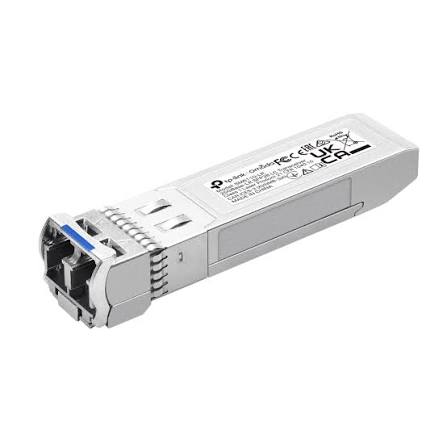
TP-Link SM6110-LR 25GBase-LR SFP28 LC Transceiver Price in Kenya
KSh 13,932.00
1 available
Continue shoppingTP-Link SM6110-LR 25GBase-LR SFP28 LC Transceiver Price in Kenya
The TP-Link Omada SM6110-LR is a high-performance 25GBase-LR SFP28 single-mode fibre transceiver designed for high-speed, long-distance network connections in data centres, enterprise networks, ISP infrastructure, campus networks and server environments.
It supports dual data rates of 25.78Gbps and 10.31Gbps, operates at a 1310nm wavelength, uses 9/125µm single-mode fibre, and can transmit data over distances of up to 10 kilometres. TP-Link describes it as a dual-rate 10G/25GBASE-LR SFP+/SFP28 transceiver.
The SM6110-LR uses a duplex LC/UPC connector, supports Digital Diagnostic Monitoring (DDM), complies with SFP28 MSA requirements, and is hot-swappable. TP-Link's current V1.20 datasheet also specifies low power consumption of no more than 1.2W.
TP-Link SM6110-LR Technical Specifications
| Specification | Details |
|---|---|
| Model | TP-Link Omada SM6110-LR |
| Product Type | 25GBase-LR SFP28 LC Transceiver |
| Form Factor | SFP28 / SFP+ dual-rate |
| Ethernet Standard | 10G/25GBASE-LR |
| Standards | IEEE 802.3ae, IEEE 802.3cc |
| Maximum Data Rate | 25.78Gbps |
| Secondary Data Rate | 10.31Gbps |
| Wavelength | 1310nm |
| Fibre Type | Single-Mode Fibre |
| Core Size | 9/125µm |
| Maximum Distance | Up to 10KM |
| Connector | Duplex LC/UPC |
| Fibre Strands Required | 2 |
| DDM | Yes |
| SFP28 MSA | Yes |
| SFF Support | SFF-8402, SFF-8431, SFF-8432, SFF-8472 |
| eCPRI / CPRI | Supported |
| Hot Swappable | Yes |
| Power Supply | 3.3V |
| Power Consumption | ≤1.2W |
| Laser Class | Class 1 |
| Maximum Laser Output | 1.66mW / 2.2dBm |
| Dimensions V1.20 | Approx. 57 × 13.9 × 11.72mm |
| Operating Temperature | 0°C to 70°C |
| Storage Temperature | -40°C to 85°C |
| Operating Humidity | 5%–85% RH non-condensing on current V1.20 datasheet |
| Certification | CE, FCC, RoHS |
| Typical Applications | Data centres, ISPs, enterprise networks, servers, campuses and backbone links |
TP-Link's current V1.20 datasheet confirms the 1310nm wavelength, 9/125µm single-mode fibre, 10km reach, dual 10.31/25.78Gbps data rate, duplex LC/UPC, DDM, SFP28 MSA and hot-swappable operation.
What Is the TP-Link SM6110-LR?
The SM6110-LR is an optical transceiver designed to convert a compatible:
25G SFP28 interface
into:
25 Gigabit Ethernet over single-mode fibre.
A typical installation is:
25G Switch
↓
SM6110-LR
↓
Duplex OS2 Single-Mode Fibre
↓
SM6110-LR
↓
25G Switch
The module can also operate at the lower 10.31Gbps rate when installed in compatible 10G equipment. TP-Link specifically describes it as supporting both 10G and 25G Ethernet.
What Does 25GBase-LR Mean?
The product name can be broken down as:
25G = 25 Gigabit Ethernet
BASE = Baseband Ethernet
LR = Long Reach
The LR designation indicates that the transceiver is designed for considerably longer fibre distances than a short-range multimode SR module.
The SM6110-LR operates over:
9/125µm single-mode fibre
at:
1310nm
and supports distances up to:
10KM.
25.78Gbps Data Rate
The maximum supported signalling rate is:
25.78Gbps
for 25 Gigabit Ethernet operation.
This provides considerably more bandwidth than:
1Gbps SFP
10Gbps SFP+
Standard Gigabit copper Ethernet
TP-Link also specifies:
10.31Gbps
as a supported secondary operating rate.
Dual-Rate 25G and 10G Support
One of the most important features of the SM6110-LR is its:
Dual Rate 25.78Gbps / 10.31Gbps support.
This means that, subject to the host device, the same module can operate with:
25G SFP28 equipment
or selected:
10G SFP+ equipment.
TP-Link specifically lists compatibility with 25G switches such as the SX6632YF and 10G switches such as SG3428X and SG3452X.
1310nm Wavelength
The SM6110-LR operates at:
1310nm
over single-mode fibre.
1310nm is commonly used in longer-range Ethernet applications because single-mode fibre provides low attenuation and supports kilometre-scale connections.
Single-Mode Fibre
The SM6110-LR is designed for:
9/125µm Single-Mode Fibre – SMF.
TP-Link specifies a maximum cable length of:
10 kilometres.
For modern installations, the typical fibre choice would be:
OS2 9/125µm single-mode fibre.
Up to 10KM Transmission Distance
The module supports transmission over distances of up to:
10KM
which is equal to approximately:
10,000 metres.
TP-Link specifies the same maximum distance for the module's supported 10G and 25G Ethernet operation over appropriate 9/125µm fibre.
Why 10KM Fibre Reach Matters
A 10km optical connection makes the SM6110-LR suitable for much more than short server-room connections.
Potential applications include:
Building-to-building links
Large campuses
ISP POP connections
Data-centre interconnection
Industrial sites
Enterprise fibre backbones
Government campuses
Hospital networks
University infrastructure
Duplex LC/UPC Connector
The SM6110-LR uses:
Duplex LC/UPC
connectivity.
This means that a standard connection uses two fibre strands:
Tx → Transmit
and:
Rx → Receive
A common patch cable would therefore be:
LC/UPC to LC/UPC Duplex OS2 Single-Mode Fibre Patch Cord.
How Many Fibre Strands Does SM6110-LR Need?
The module requires:
2 fibre strands
for a normal point-to-point optical connection.
One fibre carries data in one direction while the other carries traffic in the opposite direction.
This differs from BiDi transceivers, which can transmit and receive over a single fibre core.
Watch TP-Link SM6110-LR Video
https://youtu.be/ETTWg1jZYGI
The TP-Link SM6110-LR combines high bandwidth with long-distance single-mode fibre transmission. Its ability to operate at both 10G and 25G makes it useful for organizations that are migrating from existing 10Gbps infrastructure toward 25Gbps networking.
Unlike the SM6110-SR, which uses 850nm multimode fibre for short links, the LR version operates at 1310nm over 9/125µm single-mode fibre and supports distances up to 10km. This makes it better suited to building-to-building, campus, ISP and long enterprise backbone applications.
The transceiver also supports DDM, hot-swappable operation and 10G/25G SFP+/SFP28 MSA compatibility, while keeping power consumption to no more than approximately 1.2W.
Digital Diagnostic Monitoring – DDM
The SM6110-LR supports:
Digital Diagnostic Monitoring – DDM.
On compatible switches, DDM can provide diagnostic parameters such as:
Transmit optical power
Receive optical power
Module temperature
Supply voltage
Laser bias information
These measurements can assist technicians when diagnosing fibre problems.
Why DDM Is Important
Without DDM, a network administrator may only know whether the fibre link is:
Up
or:
Down.
With DDM, it may be possible to determine whether the problem relates to:
Low received optical power
Excessive fibre loss
Dirty LC connectors
Poor splices
Fibre bends
A degraded module
This can substantially simplify troubleshooting on critical 25G links.
SFF-8472 Support
TP-Link lists:
SFF-8472
among the SM6110-LR standards.
SFF-8472 is associated with diagnostic monitoring functionality in pluggable transceivers.
SFF-8431 Support
The module supports:
SFF-8431.
SFF-8432 Support
TP-Link also lists:
SFF-8432.
SFF-8402 Support
The module additionally supports:
SFF-8402.
eCPRI and CPRI Support
TP-Link's specification includes:
eCPRI
and:
CPRI.
These protocols are especially relevant to certain telecommunications and mobile-network transport applications.
SFP28 MSA Compatibility
The SM6110-LR supports:
SFP28 MSA
and TP-Link describes it as compatible with both 10G/25G SFP+/SFP28 MSA environments.
This defines standardized electrical and mechanical characteristics for the transceiver.
However, exact vendor compatibility should still be checked before deploying the module in large quantities.
Hot-Swappable Design
The SM6110-LR is:
Hot Swappable / Hot Pluggable.
This allows supported network equipment to accept transceiver replacement or installation without replacing or powering down the entire switch.
Always follow the equipment manufacturer's recommended transceiver procedure.
Automatic 10G / 25G Operation
TP-Link's installation documentation states that the transceiver can automatically configure itself according to the host port speed:
25Gbps port → module operates at 25Gbps
10Gbps port → module changes to 10Gbps
on supported equipment.
This makes the module particularly useful during phased network upgrades.
3.3V Power Supply
The SM6110-LR receives:
3.3V
from the host SFP28/SFP+ interface.
No separate external power adapter is required.
Low Power Consumption
TP-Link specifies power consumption of:
no more than 1.2W.
Low transceiver power consumption is beneficial in high-density switches because it reduces:
Overall power draw
Heat generation
Cooling demand
Class 1 Laser
The current SM6110-LR V1.20 datasheet classifies the module as:
Class 1 laser equipment.
TP-Link specifies maximum laser output of approximately:
1.66mW / 2.2dBm.
Even with a Class 1 designation, never look directly into an active optical transceiver or connected fibre.
SM6110-LR Switch Compatibility
TP-Link specifically gives compatibility examples including:
25G switch: SX6632YF
and:
10G switches: SG3428X and SG3452X.
Compatibility with other switches should be checked against the exact model and firmware.
SM6110-LR for 25G Switch-to-Switch Links
A typical deployment is:
Core Switch
↓
25G SFP28 Port
↓
SM6110-LR
↓
OS2 Single-Mode Fibre
↓
SM6110-LR
↓
Distribution Switch
This creates a 25Gbps long-distance fibre backbone.
SM6110-LR for Data Centres
The module can be used in data-centre environments for longer fibre runs.
Applications include:
Core-to-distribution links
Data-centre building interconnection
High-performance server networks
Storage networks
Virtualization environments
Disaster recovery links
SM6110-LR for Servers
A server equipped with a compatible:
25G SFP28 network interface card
can connect directly to a switch through SM6110-LR optics.
Example:
25G Server NIC → SM6110-LR → OS2 Fibre → SM6110-LR → 25G Switch
SM6110-LR for ISP Networks
ISPs can use the module for high-capacity optical links such as:
POP-to-POP connections
Aggregation
Core-to-distribution links
Enterprise customer connections
Data-centre interconnection
Metro fibre infrastructure
SM6110-LR for Campus Networks
The 10km reach makes the SM6110-LR suitable for connecting buildings across large sites including:
Universities
Hospitals
Industrial facilities
Government compounds
Business parks
Large schools
Research centres
SM6110-LR for CCTV Networks
Large IP surveillance networks can generate substantial aggregate bandwidth.
A 25G backbone can carry traffic generated by:
Hundreds of IP cameras
Multiple NVRs
Video management servers
AI analytics systems
4K and 8K surveillance cameras
across long single-mode fibre routes.
SM6110-LR for Enterprise Networks
Large organizations can use the SM6110-LR for:
Core backbone upgrades
Building-to-building connectivity
Data centre links
Distribution uplinks
Server rooms
Disaster recovery sites
SM6110-LR vs SM6110-SR
| Feature | SM6110-LR | SM6110-SR |
|---|---|---|
| Maximum Speed | 25.78Gbps | 25.78Gbps |
| Secondary Speed | 10.31Gbps | 10.31Gbps |
| Form Factor | SFP28 | SFP28 |
| Wavelength | 1310nm | 850nm |
| Fibre Type | Single Mode | Multimode |
| Connector | LC Duplex | LC Duplex |
| 25G Reach | Up to 10KM | Up to 100m OM4 |
| Best Use | Long-distance 25G | Short-range 25G |
The key difference is therefore:
SM6110-SR = short-range multimode
while:
SM6110-LR = long-range single-mode.
SM6110-LR vs SM5110-LR
| Feature | SM6110-LR | SM5110-LR |
|---|---|---|
| Maximum Speed | 25Gbps | 10Gbps |
| Form Factor | SFP28 | SFP+ |
| Wavelength | 1310nm | 1310nm |
| Fibre | Single Mode | Single Mode |
| Connector | LC Duplex | LC Duplex |
| Maximum Reach | 10KM | 10KM |
| Primary Advantage | Higher bandwidth | Lower-cost 10G |
The SM6110-LR therefore provides a logical upgrade when a 10G LR link no longer provides sufficient capacity.
SM6110-LR vs 25G DAC
| Feature | SM6110-LR | 25G DAC |
|---|---|---|
| Speed | 25Gbps | 25Gbps |
| Medium | Single-mode fibre | Copper twinax |
| Connector | LC Duplex | Fixed SFP28 ends |
| Reach | Up to 10KM | Very short |
| Electrical Isolation | Yes | No |
| Best Use | Long-distance fibre | Same-rack connections |
A DAC is normally preferable for very short rack connections.
The SM6110-LR is better when the connection spans:
Rooms
Floors
Buildings
Campuses
Kilometres
SM6110-LR vs 25G BiDi
A conventional SM6110-LR connection requires:
2 fibre strands.
A 25G BiDi solution typically requires:
1 fibre strand
and uses complementary transmit/receive wavelengths.
If fibre cores are scarce, an appropriate BiDi solution may be more efficient.
SFP28 vs SFP+
The SM6110-LR is primarily:
SFP28
for 25Gbps networking.
SFP28 retains a compact form factor similar to SFP+ while supporting a higher signalling rate.
This particular module also supports:
10.31Gbps
which allows operation in selected SFP+ equipment.
Can SM6110-LR Work in a 25G SFP28 Port?
Yes.
That is its primary intended application.
Can SM6110-LR Work in a 10G SFP+ Port?
Yes, on supported equipment.
TP-Link lists compatibility with selected 10G switches and describes automatic speed adaptation between 10Gbps and 25Gbps host ports.
Can SM6110-LR Work in a 1G SFP Port?
No.
Use an appropriate Gigabit SFP transceiver.
Can It Work in a 100G QSFP28 Port?
Not directly.
QSFP28 is a different physical form factor.
Some networking equipment supports breakout configurations, but this depends on the specific switch and breakout architecture.
Can SM6110-LR Use Multimode Fibre?
No.
It is designed for:
9/125µm single-mode fibre.
For multimode fibre, use the SM6110-SR.
OS2 Fibre for SM6110-LR
For new installations, OS2 single-mode fibre is generally the appropriate cable type.
A common patch cord is:
LC/UPC-LC/UPC Duplex OS2 Patch Cord.
Can SM6110-LR Work Over 1KM?
Yes.
Can It Work Over 5KM?
Yes.
Can It Work Over 10KM?
Yes, subject to the optical link remaining within specification.
TP-Link publishes a maximum cable distance of:
10KM.
Can SM6110-LR Work Over 20KM?
Not according to its manufacturer rating.
For a 20km network, use a suitably rated longer-reach 25G transceiver.
Can SM6110-LR Work Over 40KM?
No, not as specified.
Choose an appropriate 25G ER or other long-distance optical solution.
Optical Link Budget
A manufacturer's 10km rating does not mean every 10km cable installation will automatically work.
Total optical loss includes:
Cable attenuation + connectors + fusion splices + adapters + patch cords + bends + engineering margin
A poorly installed shorter link can sometimes produce more optical loss than a well-installed longer route.
Cleaning LC Connectors
Fibre connector cleanliness is extremely important at 25Gbps.
Dirty LC connectors can cause:
Excessive optical loss
Low received power
Packet errors
Link instability
Failure to establish a 25G connection
Always clean and inspect fibre connectors where practical before connection.
Testing SM6110-LR Fibre
Optical Power Meter
An Optical Power Meter can help determine whether received optical power is within the expected range.
OTDR
An OTDR can help identify:
Cable length
Fibre breaks
High-loss splices
Reflective connectors
Bends
Unusual attenuation
VFL
A Visual Fault Locator can assist with:
Fibre identification
Continuity checks
Visible breaks
A VFL does not certify a fibre route for 25Gbps performance.
25G Fibre Testing
For critical 25G installations, fibre should ideally be tested before commissioning.
Verification may include:
Connector inspection
Optical loss measurement
OTDR testing
End-to-end link testing
DDM checks after installation
Operating Temperature
TP-Link's current V1.20 datasheet specifies:
0°C to 70°C.
Storage Temperature
The storage range is:
-40°C to 85°C.
Operating Humidity
The current V1.20 datasheet lists:
5% to 85% RH non-condensing.
Some older/regional product information lists slightly different humidity ranges, so use the documentation for the exact hardware revision when environmental specifications are critical.
SM6110-LR Dimensions
The current V1.20 datasheet specifies approximately:
57 × 13.9 × 11.72mm.
Earlier V1 product information lists approximately:
57 × 14 × 12mm, indicating a small hardware-revision difference.
Package Contents
TP-Link lists:
1 × SM6110-LR
Installation Guide
A normal point-to-point optical link will typically require a compatible module at both ends.
TP-Link SM6110-LR Price in Kenya
The TP-Link SM6110-LR price in Kenya varies according to supplier, hardware revision, VAT, warranty, stock and quantity.
A current Senetic Kenya listing shows approximately:
KES 12,010.54 excluding VAT
or:
KES 13,932.23 including VAT.
The same current listing identifies the module as:
SM6110-LR
with:
1310nm wavelength
and:
10,000m maximum transmission distance.
Approximate TP-Link SM6110-LR Price in Kenya
| Market Reference | Approx. Price |
|---|---|
| Senetic Kenya – Net | KES 12,011 |
| Senetic Kenya – Gross | KES 13,932 |
These are third-party market references and not fixed Fiber Optics Kenya selling prices.
Contact Fiber Optics Kenya for the current SM6110-LR price and stock availability.
SM6110-LR vs SM6110-SR Price in Kenya
For comparison, the same current Kenyan supplier lists:
| Module | Approx. Net | Approx. Gross |
|---|---|---|
| SM6110-SR | KES 6,990 | KES 8,109 |
| SM6110-LR | KES 12,011 | KES 13,932 |
The LR version costs more because it is designed for single-mode 10km-class transmission, whereas the SR model is intended for short-range multimode connections.
What Affects TP-Link SM6110-LR Price in Kenya?
The final price can vary based on:
Stock availability
Hardware revision
VAT
Warranty
Import costs
Supplier
Quantity
Enterprise pricing
ISP bulk orders
How to Choose the Correct 25G Transceiver
Before buying the SM6110-LR, confirm:
Your device has a compatible SFP28 or supported SFP+ port.
You require 10G or 25G Ethernet.
The installed cable is 9/125µm single-mode fibre.
Your distance is within approximately 10km.
You have two fibre cores available.
Your connectors are compatible with LC/UPC duplex.
Your host switch accepts the TP-Link module.
The optical link budget is within specification.
The fibre is properly cleaned and tested.
Recommended Accessories
| Accessory | Application |
|---|---|
| TP-Link SM6110-LR | 25G single-mode 10km fibre |
| TP-Link SM6110-SR | Short-range 25G multimode fibre |
| LC-LC Duplex OS2 Patch Cord | SM6110-LR connectivity |
| OS2 Single-Mode Fibre Cable | Long-distance backbone |
| LC Duplex Adapters | Fibre interconnection |
| Single-Mode ODF | Structured fibre termination |
| SFP28 Network Switch | 25G switching |
| 25G Server NIC | Server connectivity |
| 25G DAC Cable | Short direct connections |
| Optical Power Meter | Optical signal testing |
| OTDR | Fibre fault diagnosis |
| VFL | Fibre identification |
| Fibre Cleaning Kit | LC connector maintenance |
Frequently Asked Questions About TP-Link SM6110-LR
What is the TP-Link SM6110-LR?
It is a 25GBase-LR SFP28 LC transceiver designed for 10G/25G Ethernet over single-mode fibre up to 10km.
What is its maximum speed?
25.78Gbps.
Does SM6110-LR support 10Gbps?
Yes. TP-Link specifies 10.31Gbps as a supported secondary data rate.
Is SM6110-LR SFP28?
Yes.
Is it compatible with SFP+?
TP-Link describes it as a single-mode SFP+/SFP28 transceiver and lists selected 10G switch compatibility.
What wavelength does it use?
1310nm.
Is it single mode?
Yes.
What fibre size does it use?
9/125µm single-mode fibre.
Can I use OS2 fibre?
Yes. OS2 9/125µm single-mode fibre is an appropriate choice.
Can I use multimode fibre?
No. Use SM6110-SR for appropriate multimode connections.
What is its maximum distance?
10KM.
Can it work over 1KM?
Yes.
Can it work over 5KM?
Yes.
Can it work over 10KM?
Yes, subject to the total optical link budget.
Can it work over 20KM?
Not according to its 10km manufacturer rating.
Can it work over 40KM?
No. Use an appropriately rated long-distance 25G optic.
What connector does it use?
Duplex LC/UPC.
Does it need two fibre strands?
Yes.
Is SM6110-LR BiDi?
No.
Can it work over one fibre strand?
Not in its standard configuration. A suitable 25G BiDi pair would be needed for single-fibre transmission.
Does it support DDM?
Yes.
What is DDM?
Digital Diagnostic Monitoring.
Can DDM show received optical power?
On compatible equipment, yes.
Does it support SFF-8472?
Yes.
Does it support SFF-8431?
Yes.
Does it support SFF-8432?
Yes.
Does it support eCPRI?
Yes.
Does it support CPRI?
Yes.
Is it hot-swappable?
Yes.
What voltage does it use?
3.3V.
How much power does it consume?
TP-Link specifies no more than approximately 1.2W.
Is it a Class 1 laser?
Yes.
What is the maximum laser output?
The current V1.20 datasheet lists 1.66mW / 2.2dBm.
Can SM6110-LR connect two switches?
Yes.
Can it connect two buildings?
Yes, provided the fibre distance and optical budget are within specification.
Can it connect servers?
Yes, with compatible SFP28 interfaces.
Is it suitable for data centres?
Yes.
Is it suitable for ISPs?
Yes.
Is it suitable for enterprise networks?
Yes.
Is it suitable for campus networks?
Yes.
Is it suitable for CCTV backbone networks?
Yes.
Does it work with SX6632YF?
TP-Link specifically identifies SX6632YF as a compatible 25G switch example.
Does it work with SG3428X?
TP-Link lists SG3428X as a compatible 10G switch example.
Does it work with SG3452X?
Yes. TP-Link also lists SG3452X.
Does it automatically change between 10G and 25G?
TP-Link's installation guide states that supported modules automatically operate at 25Gbps in a 25Gbps port and 10Gbps in a 10Gbps port.
What is the difference between SM6110-LR and SM6110-SR?
SM6110-LR uses 1310nm single-mode fibre for up to 10km, while SM6110-SR uses 850nm multimode fibre for short-range 25G links.
What is the difference between SM6110-LR and SM5110-LR?
SM6110-LR supports up to 25Gbps, while SM5110-LR is a 10Gbps SFP+ module.
Is SM6110-LR faster than a 10G SFP+?
Yes. Its maximum supported signalling rate is 25.78Gbps.
Can it work in a normal 1G SFP port?
No.
Can it work in a 10G SFP+ port?
Yes, on supported equipment.
Can it work in a 25G SFP28 port?
Yes.
Can it work in a QSFP28 port?
Not directly.
Can I use LC-LC OS2 patch cords?
Yes.
Should I clean the LC connectors?
Yes.
Can an Optical Power Meter test the link?
Yes.
Can an OTDR test the fibre?
Yes.
Can a VFL test the fibre?
Yes for basic identification and continuity, but it does not certify 25G Ethernet performance.
What is the operating temperature?
0°C to 70°C.
What is the storage temperature?
-40°C to 85°C.
What are the dimensions?
The current V1.20 datasheet specifies approximately 57 × 13.9 × 11.72mm.
What comes in the package?
The SM6110-LR transceiver and installation guide.
Do I normally need two SM6110-LR modules?
Yes, a standard duplex point-to-point connection normally requires a compatible transceiver at each endpoint.
What is the TP-Link SM6110-LR price in Kenya?
A current Kenyan listing is approximately KES 12,010.54 excluding VAT or KES 13,932.23 including VAT.
Is that Fiber Optics Kenya's exact price?
No. It is a third-party Kenyan market reference. Contact Fiber Optics Kenya for the current selling price.
Do you supply SM6110-SR?
Yes, subject to availability.
Do you supply OS2 single-mode fibre?
Yes.
Do you supply LC-LC duplex OS2 patch cords?
Yes.
Do you supply 25G SFP28 modules?
Yes, subject to stock.
Do you supply 25G DAC cables?
Yes, subject to availability.
Do you supply 10G SFP+ modules?
Yes.
Do you supply Optical Power Meters?
Yes.
Do you supply OTDRs?
Yes.
Can ISPs and enterprises order in bulk?
Yes. Bulk supply is suitable for ISPs, enterprises, data centres, CCTV integrators and network contractors.
Do you deliver outside Nairobi?
Yes. Fiber Optics Kenya supplies fibre optic and networking equipment throughout Kenya.
Why Buy TP-Link SM6110-LR from Fiber Optics Kenya?
| Fiber Optics Kenya Solution | Application |
|---|---|
| TP-Link SM6110-LR | 25G single-mode links up to 10km |
| TP-Link SM6110-SR | Short-range multimode 25G |
| LC-LC Duplex OS2 Patch Cords | SM6110-LR connectivity |
| OS2 Single-Mode Fibre | Long-distance backbone |
| 25G SFP28 Modules | High-capacity networking |
| 10G SFP+ Modules | 10 Gigabit networking |
| 25G DAC Cables | Short SFP28 connections |
| LC Duplex Adapters | Fibre interconnection |
| ODFs & Patch Panels | Structured fibre termination |
| 25G Network Switches | High-capacity switching |
| 25G Server NICs | Server connectivity |
| Optical Power Meters | Optical signal testing |
| OTDRs | Fibre fault diagnosis |
| VFLs | Fibre identification |
| Fibre Cleaning Equipment | LC connector maintenance |
| Bulk Supply | ISP, data-centre and enterprise projects |
| Nationwide Delivery | Supply throughout Kenya |
Contact Fiber Optics Kenya
Fiber Optics Kenya
Lyric House, 7th Floor Room S9
Kimathi Street, Nairobi
Phone: +254 704 991 492
Email: info@fibreopticskenya.co.ke
The TP-Link Omada SM6110-LR 25GBase-LR SFP28 LC Transceiver is designed for high-capacity, long-distance optical networking. It operates at 1310nm, supports dual 25.78Gbps and 10.31Gbps rates, uses 9/125µm single-mode fibre with duplex LC/UPC connectors, and supports full-duplex Ethernet links of up to 10 kilometres.
The module also supports DDM, SFP28 MSA, hot-swappable operation, eCPRI and CPRI, while consuming no more than approximately 1.2W. Its dual-rate design makes it particularly useful for networks migrating from 10G infrastructure toward 25G.
A current Kenyan market reference places the SM6110-LR at approximately KES 12,011 excluding VAT or KES 13,932 including VAT, although pricing and stock can change.
Contact Fiber Optics Kenya for the current TP-Link SM6110-LR price in Kenya, 25G SFP28 transceivers, LC-LC OS2 patch cords, single-mode fibre, 25G DAC cables, optical testing equipment, bulk orders and nationwide delivery.