SFP Modules Price in Kenya
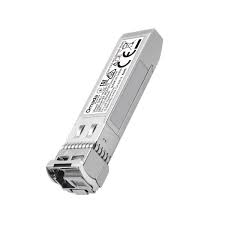
TP-Link SM5110LSB-10 10GBase-BX WDM Bi-Directional SFP+ Module Price in Kenya
KSh 6,023.00
1 available
Continue shoppingTP-Link SM5110LSB-10 10GBase-BX WDM Bi-Directional SFP+ Module Price in Kenya

The TP-Link Omada SM5110LSB-10 is a 10GBase-BX WDM Bi-Directional SFP+ optical transceiver designed to deliver high-speed 10 Gigabit Ethernet over a single strand of single-mode fibre.
The module operates at 10.3125Gbps, transmits at 1270nm, receives at 1330nm, and supports transmission distances of up to 10 kilometres over 9/125µm single-mode fibre. It uses a simplex LC/UPC connector, allowing both transmit and receive traffic to travel over one fibre core.
The SM5110LSB-10 is designed to work with the complementary SM5110LSA-10, which uses the opposite wavelength arrangement—Tx1330nm/Rx1270nm. TP-Link specifically recommends using the SM5110LSA-10 and SM5110LSB-10 together.
TP-Link SM5110LSB-10 Specifications
| Specification | Details |
|---|---|
| Model | TP-Link Omada SM5110LSB-10 |
| Module Type | 10G WDM Bi-Directional SFP+ |
| Ethernet Standard | 10GBase-BX / 10GBase-BR |
| Standards | IEEE 802.3ae |
| Form Factor | SFP+ |
| Data Rate | 10.3125Gbps |
| Ethernet Class | 10 Gigabit |
| Tx Wavelength | 1270nm |
| Rx Wavelength | 1330nm |
| Fibre Type | Single Mode |
| Core Size | 9/125µm |
| Maximum Distance | Up to 10KM |
| Connector | Simplex LC/UPC |
| Fibre Strands Required | 1 |
| Technology | WDM / BiDi |
| Complementary Module | SM5110LSA-10 |
| Transmitter Type | DFB |
| Receiver Type | PIN-TIA |
| Transmitter Power | -8.2 to -0.5dBm |
| Receiver Sensitivity | < -14.4dBm @ 10.3125Gbps |
| Receiver Overload | > 0.5dBm @ 10.3125Gbps |
| Extinction Ratio | > 3.5dB @ 10.3125Gbps |
| DDM | Yes |
| SFF Standards | SFF-8431, SFF-8432, SFF-8472 |
| Hot Swappable | Yes |
| Power Supply | 3.3V |
| Power Consumption | ≤1W |
| Dimensions | Approx. 57 × 14 × 12mm |
| Operating Temperature | 0°C to 70°C |
| Storage Temperature | -40°C to 85°C |
| Compliance | CE, FCC, RoHS |
TP-Link's official documentation confirms the 10.3125Gbps data rate, Tx1270nm/Rx1330nm wavelengths, 10km reach, simplex LC/UPC connector, DFB transmitter, PIN-TIA receiver, DDM and ≤1W power consumption.
What Is the TP-Link SM5110LSB-10?
The SM5110LSB-10 is a 10 Gigabit single-fibre SFP+ transceiver.
It is designed for situations where you need a 10Gbps optical connection but want to use only one fibre core instead of the two cores required by conventional duplex 10G optics.
A typical connection is:
10G Switch
↓
SM5110LSA-10
↓
Single OS2 Fibre Strand
↓
SM5110LSB-10
↓
10G Switch
This gives full bidirectional communication over a single optical fibre.
What Does 10GBase-BX Mean?
10GBase-BX refers to a 10 Gigabit Ethernet architecture that provides bidirectional communication over a single fibre strand using different wavelengths.
For the SM5110LSB-10:
Transmit → 1270nm
Receive ← 1330nm
For the complementary SM5110LSA-10:
Transmit → 1330nm
Receive ← 1270nm
The wavelength arrangement allows both directions of traffic to use the same fibre simultaneously.
What Does WDM Mean?
WDM stands for:
Wavelength Division Multiplexing
WDM allows multiple optical wavelengths to travel over the same fibre.
In this case:
1270nm carries traffic in one direction.
1330nm carries traffic in the opposite direction.
This is what makes single-fibre 10G communication possible.
What Does Bi-Directional Mean?
Bi-Directional, commonly shortened to BiDi, means the module can transmit and receive data through the same fibre strand.
A conventional duplex optical connection usually needs:
Fibre 1 → Tx
Fibre 2 → Rx
A BiDi connection uses:
Fibre 1 → Tx + Rx
This can effectively double the usable capacity of an existing fibre cable in appropriate point-to-point applications.
10.3125Gbps Data Rate
TP-Link specifies a supported data rate of:
10.3125Gbps.
This is the optical signalling rate associated with the module's 10 Gigabit Ethernet operation.
The module is suitable for high-bandwidth connections such as:
Core network uplinks
ISP aggregation
Enterprise backbones
Data centre links
Campus networks
CCTV backbones
Building-to-building links
1270nm Transmit Wavelength
The SM5110LSB-10 transmits optical data at:
1270nm
The SM5110LSA-10 at the opposite end receives at 1270nm.
1330nm Receive Wavelength
The SM5110LSB-10 receives optical data at:
1330nm
The complementary SM5110LSA-10 transmits at 1330nm.
SM5110LSB-10 and SM5110LSA-10 Pairing
The correct pair is:
SM5110LSA-10 ↔ SM5110LSB-10
| Module | Tx | Rx | Distance |
|---|---|---|---|
| SM5110LSA-10 | 1330nm | 1270nm | 10KM |
| SM5110LSB-10 | 1270nm | 1330nm | 10KM |
TP-Link explicitly instructs users to pair these two modules for reliable connectivity.
Can Two SM5110LSB-10 Modules Work Together?
Normally, no.
Two B modules would both:
Transmit at 1270nm
and:
Receive at 1330nm
Therefore, their wavelengths would not complement each other.
You need:
LSA-10 + LSB-10
rather than:
LSB-10 + LSB-10
Up to 10KM Transmission Distance
The SM5110LSB-10 supports fibre links of up to:
10 kilometres
over:
9/125µm single-mode fibre.
This makes it suitable for both local and metropolitan-scale fibre connections where a 10km optical budget is sufficient.
10KM in Metres
10 kilometres is:
10,000 metres
This is significantly longer than:
Copper Ethernet – typically 100m
10GBASE-SR multimode – hundreds of metres
Many local building fibre connections
Single-Mode Fibre
The SM5110LSB-10 is designed for:
9/125µm Single-Mode Fibre
TP-Link specifically lists 9µm/125µm SMF in its official specifications.
For new installations, OS2 single-mode fibre is commonly appropriate.
One Fibre Strand
One of the biggest advantages of the SM5110LSB-10 is that it uses:
1 fibre core
for full-duplex 10Gbps communication.
TP-Link highlights this single-fibre WDM design as a cost-saving feature.
Simplex LC/UPC Connector
The SM5110LSB-10 uses:
Simplex LC/UPC
according to TP-Link's detailed datasheet.
A typical connection therefore uses:
LC/UPC to LC/UPC Simplex OS2 Patch Cord
depending on the termination of the installed fibre network.
Watch TP-Link SM5110LSB-10 Video
https://youtu.be/pHTFNOi3jvA
The TP-Link SM5110LSB-10 provides a practical solution for upgrading existing single-mode fibre infrastructure to 10 Gigabit Ethernet while preserving fibre cores. Instead of consuming two fibres for each 10G connection, the module uses WDM technology to transmit and receive through one strand.
When paired with the SM5110LSA-10, the modules use complementary 1270nm and 1330nm wavelengths to create a full bidirectional 10G link. This architecture is particularly valuable where fibre capacity is limited or where installing additional fibre would be expensive.
The module also provides DDM, hot-swappable operation, SFP+ standards compatibility and up to 10km transmission, making it suitable for enterprise, ISP, data-centre and campus fibre networks.
DFB Transmitter
TP-Link specifies a:
DFB – Distributed Feedback Laser
for the SM5110LSB-10 transmitter.
DFB lasers are commonly used in higher-performance single-mode optical transceivers because they provide controlled spectral characteristics suitable for longer-distance transmission.
PIN-TIA Receiver
The module uses a:
PIN-TIA receiver
according to TP-Link's detailed datasheet.
The receiver converts the incoming optical signal into an electrical signal that can be processed by the network equipment.
Transmitter Power
TP-Link specifies transmitter power of approximately:
-8.2dBm to -0.5dBm.
This range is important when calculating the optical link budget.
Receiver Sensitivity
The specified receiver sensitivity is:
< -14.4dBm at 10.3125Gbps.
The actual received optical power should remain within the transceiver's operating limits.
Receiver Overload
TP-Link specifies receiver overload at:
> 0.5dBm at 10.3125Gbps.
This matters on very short or unusually low-loss fibre links, where excessive received optical power can potentially cause problems.
Optical Link Budget
The 10km rating should not be treated as a guarantee that every 10km fibre route will work regardless of installation quality.
Total optical loss includes:
Fibre attenuation + connectors + adapters + fusion splices + patch cords + bends + engineering margin
The received signal must remain within the optical specifications of the transceiver.
Digital Diagnostic Monitoring – DDM
The SM5110LSB-10 supports:
Digital Diagnostic Monitoring – DDM.
On compatible network equipment, DDM can provide information such as:
Transmit optical power
Receive optical power
Module temperature
Supply voltage
Laser bias current
SFF-8472 Support
TP-Link lists:
SFF-8472
among the module's supported standards.
This is associated with digital diagnostic monitoring functionality.
SFF-8431 and SFF-8432
The SM5110LSB-10 also supports:
SFF-8431
and:
SFF-8432.
These specifications relate to the SFP+ electrical and mechanical interface.
Hot-Swappable Design
The SM5110LSB-10 is:
Hot Swappable
allowing supported network equipment to accept module installation or replacement without replacing the entire switch.
Power Consumption
TP-Link's detailed datasheet specifies maximum power consumption of:
≤1W.
This is useful when calculating the total thermal and power requirements of switches populated with multiple SFP+ modules.
3.3V Power Supply
The module operates from:
3.3V
supplied through the SFP+ interface.
No separate external power adapter is required.
TP-Link SM5110LSB-10 Switch Compatibility
TP-Link states that the module is compatible with switches containing suitable 10G ports and specifically mentions examples such as:
SG3428X
and:
SG3452X.
Compatibility with the exact switch model and firmware should still be verified before large deployments.
SM5110LSB-10 for Switch-to-Switch Connections
A common deployment is:
Core Switch
↓
SM5110LSA-10
↓
Single OS2 Fibre
↓
SM5110LSB-10
↓
Distribution Switch
This provides a 10G optical backbone while consuming only one fibre core.
SM5110LSB-10 for ISP Networks
The module can be particularly useful to ISPs because fibre cores are valuable infrastructure.
Potential applications include:
POP-to-POP links
Distribution networks
Enterprise customer links
Aggregation
Metro fibre
Building connectivity
Network expansion
SM5110LSB-10 for Data Centres
Within data-centre environments, BiDi optics can help preserve existing single-mode fibre capacity.
Applications can include:
Building-to-building data-centre links
Distribution connections
Core uplinks
Remote equipment rooms
Disaster recovery infrastructure
For very short rack-to-rack links, SR optics or DAC cables may be more economical.
SM5110LSB-10 for Campus Networks
The 10km reach makes the module suitable for large campuses such as:
Universities
Hospitals
Industrial sites
Government compounds
Business parks
Large schools
Research institutions
SM5110LSB-10 for CCTV Networks
Large CCTV systems can generate significant aggregate traffic.
A 10G BiDi backbone can carry traffic from multiple:
PoE switches
IP cameras
NVRs
Recording servers
Monitoring centres
over a single fibre core.
SM5110LSB-10 vs SM5110LSA-10
| Feature | SM5110LSB-10 | SM5110LSA-10 |
|---|---|---|
| Speed | 10.3125Gbps | 10.3125Gbps |
| Technology | WDM BiDi | WDM BiDi |
| Fibre | Single Mode | Single Mode |
| Fibre Cores | 1 | 1 |
| Connector | Simplex LC/UPC | Simplex LC/UPC |
| Tx | 1270nm | 1330nm |
| Rx | 1330nm | 1270nm |
| Maximum Distance | 10KM | 10KM |
| DDM | Yes | Yes |
| Hot Swappable | Yes | Yes |
The two models are complementary and should be used together.
SM5110LSB-10 vs TL-SM5110-LR
| Feature | SM5110LSB-10 | TL-SM5110-LR |
|---|---|---|
| Speed | 10Gbps | 10Gbps |
| Fibre | Single Mode | Single Mode |
| Maximum Reach | 10KM | 10KM |
| Technology | WDM BiDi | Conventional Duplex |
| Fibre Cores | 1 | 2 |
| Connector | LC Simplex | LC Duplex |
| Wavelength | Tx1270/Rx1330 | 1310nm |
| Pair Requirement | A/B complementary pair | Standard LR pair |
| Main Advantage | Saves fibre cores | Standard 10G LR architecture |
SM5110LSB-10 vs TL-SM5110-SR
| Feature | SM5110LSB-10 | TL-SM5110-SR |
|---|---|---|
| Speed | 10Gbps | 10Gbps |
| Fibre | Single Mode | Multimode |
| Technology | BiDi | Duplex |
| Fibre Cores | 1 | 2 |
| Wavelength | 1270/1330nm | 850nm |
| Reach | 10KM | Up to 300m OM3 |
| Best Use | Long single-fibre links | Short multimode links |
SM5110LSB-10 vs Gigabit BiDi SFP
| Feature | SM5110LSB-10 | Gigabit BiDi SFP |
|---|---|---|
| Speed | 10Gbps | 1Gbps |
| Form Factor | SFP+ | SFP |
| Single Fibre | Yes | Yes |
| Technology | WDM BiDi | WDM BiDi |
| Typical Use | High-capacity backbone | Standard Gigabit link |
The SM5110LSB-10 provides approximately ten times the nominal Ethernet bandwidth of a 1Gbps BiDi SFP link.
SM5110LSB-10 vs 10G RJ45 SFP+
| Feature | SM5110LSB-10 | 10G RJ45 SFP+ |
|---|---|---|
| Media | Fibre | Copper |
| Connector | LC Simplex | RJ45 |
| Distance | Up to 10KM | Short copper links |
| EMI Immunity | Excellent | Lower |
| Electrical Isolation | Yes | No |
| Best Use | Fibre backbone | Local copper Ethernet |
Fibre Core Savings
Consider an existing 12-core single-mode fibre cable.
With conventional duplex optics:
12 cores ÷ 2 = 6 links
With single-fibre BiDi optics:
12 cores = potentially 12 point-to-point links
depending on network design.
This is one of the biggest reasons to deploy WDM BiDi modules.
Can SM5110LSB-10 Work Over 1KM?
Yes, provided the optical power remains within the specified range.
Can It Work Over 5KM?
Yes, subject to optical link loss.
Can It Work Over 10KM?
Yes. TP-Link specifies a maximum cable length of:
10KM.
Can It Work Over 20KM?
No. It is not specified as a 20km module.
For a 20km route, select a 10G BiDi module specifically rated for that distance.
Can It Work Over Multimode Fibre?
It is designed for:
9/125µm single-mode fibre.
Do not design the link around multimode fibre.
OS2 Fibre with SM5110LSB-10
For modern installations, OS2 single-mode fibre is an appropriate choice.
A typical connection can use:
LC/UPC-LC/UPC Simplex OS2 Patch Cord
between the SFP+ and fibre termination.
Fibre Connector Cleaning
LC connectors should be cleaned before connection.
Dirty connectors can cause:
Excessive attenuation
Low received power
Packet errors
Unstable links
Complete loss of connectivity
Testing SM5110LSB-10 Fibre Links
Optical Power Meter
An Optical Power Meter can measure the received optical signal and help determine whether it falls within the module's acceptable range.
OTDR
An OTDR can help identify:
Fibre distance
Fibre breaks
Bad fusion splices
High-loss connectors
Macrobends
Reflective events
VFL
A Visual Fault Locator can assist with fibre identification and basic continuity checks.
Operating Temperature
The SM5110LSB-10 operates between:
0°C and 70°C.
Storage Temperature
TP-Link specifies:
-40°C to 85°C
for storage.
Operating Humidity
The operating humidity specification is:
10% to 90% RH, non-condensing.
Dimensions
The SM5110LSB-10 measures approximately:
57 × 14 × 12mm.
Package Contents
TP-Link lists:
1 × SM5110LSB-10
Installation Guide
The complementary SM5110LSA-10 is therefore not automatically included and should be ordered separately unless a supplier explicitly sells them as a pair.
TP-Link SM5110LSB-10 Price in Kenya
The TP-Link SM5110LSB-10 price in Kenya varies according to supplier, VAT, stock availability, warranty and quantity.
A current Kenyan market listing shows approximately:
KES 5,200.60 excluding VAT
or:
KES 6,032.70 including VAT.
Another current category listing from the same Kenyan supplier shows approximately:
KES 5,192.77 excluding VAT
or:
KES 6,023.61 including VAT.
Approximate SM5110LSB-10 Price in Kenya
| Market Reference | Approx. Price |
|---|---|
| Net Price | KES 5,193–5,201 |
| VAT-Inclusive Price | KES 6,024–6,033 |
These are third-party market references and not fixed Fiber Optics Kenya prices. Prices and stock can change.
Contact Fiber Optics Kenya for the current TP-Link SM5110LSB-10 price and availability.
Is SM5110LSA-10 Included?
Normally, no.
The official package contents specify the SM5110LSB-10 module and installation guide.
For a complete point-to-point BiDi link, you normally need:
1 × SM5110LSA-10
and:
1 × SM5110LSB-10
How to Choose the Correct SM5110LSB-10
Before buying, confirm:
Your equipment has a compatible 10G SFP+ port.
You require 10 Gigabit Ethernet.
The installed fibre is 9/125µm single mode.
You want to use one fibre core.
The route is within approximately 10km.
The opposite end uses SM5110LSA-10.
The fibre termination is compatible with LC/UPC simplex.
The optical link budget is within specification.
Your switch supports the transceiver.
Recommended Accessories
| Accessory | Application |
|---|---|
| SM5110LSB-10 | Tx1270/Rx1330 10G BiDi endpoint |
| SM5110LSA-10 | Complementary Tx1330/Rx1270 endpoint |
| LSA-10 + LSB-10 Pair | Complete 10km 10G BiDi link |
| LC-LC Simplex OS2 Patch Cord | Single-fibre connectivity |
| OS2 Single-Mode Fibre | Optical backbone |
| LC/UPC Adapters | Fibre interconnection |
| Single-Mode ODF | Fibre termination |
| 10G SFP+ Switch | 10Gbps networking |
| Optical Power Meter | Optical signal testing |
| OTDR | Fibre troubleshooting |
| VFL | Fibre identification |
| Fibre Cleaning Kit | LC connector maintenance |
Frequently Asked Questions About TP-Link SM5110LSB-10
What is the TP-Link SM5110LSB-10?
It is a 10GBase-BX WDM Bi-Directional SFP+ module for single-mode fibre.
What speed does it support?
10.3125Gbps.
Is it a 10G module?
Yes.
Is it SFP+?
Yes.
What wavelength does SM5110LSB-10 transmit?
1270nm.
What wavelength does it receive?
1330nm.
Which module pairs with SM5110LSB-10?
SM5110LSA-10.
What wavelength does SM5110LSA-10 transmit?
1330nm.
What wavelength does SM5110LSA-10 receive?
1270nm.
Can two SM5110LSB-10 modules work together?
Normally no. Use one LSA-10 and one LSB-10.
Is SM5110LSB-10 BiDi?
Yes.
What does BiDi mean?
Bidirectional optical communication over one fibre strand.
What does WDM mean?
Wavelength Division Multiplexing.
How many fibre strands does it need?
One.
What fibre does it use?
9/125µm single-mode fibre.
Can I use OS2 fibre?
Yes.
Can I use multimode fibre?
It is designed for single-mode fibre.
What is the maximum distance?
10km.
Can it work over 1km?
Yes, subject to optical specifications.
Can it work over 5km?
Yes.
Can it work over 10km?
Yes, subject to the optical link budget.
Can it work over 20km?
No. Use an appropriately rated 20km module.
What connector does it use?
Simplex LC/UPC.
Does it use LC duplex?
No. TP-Link's detailed datasheet specifies simplex LC/UPC.
Does it require two fibre cores?
No.
Does it support DDM?
Yes.
What does DDM monitor?
Depending on the host, it can monitor parameters such as optical power, voltage and temperature.
Does it support SFF-8472?
Yes.
Does it support SFF-8431?
Yes.
Does it support SFF-8432?
Yes.
Is it hot-swappable?
Yes.
What transmitter does it use?
A DFB transmitter.
What receiver does it use?
A PIN-TIA receiver.
What is its transmitter power?
TP-Link specifies approximately -8.2 to -0.5dBm.
What is its receiver sensitivity?
TP-Link specifies < -14.4dBm at 10.3125Gbps.
What is its power consumption?
Up to approximately 1W.
What voltage does it use?
3.3V.
Can it connect two switches?
Yes, with the complementary module at the opposite end.
Is it suitable for ISP networks?
Yes.
Is it suitable for data centres?
Yes.
Is it suitable for enterprise networks?
Yes.
Is it suitable for CCTV backbones?
Yes.
Is it suitable for campus networks?
Yes.
Can it connect two buildings?
Yes, subject to fibre distance and optical budget.
Can it work with SG3428X?
TP-Link specifically lists SG3428X as a compatible 10G switch example.
Can it work with SG3452X?
Yes, TP-Link also lists SG3452X.
Can it work with other switches?
Potentially, provided the switch has a compatible 10G SFP+ port and accepts the transceiver.
What is the difference between SM5110LSB-10 and SM5110LSA-10?
The wavelengths are reversed. B transmits 1270nm and receives 1330nm; A transmits 1330nm and receives 1270nm.
What is the difference between SM5110LSB-10 and TL-SM5110-LR?
Both support 10Gbps and 10km-class single-mode links, but SM5110LSB-10 uses one fibre, while TL-SM5110-LR uses two fibres.
What is the difference between SM5110LSB-10 and TL-SM5110-SR?
SM5110LSB-10 uses single-mode fibre for up to 10km, while TL-SM5110-SR uses multimode fibre for short-range 10G links.
Is it the same as a 1G BiDi SFP?
No. SM5110LSB-10 is a 10G SFP+ module.
Can it work in a normal 1G SFP port?
No, not for its intended 10G operation.
Does it need an external power adapter?
No.
What is its operating temperature?
0°C to 70°C.
What is its storage temperature?
-40°C to 85°C.
What are its dimensions?
Approximately 57 × 14 × 12mm.
Does the package include SM5110LSA-10?
No. TP-Link lists only the LSB-10 module and installation guide in the package.
Do I need both A and B modules?
Yes, for a normal point-to-point link.
Can I use an LC-LC simplex patch cord?
Yes, provided it is compatible single-mode fibre with the correct connector polish.
Should I clean the LC connector?
Yes.
Can an Optical Power Meter test the link?
Yes.
Can an OTDR test the fibre?
Yes.
What is the TP-Link SM5110LSB-10 price in Kenya?
Current Kenyan market references are around KES 5,193–5,201 excluding VAT and approximately KES 6,024–6,033 including VAT.
Is that Fiber Optics Kenya's exact selling price?
No. These are third-party market references. Contact Fiber Optics Kenya for the current price.
Do you supply SM5110LSA-10?
Yes, subject to stock availability.
Do you supply complete SM5110LSA-10/LSB-10 pairs?
Yes, subject to stock.
Do you supply LC simplex OS2 patch cords?
Yes.
Do you supply single-mode fibre?
Yes.
Do you supply other 10G SFP+ modules?
Yes.
Do you supply 10G LR and SR modules?
Yes.
Do you supply Optical Power Meters and OTDRs?
Yes.
Can ISPs and businesses order in bulk?
Yes. Bulk supply is suitable for ISPs, enterprises, data centres, CCTV integrators, network contractors and campus deployments.
Do you deliver outside Nairobi?
Yes. Fiber Optics Kenya supplies fibre optic and networking equipment throughout Kenya.
Why Buy TP-Link SM5110LSB-10 from Fiber Optics Kenya?
| Fiber Optics Kenya Solution | Application |
|---|---|
| SM5110LSB-10 | Tx1270/Rx1330 10G BiDi endpoint |
| SM5110LSA-10 | Complementary Tx1330/Rx1270 endpoint |
| LSA-10 + LSB-10 Pair | Complete 10km single-fibre 10G link |
| 10GBASE-LR SFP+ | Conventional duplex 10G fibre |
| 10GBASE-SR SFP+ | Short-range multimode 10G |
| LC-LC Simplex OS2 Patch Cords | BiDi connectivity |
| OS2 Single-Mode Fibre | Long-distance optical backbone |
| ODFs & Patch Panels | Fibre termination |
| 10G Network Switches | High-capacity networking |
| Optical Power Meters | Optical power measurement |
| OTDRs | Fibre troubleshooting |
| VFLs | Fibre identification |
| Fibre Cleaning Equipment | Connector maintenance |
| Bulk Supply | ISP, enterprise and data-centre projects |
| Nationwide Delivery | Supply throughout Kenya |
Contact Fiber Optics Kenya
Fiber Optics Kenya
Lyric House, 7th Floor Room S9
Kimathi Street, Nairobi
Phone: +254 704 991 492
Email: info@fibreopticskenya.co.ke
The TP-Link Omada SM5110LSB-10 10GBase-BX WDM Bi-Directional SFP+ Module provides high-capacity 10 Gigabit Ethernet over a single fibre strand. It supports 10.3125Gbps, Tx1270nm/Rx1330nm, 9/125µm single-mode fibre, simplex LC/UPC connectivity, DDM, hot-swappable operation and transmission distances up to 10km.
When paired with the complementary SM5110LSA-10, which transmits at 1330nm and receives at 1270nm, the two modules create a full bidirectional 10G connection while consuming only one fibre core. This makes the pair especially useful for ISPs, enterprises, data centres, campuses, CCTV backbones and building-to-building networks where fibre-core capacity is valuable.
Current Kenyan market references put the SM5110LSB-10 at approximately KES 5,193–5,201 excluding VAT or KES 6,024–6,033 including VAT, although pricing and availability can change.
Contact Fiber Optics Kenya for the current TP-Link SM5110LSB-10 price in Kenya, SM5110LSA-10/LSB-10 pairs, 10G SFP+ modules, LC simplex OS2 patch cords, single-mode fibre, optical testing equipment, bulk orders and nationwide delivery.