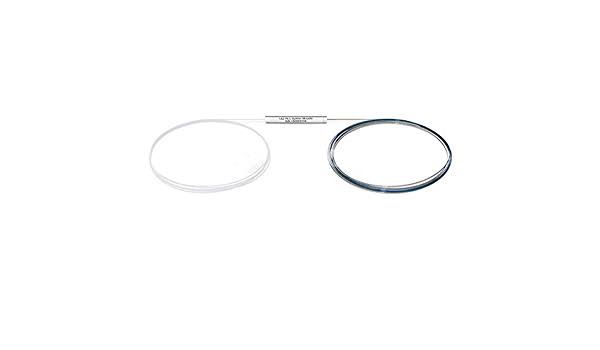
Bare Fibre PLC Splitters Price in Kenya
Single Mode Bare PLC Splitters in Kenya
KSh 300.00
1 available
Continue shoppingSingle Mode Bare PLC Splitters in Kenya

Single Mode Bare PLC Splitters are compact passive fibre optic devices designed to divide one incoming optical signal into multiple output fibres without requiring electrical power. They use Planar Lightwave Circuit (PLC) technology, making them particularly suitable for high-density FTTH, FTTx and passive optical distribution networks. Corning describes its 250 µm bare splitters as PLC-based devices designed for compact, high-density applications, including fibre-to-the-premises networks.
Bare PLC splitters are available in multiple ratios, including 1x2, 1x4, 1x8, 1x16, 1x32 and 1x64. Corning's current bare-splitter range includes all of these 1xN configurations, while FS lists single-mode bare splitters in 1x2, 1x4, 1x8, 1x16 and 1x32 versions using 250 µm fibre and no connectors.
At Fiber Optics Kenya, Single Mode Bare PLC Splitters are ideal for ISPs, FTTH contractors, telecommunications companies, fibre installers, property developers and network integrators. They can be supplied alongside compatible SC/APC pigtails, SC/UPC pigtails, FDB/FAT boxes, ODFs, splice trays, fibre drop cables, fusion-splicing equipment and fibre-testing tools.
Key Product Specifications
| Specification | Details |
|---|---|
| Product Name | Single Mode Bare PLC Splitters |
| Product Type | Passive Optical Splitter |
| Technology | Planar Lightwave Circuit |
| Fibre Mode | Single Mode |
| Common Configurations | 1x2 / 1x4 / 1x8 / 1x16 / 1x32 / 1x64 |
| Common Fibre Diameter | 250 µm |
| Common Fibre Types | G.657A1 / G.657A2 depending on manufacturer |
| Connector Type | None on true bare versions |
| Operating Wavelength | Commonly 1260–1650 nm |
| Split Type | Balanced / Symmetrical on standard models |
| Package | Compact bare-fibre / steel-tube construction |
| Power Requirement | None |
| Installation Method | Fusion splicing typically |
| Applications | FTTH, FTTx, GPON, EPON, ODF, FDB |
| Professional Installation | Available |
| Delivery | Available throughout Kenya |
FS specifies its current bare PLC splitter products as single-mode, 250 µm and unconnectorized, with models covering common split ratios. Its bare 1x4 product uses G.657A1 fibre and operates across 1260–1650 nm. Corning's own bare splitter range uses 250 µm ITU-T G.657.A2 low-bend-loss fibre.
What Is a Single Mode Bare PLC Splitter?

A bare PLC splitter distributes optical power while leaving the fibre tails without factory-installed connectors.
| Feature | Description |
|---|---|
| Input | One or more single-mode fibres depending on configuration |
| Outputs | Multiple single-mode fibres |
| Fibre Leads | Bare / unconnectorized |
| Typical Diameter | 250 µm |
| Core Technology | PLC |
| Signal Processing | Passive optical splitting |
| Electrical Power | Not required |
| Typical Installation | ODF, FDB, FAT box, splice tray |
| Termination | Usually fusion-spliced |
Bare PLC splitters are particularly useful where enclosure space is limited because the thin fibre leads and compact PLC package occupy much less room than larger connectorized ABS-box or rack-mount splitter assemblies. Corning specifically describes bare PLC splitters as compact solutions for high-density applications.
What Does PLC Mean?
PLC stands for Planar Lightwave Circuit.
| Term | Meaning |
|---|---|
| PLC | Planar Lightwave Circuit |
| Bare | Fibre leads supplied without connectors |
| Single Mode | Fibre designed for single-mode optical transmission |
| 1xN | One input divided into N outputs |
| Splitter | Passive optical power-distribution device |
| PON | Passive Optical Network |
| FTTH | Fibre to the Home |
PLC technology is commonly used for compact optical splitters because it supports numerous split ratios while maintaining a relatively uniform distribution between channels. Corning's PLC range includes 1x2 through 1x64 as well as multiple 2xN formats.
Available Single Mode Bare PLC Splitter Configurations

| Splitter | Inputs | Outputs | Ideal Power Share per Output | Approx. Theoretical Split Loss |
|---|---|---|---|---|
| 1x2 | 1 | 2 | 50% | 3.01 dB |
| 1x4 | 1 | 4 | 25% | 6.02 dB |
| 1x8 | 1 | 8 | 12.5% | 9.03 dB |
| 1x16 | 1 | 16 | 6.25% | 12.04 dB |
| 1x32 | 1 | 32 | 3.125% | 15.05 dB |
| 1x64 | 1 | 64 | 1.5625% | 18.06 dB |
These theoretical figures represent ideal power division only. Real-world insertion loss is higher because practical PLC devices also have excess optical loss.
Corning's current premium bare-splitter portfolio includes 1x2, 1x4, 1x8, 1x16, 1x32 and 1x64 products.
Single Mode Bare PLC Splitter 1x2
A 1x2 PLC splitter divides one incoming optical signal into two outputs.
| Parameter | 1x2 |
|---|---|
| Inputs | 1 |
| Outputs | 2 |
| Ideal Power per Output | 50% |
| Theoretical Split Loss | ~3.01 dB |
| Typical Application | Small branch / first-stage splitting |
| FTTH Use | Excellent |
| GPON Use | Excellent |
FS currently sells an exact 1x2 single-mode 250 µm bare fibre PLC splitter with no connectors.
Single Mode Bare PLC Splitter 1x4
The 1x4 PLC splitter distributes one feeder fibre across four outputs.
| Parameter | 1x4 |
|---|---|
| Inputs | 1 |
| Outputs | 4 |
| Ideal Power per Output | 25% |
| Theoretical Split Loss | ~6.02 dB |
| Typical Fibre | G.657A1 on representative model |
| Operating Wavelength | 1260–1650 nm on representative model |
FS's current 1x4 bare PLC splitter is specified as single-mode, 250 µm, no connector, G.657A1 and 1260–1650 nm.
Single Mode Bare PLC Splitter 1x8
A 1x8 splitter provides eight optical branches from one feeder fibre.
| Parameter | 1x8 |
|---|---|
| Inputs | 1 |
| Outputs | 8 |
| Ideal Power per Output | 12.5% |
| Theoretical Split Loss | ~9.03 dB |
| Split Type | Symmetrical on representative models |
| Typical Fibre Diameter | 250 µm |
FS specifies its current 1x8 bare PLC splitter as single-mode, 250 µm and symmetrical, with no connector.
Single Mode Bare PLC Splitter 1x16
The 1x16 PLC splitter provides sixteen downstream optical outputs and is well suited to medium- to high-density subscriber distribution.
| Parameter | 1x16 |
|---|---|
| Inputs | 1 |
| Outputs | 16 |
| Ideal Power per Output | 6.25% |
| Theoretical Split Loss | ~12.04 dB |
| Fibre Diameter | 250 µm commonly |
| Connectorized? | No on bare model |
FS currently lists an exact 1x16 single-mode 250 µm bare PLC splitter with no connector and 1260–1650 nm operation.
Single Mode Bare PLC Splitter 1x32
A 1x32 PLC splitter provides 32 optical outputs from one feeder fibre, making it suitable for high-density subscriber distribution.
| Parameter | 1x32 |
|---|---|
| Inputs | 1 |
| Outputs | 32 |
| Ideal Power per Output | 3.125% |
| Theoretical Split Loss | ~15.05 dB |
| Typical Fibre Diameter | 250 µm |
| Split Type | Symmetrical on representative model |
| Operating Wavelength | 1260–1650 nm |
FS currently specifies its 1x32 bare splitter as single-mode, 250 µm, no connector and symmetrical, operating from 1260–1650 nm.
Comparison of Bare PLC Splitter Ratios
| Feature | 1x2 | 1x4 | 1x8 | 1x16 | 1x32 |
|---|---|---|---|---|---|
| Outputs | 2 | 4 | 8 | 16 | 32 |
| Ideal Power/Output | 50% | 25% | 12.5% | 6.25% | 3.125% |
| Theoretical Loss | 3.01 dB | 6.02 dB | 9.03 dB | 12.04 dB | 15.05 dB |
| Subscriber Density | Low | Low-Medium | Medium | High | Very High |
| Optical Budget Demand | Lowest | Low | Moderate | Higher | Highest |
| Compact FTTH Use | Excellent | Excellent | Excellent | Excellent | Excellent |
The appropriate splitter ratio should be selected based on the number of subscribers, network topology and total available optical power budget.
Typical Fibre Construction
Single-mode bare PLC splitters commonly use 250 µm bend-insensitive fibre.
| Fibre Feature | Typical Description |
|---|---|
| Fibre Mode | Single Mode |
| Bare Fibre Diameter | 250 µm |
| Common ITU Types | G.657A1 / G.657A2 |
| Connector | None |
| Output Identification | Colour coded on many models |
| Installation | Fusion splice |
| Enclosure | ODF / FDB / splice tray |
Corning states that all of its current 250 µm bare splitter products use G.657.A2-compliant low-bend-loss fibre.
G.657A1 vs G.657A2 Bare Splitter Fibre
| Feature | G.657A1 | G.657A2 |
|---|---|---|
| Mode | Single Mode | Single Mode |
| Bend Insensitive | Yes | Yes |
| Tight-Bend Capability | Excellent | Enhanced |
| FTTH Use | Excellent | Excellent |
| Compact FDB Routing | Excellent | Excellent |
| Splice Tray Routing | Excellent | Excellent |
FS uses G.657A1 on representative bare PLC splitters, while Corning's premium 250 µm bare splitter range uses G.657.A2 low-bend-loss fibre.
Operating Wavelength Range
Professional single-mode bare PLC splitters commonly provide broad wavelength coverage.
| Wavelength | Typical Application |
|---|---|
| 1310 nm | Upstream PON transmission |
| 1490 nm | Traditional GPON downstream |
| 1550 nm | Optical video and other services |
| 1577 nm | Used by newer PON systems |
| 1625 nm | Fibre monitoring and testing |
FS's bare PLC splitter products provide full-band operation from 1260 to 1650 nm, supporting broad single-mode network compatibility.
Bare PLC Splitters vs Connectorized PLC Splitters
| Feature | Bare PLC Splitter | Connectorized PLC Splitter |
|---|---|---|
| Factory Connectors | No | Yes |
| Space Requirement | Very Low | Higher |
| Fusion Splicing | Usually Required | Often Not |
| Termination Flexibility | Excellent | Fixed |
| ODF Integration | Excellent | Excellent |
| FDB Installation | Excellent | Excellent |
| Mechanical Protection | Lower | Greater |
| Installation Skill | Higher | Lower |
Bare splitters are best where compact size and flexible termination are priorities, while connectorized modules can simplify plug-and-play installation.
Bare PLC Splitter vs ABS Box PLC Splitter
| Feature | Bare PLC | ABS Box PLC |
|---|---|---|
| Size | Very Compact | Larger |
| Housing Protection | Limited | High |
| Typical Fibre Leads | 250 µm | 2 mm / 3 mm often |
| Connectors | Normally None | Common |
| Splice Tray Use | Excellent | Less Compact |
| FTTH Cabinet Use | Excellent with enclosure | Excellent |
| Installation Flexibility | High | Moderate |
Bare PLC Splitter vs Mini Steel Tube Splitter
| Feature | Bare Fibre | Mini Steel Tube / Blockless |
|---|---|---|
| Fibre Leads | 250 µm commonly | 900 µm commonly |
| Mechanical Protection | Lower | Higher |
| Installation Space | Lowest | Low |
| Handling | More Delicate | Easier |
| Connectors | Usually None | Optional |
| Splice Tray Integration | Excellent | Excellent |
Bare splitter products often still contain a compact protective body around the actual PLC chip; the term "bare" generally refers to the thin, unconnectorized fibre leads rather than a completely exposed optical circuit. The available online examples show compact metal housings with bare fibre input/output tails.
Why Choose Single Mode Bare PLC Splitters?
Compact Size
Bare PLC splitters are optimized for installations where enclosure and splice-tray space is limited. Corning specifically identifies PLC bare splitters as suitable for high-density applications.
Multiple Split Ratios
Options ranging from 1x2 to 1x64 allow network designers to match subscriber capacity with optical-budget requirements.
Wide Wavelength Operation
Representative bare PLC products transmit across 1260–1650 nm.
Bend-Insensitive Fibre
G.657A1 and G.657A2 options provide improved routing capability inside compact fibre enclosures.
No Electrical Power Required
PLC splitting is passive, so there is no power supply, software or active electronics to maintain.
Flexible Termination
The bare leads can be fusion-spliced directly into the network or connected to SC/APC, SC/UPC, LC/UPC or other pigtails according to the project design.
Watch Single Mode Bare PLC Splitters
Watch on YouTube: https://youtu.be/Zuxg7VxT148
Single Mode Bare PLC Splitters provide a compact and scalable method of distributing optical signals throughout FTTH and other passive optical networks. Current product ranges cover split ratios from 1x2 through 1x64, while common commercial models use 250 µm single-mode fibre and unconnectorized leads so they can be integrated directly into splice trays, distribution boxes and ODFs.
The number of outputs has a direct effect on the optical power available at each branch. A 1x2 splitter ideally delivers half of the incoming optical power to each output, whereas a 1x32 splitter divides the signal across 32 paths. Selecting the correct split ratio therefore requires balancing subscriber capacity against the overall optical power budget, including fibre attenuation, fusion-splice losses, connector losses and any additional splitting stages.
For professional FTTH installations, bare PLC splitters provide greater termination flexibility than preconnectorized modules because technicians can splice each fibre according to the project's exact layout. Fiber Optics Kenya can supply these splitters together with SC/APC and SC/UPC pigtails, ODFs, FDB/FAT boxes, splice trays, FTTH drop cables, fusion-splicing tools, optical power meters and OTDR equipment, allowing customers to source complete passive optical distribution solutions.
Applications of Single Mode Bare PLC Splitters
1. FTTH Networks
Distribute one feeder fibre to multiple subscriber connections.
2. GPON Networks
Provide passive optical branching between OLT infrastructure and downstream ONTs.
3. EPON Networks
Split Ethernet PON optical signals without active switching equipment.
4. Fibre Distribution Boxes
Integrate compact splitters into FDBs serving multiple subscriber fibres.
5. FAT Boxes
Create optical distribution points for FTTH subscriber drops.
6. Optical Distribution Frames
Install splitters inside ODF splice and fibre-management systems.
7. Fibre Joint Closures
Fusion-splice bare splitter fibres directly into outdoor fibre infrastructure.
8. Residential Estates
Distribute fibre to multiple homes from shared feeder infrastructure.
9. Apartment Buildings
Use suitable splitter ratios to serve multiple apartments or floors.
10. Commercial Buildings
Distribute fibre to offices, departments or other network endpoints.
Typical FTTH Architecture
| Network Stage | Typical Component |
|---|---|
| Central Office | OLT |
| Feeder Network | Single Mode Fibre |
| Optical Distribution | Bare PLC Splitter |
| Distribution Enclosure | FDB / FAT Box |
| Drop Network | FTTH Drop Cable |
| Subscriber Termination | SC/APC / SC/UPC depending on system |
| Subscriber Equipment | ONT / ONU |
Choosing the Correct Splitter Ratio
| Network Requirement | Suggested Ratio |
|---|---|
| Two Optical Branches | 1x2 |
| Four Optical Branches | 1x4 |
| Eight Subscribers/Branches | 1x8 |
| Sixteen Subscribers/Branches | 1x16 |
| Thirty-Two Subscribers/Branches | 1x32 |
| Higher Density Network | 1x64 where optical budget permits |
The final selection should always consider the PON class, distance, total fibre loss, splitter losses, connector losses and engineering margin.
Optical Budget Considerations
| Loss Source | Include in Calculation? |
|---|---|
| PLC Splitter Loss | Yes |
| Feeder Fibre Attenuation | Yes |
| Distribution Fibre | Yes |
| Drop Cable | Yes |
| Fusion Splices | Yes |
| Adapters | Yes |
| Connector Pairs | Yes |
| Cascaded Splitters | Yes |
| Engineering Margin | Yes |
As the split ratio increases, the optical power available to each output falls. This is why a 1x32 or 1x64 network requires a more carefully planned optical budget than a simple 1x2 or 1x4 deployment.
Recommended Accessories
| Accessory | Purpose |
|---|---|
| SC/APC Pigtails | APC termination of bare fibres |
| SC/UPC Pigtails | UPC fibre termination |
| Fusion Splice Sleeves | Protect completed splices |
| Fibre Splice Tray | Organize splitter fibres |
| FDB / FAT Box | House splitter and distribution fibres |
| Optical Distribution Frame | Structured fibre termination |
| FTTH Drop Cable | Subscriber fibre connection |
| Fibre Cleaver | Precision fibre preparation |
| Fibre Stripper | Removes fibre coating |
| Fusion Splicer | Joins bare splitter fibres |
| Optical Power Meter | Measures optical power |
| PON Power Meter | Tests PON signals |
| Visual Fault Locator | Helps identify fibre paths |
| OTDR | Tests installed optical links |
Why Buy Single Mode Bare PLC Splitters from Fiber Optics Kenya?

| Why Choose Fiber Optics Kenya? | Customer Benefit |
|---|---|
| Multiple Split Ratios | Choose the correct subscriber capacity |
| Bare Fibre Options | Compact fibre distribution |
| Single Mode PLC Splitters | Suitable for FTTH and PON networks |
| G.657 Fibre Options | Improved bend performance |
| SC/APC & SC/UPC Pigtails | Complete termination solutions |
| FDB & FAT Boxes | Complete subscriber distribution |
| ODFs & Splice Trays | Professional fibre management |
| FTTH Drop Cables | Complete downstream network |
| Fusion-Splicing Equipment | Installation tools available |
| Testing Equipment | Verify network performance |
| Technical Guidance | Help with split ratios and optical budgets |
| Bulk Supply | Suitable for ISPs and contractors |
| Competitive Pricing | Cost-effective fibre deployment |
| Nationwide Delivery | Supply throughout Kenya |
Frequently Asked Questions
What are Single Mode Bare PLC Splitters?
They are passive optical devices that divide an incoming single-mode fibre signal into multiple output fibres and are supplied with unconnectorized fibre leads.
What does PLC mean?
PLC means Planar Lightwave Circuit.
What splitter ratios are available?
Common configurations include 1x2, 1x4, 1x8, 1x16, 1x32 and 1x64. Corning currently lists all six ratios in its bare-splitter range.
What fibre diameter is used?
Bare PLC splitters commonly use 250 µm fibre. Both Corning and FS currently offer 250 µm products.
What type of fibre is used?
G.657A1 and G.657A2 bend-insensitive single-mode fibres are common. FS lists G.657A1 on its 1x4 product, while Corning specifies G.657.A2 for its current 250 µm bare splitters.
What is the operating wavelength?
Current FS bare PLC splitters commonly operate across 1260–1650 nm.
Do bare PLC splitters come with connectors?
True bare versions are normally supplied without connectors. FS explicitly lists no-connector configurations for its 1x2, 1x4, 1x8, 1x16 and 1x32 bare products.
Do they require electricity?
No. PLC splitters are passive optical components.
Do they require fusion splicing?
Usually yes. Bare splitter leads are typically fusion-spliced to installed fibre or pigtails.
Can I terminate them with SC/APC?
Yes. The bare fibres can be fusion-spliced to SC/APC pigtails when APC interfaces are required.
Can I use SC/UPC instead?
Yes, provided the network is designed around compatible UPC interfaces.
What is the difference between 1x2 and 1x32?
A 1x2 provides two outputs and preserves substantially more optical power per output, while a 1x32 provides 32 outputs but introduces much greater splitting loss.
Which PLC splitter is best for FTTH?
There is no single best split ratio. The correct option depends on subscriber count, PON technology, network distance and optical power budget.
Can a bare PLC splitter be installed inside an FDB?
Yes. Compact FDB and splice-tray installation is one of the major advantages of bare splitters.
Can it be installed inside an ODF?
Yes. Bare splitters can be integrated into ODF fibre-management and splice systems.
Can PLC splitters be cascaded?
Yes. For example, a first-stage 1x4 splitter can feed secondary splitters, but the loss of every stage must be included in the optical budget.
Can a 1x16 splitter serve sixteen subscribers?
Potentially yes, provided each output is allocated to a subscriber and the overall PON optical budget supports the installation.
Can a 1x32 splitter serve thirty-two subscribers?
Potentially yes, subject to the network architecture and available optical budget.
Are 1x64 bare PLC splitters available?
Yes. Corning currently lists a 1x64 250 µm bare PLC splitter as part of its product family.
What is the advantage of G.657 fibre?
Its bend-insensitive characteristics make it particularly suitable for routing inside compact FDBs, ODFs and splice trays. Corning specifically uses G.657.A2 low-bend-loss fibre in its current bare splitter range.
What is the difference between a bare PLC splitter and an ABS splitter?
A bare splitter is smaller and designed primarily for splice-in integration, while an ABS-box splitter has a larger protective enclosure and is often supplied with stronger jacketed leads or connectors.
What is the difference between bare and blockless PLC splitters?
Bare splitters commonly use thin 250 µm fibre leads, while blockless or mini steel-tube versions often use more protected fibre tails and may be supplied with connectors.
Do you supply SC/APC pigtails?
Yes. Fiber Optics Kenya can supply compatible single-mode SC/APC pigtails.
Do you supply SC/UPC pigtails?
Yes. Matching SC/UPC single-mode pigtails can also be supplied.
Do you supply FDB and FAT boxes?
Yes. Compatible fibre distribution and access terminal boxes can be supplied.
Do you supply ODFs and splice trays?
Yes. ODFs, splice trays and other fibre-management products can be supplied.
Do you supply fusion-splicing tools?
Yes. Fibre cleavers, strippers, fusion-splicing equipment and related accessories can be supplied.
Do you provide fibre installation and testing?
Yes. Professional fibre installation, fusion splicing, termination and optical testing support is available.
Do you deliver outside Nairobi?
Yes. Fiber Optics Kenya supplies fibre optic products and networking accessories throughout Kenya.
Contact Fiber Optics Kenya
Fiber Optics Kenya
Lyric House
7th Floor Room S9
Kimathi Street
Nairobi
Phone: +254 704 991 492
Email: info@fibreopticskenya.co.ke
Single Mode Bare PLC Splitters provide compact, scalable optical distribution for FTTH, GPON, EPON and other passive fibre networks, with configurations ranging from small 1x2 branches to high-density 1x32 and 1x64 deployments.
Contact Fiber Optics Kenya for competitive pricing, bare PLC splitters, FDBs, ODFs, pigtails, splicing accessories, bulk orders and nationwide delivery across Kenya.