Fibre Cleavers Price in Kenya
Fibre Cleaver Price in Kenya
KSh 6,000.00
1 available
Continue shoppingFibre Cleaver Price in Kenya

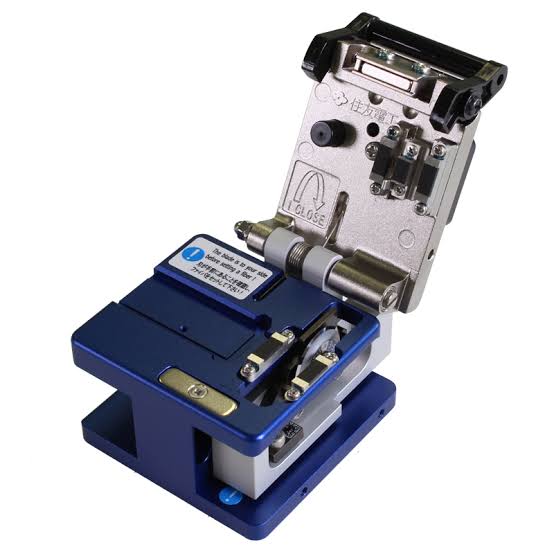
A Fibre Cleaver is a precision optical fibre preparation tool used to create a clean, flat end face before fusion splicing, mechanical splicing or fibre connector termination. It is one of the most important tools in an FTTH technician's kit because even a high-quality fusion splicer cannot consistently produce low-loss joints when the fibre has been poorly cleaved.
Professional fibre cleavers are designed for standard 125 µm optical fibre cladding and commonly support 250 µm and 900 µm coated fibres, with some models also accommodating 2 mm or 3 mm fibre cords and ribbon fibre. Cleave lengths and blade life vary significantly by model: for example, AFL's CT16 supports 5–20 mm cleave lengths and approximately 48,000 cleaves, while Sumitomo models can offer typical 0.5° cleave angles and blade life up to 60,000 fibres.
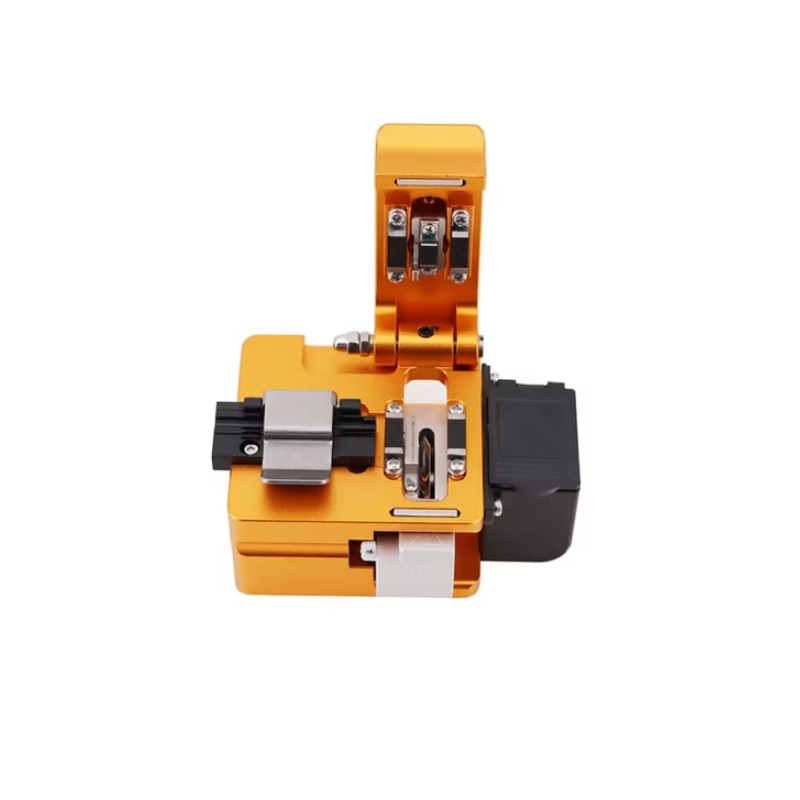
At Fiber Optics Kenya, fibre cleavers can be supplied for FTTH installers, ISPs, telecom contractors, data centres, CCTV fibre projects and network maintenance teams, together with fusion splicers, strippers, splice sleeves and fibre testing equipment.
Typical Fibre Cleaver Specifications
| Specification | Typical Range |
|---|---|
| Product Type | Precision Optical Fibre Cleaver |
| Applicable Fibre | Single Mode / Multimode |
| Cladding Diameter | Commonly 125 µm |
| Coating Diameter | 250 µm / 900 µm, model dependent |
| 2 mm / 3 mm Cable | Supported on selected models |
| Ribbon Fibre | Supported on selected models |
| Cleave Length | Typically 5–20 mm |
| Typical Cleave Angle | Approx. 0.3°–0.9° on professional models |
| Blade Positions | Model dependent |
| Blade Life | Tens of thousands of cleaves |
| Scrap Collector | Available on many models |
| Blade Replacement | Yes |
| Operation | Manual / Single-action depending model |
| Applications | FTTH, Fusion Splicing, ODF, FAT, Closures |
Modern cleavers vary considerably. AFL's CT16, for example, specifies an average cleave angle of roughly 0.3°–0.9° and 48,000-cleave blade life, while Fujikura's CT110 specifies an average 0.3° cleave angle under defined conditions.
What Is a Fibre Cleaver?
A fibre cleaver is not simply a cutter. It is designed to create a precisely controlled fracture in the glass fibre so that the end face is almost perpendicular to the fibre axis.
The standard workflow is:
Strip → Clean → Cleave → Align → Fusion Splice → Protect
The cleaver is used after the fibre coating has been removed and the bare glass has been cleaned.
Why Fibre Cleaving Is Important
A fusion splicer aligns two prepared optical fibres and melts them together with an electric arc. If either fibre has a poor end face, the splice may suffer from:
High insertion loss
Air gaps
Core misalignment
Fibre deformation
Weak mechanical joints
Splicer error messages
Repeated fusion attempts
A good cleave therefore directly affects the quality of the finished fibre link.
Fibre Cleave Angle
Professional cleavers are designed to create an end face that is very close to 90° relative to the fibre.
| Cleave Condition | Effect |
|---|---|
| Near-Perpendicular End Face | Better fusion |
| Large Cleave Angle | Potentially higher loss |
| Chipped Fibre | Poor splice quality |
| Cracked End Face | Unreliable splice |
| Dirty Fibre | Increased loss |
| Uneven Fibre End | Fusion error possible |
High-end commercial cleavers commonly specify sub-1° average cleave angles under controlled conditions.
Fibre Cleaver Blade
The cutting blade is one of the most important parts of the cleaver.
Most professional fibre cleavers use a rotating or indexed blade with multiple cutting positions. Once one section becomes worn, the technician can move to another section rather than immediately replacing the complete blade.
For comparison:
| Cleaver Example | Published Blade Life |
|---|---|
| AFL CT16 | Approx. 48,000 cleaves |
| Fujikura CT50 | Approx. 60,000 fibres |
| Sumitomo High-End Cleaver | Up to 60,000 fibres |
| K8 Precision Cleaver | Tens of thousands, model specification dependent |
Actual blade life depends on fibre type, cleanliness, technician technique and blade maintenance.
Fibre Scrap Collection
Many modern cleavers include a scrap collector.
This is an important safety feature because cleaved fibre fragments are:
Extremely small
Transparent
Sharp
Difficult to see
Capable of penetrating skin
Professional cleavers such as the AFL CT16 and Fujikura CT50 include fibre scrap collection systems.
Fibre fragments should always be disposed of in a dedicated fibre waste container.
Fibre Cleaver for Single-Mode Fibre

A fibre cleaver is commonly used with standard single-mode fibres such as:
G.652
G.657
FTTH drop fibre
Pigtails
Patch cord fibre
Feeder fibre
Single-mode fibre has a very small optical core, making accurate preparation particularly important.
Fibre Cleaver for Multimode Fibre
Many professional cleavers also support multimode optical fibre.
The same principles apply:
strip → clean → cleave → splice
The cleaver must support the fibre's cladding and coating dimensions.
Fibre Cleaver for FTTH Drop Cable
A fibre cleaver is essential when fusion-splicing FTTH subscriber connections.
Typical installation:
FAT Box → FTTH Drop Cable → ATB → Pigtail / Fast Connector
Where fusion splicing is used, the drop fibre must first be prepared using:
Drop cable stripper
Fibre stripper
Cleaning alcohol
Precision fibre cleaver
Fusion splicer
Fibre Cleaver for Pigtails
Pigtails are commonly fusion-spliced to incoming fibre inside:
ODFs
Fibre closures
FAT boxes
Termination boxes
Data-centre panels
The stripped pigtail fibre must be cleaved accurately before it is placed into the fusion splicer.
Fibre Cleaver for Ribbon Fibre
Some advanced cleavers can also prepare multiple fibres simultaneously.
For example, Fujikura's CT50 supports up to 12-fibre cleaving, while Sumitomo also offers single- and ribbon-fibre models.
Ribbon-fibre cleavers are useful in:
High-density backbone networks
Data centres
High-core-count cables
Telecom infrastructure
Adjustable Cleave Length
Different splicing applications require different exposed fibre lengths.
Professional cleavers commonly support adjustable ranges such as:
5–20 mm
6–20 mm
10–20 mm
AFL's CT16, for example, supports 5–20 mm depending on coating diameter and adapter configuration.
How to Use a Fibre Cleaver
A typical procedure is:
Strip the fibre coating.
Clean the exposed glass fibre.
Open the cleaver.
Place the fibre into the holder or adapter.
Set the required cleave length.
Ensure the fibre lies straight.
Close the clamp.
Perform the cleaving action.
Open the cleaver.
Carefully remove the prepared fibre.
Place the fibre into the fusion splicer.
Dispose of the glass fragment safely.
The freshly cleaved fibre end should never be touched.
Fibre Cleaver with Fusion Splicer
The fibre cleaver and fusion splicer perform different but complementary functions.
| Tool | Function |
|---|---|
| Fibre Stripper | Removes fibre coating |
| Fibre Cleaver | Creates precision end face |
| Fusion Splicer | Joins two fibres |
| Splice Sleeve | Protects the finished splice |
| Optical Power Meter | Tests optical power |
| OTDR | Tests fibre quality and faults |
A technician performing regular fibre installations normally needs all of these tools.
Fibre Cleaver vs Fibre Stripper
A fibre stripper does not replace a cleaver.
The stripper removes:
Outer coating
Buffer
Protective layers
The cleaver then precision-cuts the exposed glass.
Fibre Cleaver vs Kevlar Scissors
| Tool | Purpose |
|---|---|
| Fibre Cleaver | Precision cleaving of glass fibre |
| Kevlar Scissors | Cutting aramid strength members |
| Cable Cutter | Cutting fibre cable |
| Drop Cable Stripper | Opening FTTH cable |
| Miller Stripper | Removing fibre coating |
Using ordinary scissors instead of a cleaver will not produce the end-face quality needed for fusion splicing.
Fibre Cleaver vs Ordinary Cutter
| Feature | Fibre Cleaver | Ordinary Cutter |
|---|---|---|
| Precision Glass Cleave | Yes | No |
| Controlled Cleave Angle | Yes | No |
| Fusion Splicing | Designed For It | No |
| Fibre Holder | Yes | No |
| Blade Adjustment | Yes | Usually No |
| Scrap Collection | Often | No |
High-Precision Fibre Cleaver
Higher-quality cleavers offer:
More consistent end faces
Lower average cleave angles
Longer blade life
Better scrap handling
More consistent clamp pressure
Easier maintenance
Support for multiple fibre formats
For example, Fujikura's CT50 specifies a typical 0.7° single-fibre cleave angle, while Sumitomo lists typical 0.5° performance on selected models.
Watch Fibre Cleaver Video
https://youtu.be/IW8_I6Z7RZQ
A precision fibre cleaver is one of the most important supporting tools for a fusion splicer. The machine performing the fusion relies on the technician presenting two clean, accurately cleaved fibres. Poor preparation can cause a good fusion splicer to reject the fibres or produce an unnecessarily high-loss joint.
For FTTH technicians, a compact cleaver is particularly useful because it can be carried directly to FAT boxes, ODFs, fibre closures, apartment distribution cabinets and customer premises. A model with a scrap collector also makes field operation safer by containing tiny glass fragments.
When selecting a cleaver, technicians should compare cleave-angle consistency, blade life, supported fibre diameter, coating range, cleave length, fibre-holder design, scrap collection and availability of replacement blades rather than choosing on price alone.
Applications of Fibre Cleavers
FTTH Installation
Used to prepare FTTH fibre before fusion splicing.
ISP Fibre Networks
Essential for access, distribution and backbone fibre work.
ODF Termination
Used before splicing feeder fibre onto pigtails.
FAT Box Installation
Prepares subscriber fibres for fusion.
Fibre Closures
Used for fibre preparation during jointing and repairs.
Backbone Fibre Networks
Precision cleaving helps maintain low splice losses on long fibre routes.
CCTV Fibre Networks
Used to splice fibre between surveillance locations.
Data Centres
Useful during fibre termination, repairs and expansions.
Telecom Networks
Used for outside-plant and inside-plant fibre installation.
Emergency Fibre Repairs
Compact cleavers are convenient for mobile fibre repair teams.
Fibre Cleaver Maintenance
To maintain reliable cleave quality:
Clean the fibre clamp regularly.
Remove glass fragments after use.
Keep the blade clean.
Never touch the blade edge.
Rotate the blade when cleaving deteriorates.
Replace the blade when all positions are worn.
Check blade height where adjustment is supported.
Keep the cleaver inside its protective case.
Avoid dropping the cleaver.
Test cleave performance after maintenance.
Manufacturers explicitly note that cleave angle and blade life vary with cleanliness, blade condition, operating technique and environment.
Signs of a Worn Fibre Cleaver Blade
Possible signs include:
Frequent bad-cleave warnings
Chipped fibre ends
Increasing splice loss
Uneven fibre breaks
Repeated fusion failures
Fibre breaking at incorrect points
The first action is often to clean the cleaver and move the blade to a fresh position.
Fibre Cleaver Price in Kenya
The Fibre Cleaver price in Kenya depends on:
Brand
Cleave accuracy
Blade life
Fibre types supported
Ribbon-fibre capability
Scrap collector
Automatic blade rotation
Replacement blade availability
Professional or entry-level class
Entry-level FTTH cleavers are considerably cheaper than precision models from manufacturers such as Fujikura, Sumitomo or AFL.
For professional ISP work, a better-quality cleaver can reduce repeated splices, technician time and wasted fibre.
Choosing the Right Fibre Cleaver
| Requirement | Recommended Cleaver |
|---|---|
| Basic FTTH Work | Standard Precision Cleaver |
| Daily ISP Installations | Heavy-Duty Precision Cleaver |
| Signal Fire Fusion Splicer | Compatible Standard Cleaver |
| Backbone Fibre | High-Precision Cleaver |
| Ribbon Fibre | Ribbon-Capable Cleaver |
| High Installation Volume | Long Blade-Life Model |
| Field Work | Compact Model with Scrap Collector |
| Premium Telecom Work | Fujikura / Sumitomo / AFL Class |
Recommended Fibre Tools
| Tool | Purpose |
|---|---|
| Fusion Splicer | Joins optical fibres |
| Fibre Cleaver | Precision fibre preparation |
| Miller Stripper | Removes coating |
| Drop Cable Stripper | FTTH cable preparation |
| Kevlar Scissors | Cuts strength members |
| Splice Sleeves | Protect fusion joints |
| IPA Cleaner | Cleans fibre |
| Lint-Free Wipes | Removes contamination |
| Optical Power Meter | Tests optical power |
| VFL | Finds visible faults |
| PON Power Meter | Tests PON signals |
| OTDR | Locates fibre faults |
| Fibre Identifier | Identifies active fibre |
Why Buy a Fibre Cleaver from Fiber Optics Kenya?
| Fiber Optics Kenya Solution | Benefit |
|---|---|
| Precision Fibre Cleavers | Reliable fibre preparation |
| Replacement Blades | Extended tool service life |
| Signal Fire Fusion Splicers | Complete fusion setup |
| Fibre Strippers | Correct coating removal |
| Drop Cable Strippers | FTTH preparation |
| Kevlar Scissors | Cable preparation |
| Splice Sleeves | Joint protection |
| OPMs | Optical testing |
| VFLs | Fibre troubleshooting |
| PON Meters | FTTH testing |
| OTDRs | Advanced diagnostics |
| Fibre Cables | Network construction |
| ODFs & FAT Boxes | Fibre management |
| Nationwide Delivery | Supply throughout Kenya |
Frequently Asked Questions
What is a fibre cleaver?
A fibre cleaver is a precision tool used to prepare a flat optical fibre end face before fusion or mechanical splicing.
Why do I need a fibre cleaver?
Fusion splicing requires clean, accurately prepared fibre ends. A poor cleave can increase loss or cause the fusion splicer to reject the fibre.
Can I use scissors instead of a fibre cleaver?
No. Scissors cannot produce the near-perpendicular glass end face required for professional fusion splicing.
What is a good fibre cleave angle?
Professional cleavers commonly achieve average angles below 1° under specified conditions. Some high-end models specify approximately 0.3°–0.9°.
What fibre diameter do cleavers normally support?
Standard telecommunications optical fibre commonly uses 125 µm cladding, which is supported by mainstream precision cleavers.
Can a fibre cleaver cut single-mode fibre?
Yes.
Can it cut multimode fibre?
Yes, if the cleaver supports the fibre's dimensions.
Can I cleave G.657 FTTH fibre?
Yes. Standard FTTH G.657 fibre can be prepared using an appropriate precision cleaver.
Can I cleave a fibre pigtail?
Yes.
Can I cleave FTTH drop cable fibre?
Yes, after the outer cable and fibre coating have been correctly stripped.
Can fibre cleavers handle ribbon fibre?
Some can. Fujikura CT50, for example, supports up to 12-fibre cleaving.
What is the normal cleave length?
Common ranges are approximately 5–20 mm, depending on the cleaver and fibre coating.
How long does a fibre-cleaver blade last?
This varies greatly. Professional models may provide tens of thousands of cleaves; examples include approximately 48,000 on the AFL CT16 and 60,000 on selected Fujikura/Sumitomo designs.
Can the fibre-cleaver blade be replaced?
Yes on professional models.
Can I rotate the blade?
Many cleavers use multiple cutting positions so the blade can be indexed as one section wears.
Why is my cleaver producing bad fibre ends?
Possible causes include dirt, worn blade position, incorrect blade height, poor fibre placement or contaminated fibre.
Should the fibre be cleaned before cleaving?
Yes. The bare glass should be cleaned before it is cleaved.
Should I touch the cleaved end?
No. Touching it can contaminate or damage the prepared end face.
Does a fibre cleaver require electricity?
Most standard manual cleavers do not.
Does a fibre cleaver collect fibre scraps?
Many professional models include an integrated scrap collector.
Why are fibre scraps dangerous?
They are extremely fine glass fragments and can penetrate skin or eyes.
Can I use any cleaver with Signal Fire AI-9?
Most suitable precision cleavers can be used as long as they produce the fibre dimensions required by the splicer.
Can I use a fibre cleaver with Fujikura splicers?
Yes, provided the fibre preparation dimensions match the splicer and holder requirements.
Can I use one cleaver with different fusion splicer brands?
Generally yes. The cleaver prepares the fibre independently of the fusion-splicer brand.
Is a fibre cleaver suitable for FTTH installers?
Yes. It is an essential tool for fusion-spliced FTTH installations.
Is it suitable for ISP technicians?
Yes.
Can I use it for ODF installation?
Yes.
Can I use it for FAT boxes?
Yes.
Can I use it for fibre closures?
Yes.
Can it be used for backbone fibre?
Yes. Professional precision cleavers are commonly used for backbone fusion splicing.
What is the difference between a cheap and professional fibre cleaver?
Professional models generally provide better cleave-angle consistency, longer blade life, stronger construction, better fibre handling and easier maintenance.
Do you supply fibre cleavers in Kenya?
Yes. Fiber Optics Kenya can supply precision fibre cleavers and associated fibre-splicing tools.
Do you supply replacement cleaver blades?
Yes, subject to the cleaver model and stock availability.
Do you supply fusion splicers?
Yes. Signal Fire and other fibre-splicing equipment can be supplied.
Do you supply fibre strippers?
Yes.
Do you supply splice sleeves?
Yes.
Do you supply Optical Power Meters?
Yes.
Do you supply PON Power Meters?
Yes.
Do you supply VFLs?
Yes.
Do you supply OTDRs?
Yes.
Do you deliver outside Nairobi?
Yes. Fiber Optics Kenya supplies fibre optic equipment throughout Kenya.
Contact Fiber Optics Kenya
Fiber Optics Kenya
Lyric House, 7th Floor Room S9
Kimathi Street, Nairobi
Phone: +254 704 991 492
Email: info@fibreopticskenya.co.ke
A Fibre Cleaver is an essential precision tool for FTTH technicians, ISPs, fibre contractors and telecommunications engineers. Its job is simple but critical: create the clean, nearly perpendicular fibre end required for consistent, low-loss fusion splicing.
Professional cleavers commonly support 125 µm optical fibre, adjustable cleave lengths, replaceable multi-position blades and fibre scrap collection, while higher-end models can achieve average cleave angles well below 1° and blade lives measured in tens of thousands of cleaves.
When combined with a quality fusion splicer, fibre stripper, splice sleeves and optical testing tools, the fibre cleaver forms part of a complete FTTH installation kit for ODFs, FAT boxes, fibre closures, subscriber drops and backbone networks.
Contact Fiber Optics Kenya for Fibre Cleaver prices in Kenya, replacement blades, Signal Fire fusion splicers, fibre strippers, splice sleeves, Optical Power Meters, VFLs, OTDRs, complete fibre installation kits, bulk orders and nationwide delivery.