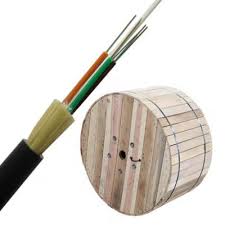
Fiber Optic Cable Prices in Kenya
24 Core Single Mode ADSS Fibre Optic Cable in Kenya
KSh 280.00
1 available
Continue shopping24 Core Single Mode ADSS Fibre Optic Cable in Kenya
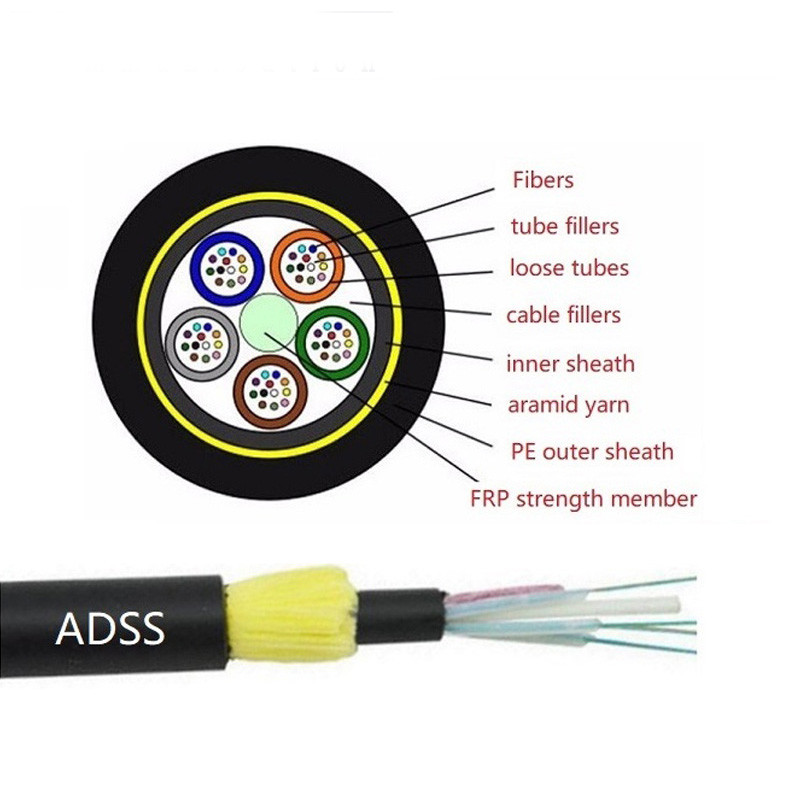
The 24 Core Single Mode ADSS Fibre Optic Cable is a robust outdoor aerial fibre cable designed for high-speed and long-distance network transmission. ADSS stands for All-Dielectric Self-Supporting, which means the cable is designed with non-metallic strength components and can be installed aerially without requiring a separate metallic messenger wire. This makes it particularly suitable for telecommunications, ISP infrastructure, FTTH networks, utility routes, CCTV backbones, campuses and enterprise fibre networks.
A 24-core ADSS cable provides substantial fibre capacity for networks that require multiple connections, redundancy and future expansion. Modern single-mode ADSS cable constructions commonly use OS2 fibre compliant with ITU-T G.652.D, together with loose tubes, water-blocking components, dielectric strength members and a black polyethylene outer jacket. Corning's current 24-fibre ADSS designs, for example, use this type of construction for outdoor self-supporting aerial applications.
At Fiber Optics Kenya, we supply 24 Core Single Mode ADSS Fibre Optic Cable for contractors, ISPs, telecommunications companies, system integrators, institutions, commercial properties and large networking projects. We can also provide compatible fibre accessories, installation support, fusion splicing and testing solutions to help customers build complete aerial fibre networks.
Key Specifications
| Specification | Details |
|---|---|
| Product Name | 24 Core Single Mode ADSS Fibre Optic Cable |
| Cable Type | All-Dielectric Self-Supporting Fibre Cable |
| Abbreviation | ADSS |
| Fibre Count | 24 Cores |
| Fibre Mode | Single Mode |
| Typical Fibre Category | OS2 |
| Common Fibre Standard | ITU-T G.652.D |
| Typical Fibre Size | Approx. 8-9/125 µm |
| Fibre Coating | Typically 250 µm |
| Construction | Loose Tube |
| Metal Content | All-dielectric / non-metallic design |
| Strength Member | FRP and/or aramid yarn depending on design |
| Outer Jacket | PE or HDPE depending on model |
| Typical Jacket Colour | Black |
| Water Blocking | Water-swellable elements or equivalent |
| Installation Method | Self-supporting aerial |
| Typical Applications | ISP, telecom, FTTH, CCTV and backbone networks |
| Typical Wavelengths | 1310 nm / 1550 nm |
| Delivery | Available throughout Kenya |
| Installation Support | Available |
What Does ADSS Mean?
ADSS — All-Dielectric Self-Supporting — describes a fibre cable that contains no metallic load-bearing components and is engineered to support its own weight between aerial support points.
| ADSS Feature | Benefit |
|---|---|
| All-Dielectric Construction | No conductive metallic strength member |
| Self-Supporting | Does not normally require a separate messenger wire |
| Aerial Installation | Designed for poles and overhead routes |
| Non-Metallic Strength Members | Provides tensile strength without conductive metal |
| Loose-Tube Construction | Helps protect fibres from mechanical stresses |
| Water Blocking | Helps protect against moisture penetration |
| PE/HDPE Jacket | Provides outdoor environmental protection |
| Long Span Options | Different cable designs can support different aerial span requirements |
Corning describes its ADSS cable family as using non-metallic strength members over the cable core and dry water-swellable elements, confirming the all-dielectric self-supporting design.
24 Core Fibre Configuration
A 24-core cable provides significantly more flexibility than a basic 2-core or 4-core connection.
| Usage | Approximate Fibre Allocation |
|---|---|
| Basic Duplex Connections | Up to 12 duplex links |
| Primary Backbone Fibres | Can be allocated according to network design |
| Redundant Links | Multiple fibres can be reserved |
| Future Expansion | Spare fibres can remain unused until required |
| Multiple Departments/Sites | Different fibres can serve separate network segments |
| CCTV Backbone | Several remote switch links can share one cable |
| ISP Distribution | Multiple optical routes can be accommodated |
The actual number of usable links depends on the network architecture, transceivers, redundancy requirements and whether fibres are used in simplex or duplex configurations.
Single Mode OS2 Fibre Characteristics
| Characteristic | Typical Description |
|---|---|
| Fibre Category | OS2 |
| Common Standard | ITU-T G.652.D |
| Core Diameter | Approx. 8.2-9 µm |
| Cladding Diameter | 125 µm |
| Common Operating Wavelengths | 1310 nm and 1550 nm |
| Transmission Distance | Suitable for long-distance networks |
| Bandwidth Potential | Very High |
| Optical Source | Laser |
| Network Applications | ISP, telecom, FTTH and backbone |
| Outdoor Suitability | Excellent when incorporated into ADSS cable |
For reference, one current Corning 24-fibre ADSS model specifies 8.2 µm fibre core diameter, 125 µm cladding diameter, and maximum attenuation of 0.36 dB/km at 1310 nm and 0.22 dB/km at 1550 nm. Exact specifications vary by manufacturer and model.
24 Core ADSS Cable Construction

A typical 24 Core ADSS cable combines several protective elements to withstand the mechanical and environmental stresses associated with aerial installation.
| Cable Component | Function |
|---|---|
| Single Mode Fibres | Carry optical data signals |
| Primary Fibre Coating | Protects the glass fibre |
| Loose Tubes | House and protect groups of fibres |
| Tube Filling / Dry Water Blocking | Helps prevent water migration |
| Central FRP Strength Member | Provides structural support |
| Fillers | Maintain cable geometry |
| Water-Swellable Tape/Yarn | Adds moisture protection |
| Aramid Yarn | Provides high tensile strength |
| Inner Sheath, where used | Adds structural protection |
| PE/HDPE Outer Jacket | Protects against outdoor exposure |
| Ripcord | Helps with cable preparation and stripping |
Mechanical and Environmental Characteristics
The exact mechanical limits depend strongly on the required span length and the specific manufacturer.
| Characteristic | Typical / Model-Dependent Description |
|---|---|
| Installation Environment | Outdoor aerial |
| Cable Geometry | Round |
| Outer Jacket | PE / HDPE |
| Metallic Components | None in true ADSS construction |
| Tensile Strength | Span- and model-dependent |
| Crush Resistance | Model-dependent |
| Minimum Bend Radius | Cable-model dependent |
| Water Resistance | Water-blocking construction available |
| UV Resistance | Outdoor-rated jacket |
| Operating Temperature | Typically broad outdoor range |
| Span Length | Depends on cable design |
| Self-Supporting | Yes |
For example, one Corning 24-fibre ADSS cable specifies 3,800 N long-term tensile strength, 9,000 N short-term tensile strength and 3,000 N/10 cm crush resistance, while another 24-fibre design has different tensile limits. This is why the exact span and mechanical requirement should be established before ordering.
Why Span Length Matters
The required distance between poles is one of the most important factors when selecting ADSS cable.
| Typical Span Requirement | Recommended Action |
|---|---|
| Short Span | Standard light-duty ADSS may be sufficient |
| Medium Span | Select cable engineered for increased tensile load |
| Long Span | Use heavy-duty ADSS specifically rated for the distance |
| High Wind Area | Consider wind loading during cable selection |
| Large Pole Separation | Engineering verification is strongly recommended |
| Power Utility Corridor | Confirm electrical-field and cable jacket requirements |
Some ADSS cables are designed for spans of around 100 metres, while other designs are engineered for substantially different distances. The cable should never be selected purely by fibre count; span rating is essential. Current Corning specifications include ADSS families explicitly designed for particular span classes.
Key Benefits of 24 Core Single Mode ADSS Fibre Optic Cable
1. Self-Supporting Aerial Installation
ADSS cable is designed to support itself between poles, eliminating the need for a separate metallic messenger wire in appropriately engineered installations.
2. All-Dielectric Construction
The non-metallic design reduces concerns associated with conductive metallic cable elements.
3. High-Capacity 24 Core Design
Twenty-four optical fibres provide enough capacity for multiple links, redundancy and future expansion.
4. Long-Distance Single Mode Transmission
OS2 single mode fibre offers very low attenuation and is suitable for long-distance communications.
5. Suitable for ISP Networks
ADSS is particularly useful for building aerial fibre distribution networks between poles, buildings and telecommunications sites.
6. Excellent Expansion Potential
Unused fibres can be reserved for future network growth without installing another aerial cable.
7. Resistance to Electromagnetic Interference
Data is transmitted using light, making the optical fibres immune to electromagnetic interference.
8. Outdoor Durability
ADSS cables use weather-resistant outer jackets and protective internal structures suitable for outdoor installations.
Watch 24 Core Single Mode ADSS Fibre Optic Cable
Watch on YouTube: https://youtu.be/0wavTKJYkAI
The 24 Core Single Mode ADSS Fibre Optic Cable is designed for network projects where fibre must be installed overhead between poles or support structures without depending on a separate metallic messenger cable. Its combination of single mode optical fibres, dielectric strength members and protective outdoor construction makes it well suited to telecommunications, ISP distribution, campus networks, CCTV infrastructure and other long-distance fibre applications.
Its 24-core capacity provides significant flexibility for both current and future requirements. Network operators can dedicate fibres to different buildings, switches, CCTV zones, access networks or customer connections while reserving unused cores for redundancy and future expansion. This can reduce future infrastructure costs because additional services can often be activated using spare fibres already installed in the aerial backbone.
ADSS cable must, however, be chosen according to more than fibre count alone. Span distance, wind loading, sag, cable tension, pole configuration and environmental conditions can all affect the required cable construction. Fiber Optics Kenya can help customers choose an appropriate ADSS cable and matching accessories based on the physical characteristics of the proposed aerial route.
Applications of 24 Core ADSS Fibre Optic Cable
1. Internet Service Provider Networks
ADSS cable is ideal for ISPs building aerial fibre backbone and distribution routes using existing pole infrastructure.
2. FTTH Fibre Networks
It can form part of aerial FTTH distribution networks connecting neighbourhoods, estates, apartment developments and customer distribution points.
3. Telecommunications Networks
The cable is suitable for high-capacity telecommunications infrastructure requiring long-distance optical transmission.
4. Campus Networks
Connect buildings across universities, schools, hospitals, government facilities and industrial compounds.
5. CCTV Surveillance Networks
ADSS fibre provides a reliable backbone for large CCTV deployments where network switches and cameras are spread over extensive areas.
6. Building-to-Building Networks
The cable can provide high-speed fibre connections between buildings separated by roads, open areas or large compounds.
7. Industrial Facilities
Factories, warehouses and industrial campuses can use ADSS to establish high-capacity aerial network links.
8. Utility Infrastructure
Its dielectric construction makes ADSS an important fibre option for selected utility and power-related network environments when properly engineered.
9. County and Municipal Networks
Suitable for developing aerial fibre infrastructure connecting public buildings and service facilities.
10. Enterprise Backbone Networks
Organizations with large compounds can deploy ADSS as the main backbone between network distribution points.
ADSS vs Figure 8 Fibre Optic Cable
| Feature | ADSS Fibre Cable | Figure 8 Fibre Cable |
|---|---|---|
| Self-Supporting | Yes | Yes |
| Typical Strength System | Aramid yarn / dielectric members | Messenger wire or dielectric messenger |
| Metallic Messenger Required | No | Often present depending on design |
| All-Dielectric | Yes | Not necessarily |
| Aerial Installation | Excellent | Excellent |
| Electrical Environment | Advantageous due to dielectric design | Depends on construction |
| Weight | Generally optimized for aerial installation | Design dependent |
| Typical Application | Telecom, ISP and utility routes | Telecom and access networks |
| Long Span Options | Available | Available depending on construction |
ADSS vs Conventional Duct Fibre Cable
| Feature | ADSS Cable | Duct Fibre Cable |
|---|---|---|
| Primary Installation | Aerial | Underground duct |
| Self-Supporting | Yes | No |
| Pole Installation | Excellent | Not normally |
| Underground Duct | Not primary purpose | Excellent |
| Strength Members | Designed for aerial load | Designed primarily for pulling |
| Installation Infrastructure | Poles/support points | Ducts, chambers and conduits |
| Best Use | Overhead fibre networks | Underground fibre networks |
Recommended ADSS Installation Accessories
Correct hardware is essential for reliable aerial installation.
| Accessory | Purpose |
|---|---|
| ADSS Suspension Clamp | Supports cable on intermediate poles |
| ADSS Tension/Dead-End Clamp | Anchors cable at termination or tension points |
| Preformed Dead-End Grip | Provides secure aerial cable anchoring |
| Pole Bracket | Mounts hardware onto poles |
| Stainless Steel Band | Secures brackets to poles |
| Cable Storage Bracket | Stores spare fibre cable |
| Fibre Joint Closure | Protects outdoor fibre splices |
| ODF | Terminates and distributes fibres |
| SC/APC Pigtails | Suitable for many PON/FTTH terminations |
| SC/UPC Pigtails | Standard single mode termination |
| LC Pigtails | Suitable for network equipment |
| Fusion Splice Sleeves | Protects spliced fibres |
| SFP/SFP+ Modules | Connects fibre to network equipment |
| OTDR | Tests completed fibre links |
ADSS Suspension Clamp vs Tension Clamp
| Hardware | Purpose | Typical Position |
|---|---|---|
| Suspension Clamp | Supports cable without terminating tension | Intermediate poles |
| Tension Clamp | Anchors cable and carries tensile load | End poles and major direction changes |
| Dead-End Grip | Provides strong termination support | Cable ends |
| Pole Bracket | Attaches clamps to pole | Supporting structures |
Using the correct hardware is important because unsuitable clamps can concentrate pressure on the cable jacket and potentially damage the internal fibres.
Single Mode ADSS vs Multimode Aerial Fibre
| Feature | Single Mode ADSS | Multimode Fibre |
|---|---|---|
| Core Size | Approx. 8-9 µm | Typically 50 µm |
| Typical Fibre Category | OS2 | OM2 / OM3 / OM4 |
| Long-Distance Performance | Excellent | More limited |
| ISP Networks | Excellent | Rare for long routes |
| FTTH | Excellent | Not typical |
| Telecom Backbone | Excellent | Limited |
| Enterprise Campus | Excellent | Suitable for shorter routes |
| Upgrade Potential | Very High | High |
Why Buy 24 Core ADSS Fibre Optic Cable from Fiber Optics Kenya?

Buying ADSS cable requires more than simply comparing prices. The cable must be matched to the aerial span, fibre standard, installation route, environmental conditions and required network capacity.
| Why Choose Fiber Optics Kenya? | Customer Benefit |
|---|---|
| Quality ADSS Cable | Reliable outdoor aerial fibre solutions |
| 24 Core Capacity | Suitable for high-capacity networks |
| Single Mode OS2 Options | Excellent long-distance transmission |
| Technical Advice | Assistance with cable and span selection |
| ADSS Accessories | Suspension and tension hardware solutions |
| Complete Fibre Accessories | ODFs, pigtails, patch cords and closures |
| Bulk Supply | Suitable for ISPs and contractors |
| Competitive Pricing | Value for commercial network projects |
| Fusion Splicing | Professional cable termination |
| Fibre Testing | OTDR and optical testing support |
| Installation Support | Professional fibre installation solutions |
| Nationwide Delivery | Supply to projects throughout Kenya |
Frequently Asked Questions
What is 24 Core ADSS Fibre Optic Cable?
It is an All-Dielectric Self-Supporting aerial cable containing 24 optical fibres, designed for overhead fibre network installations.
What does ADSS mean?
ADSS means All-Dielectric Self-Supporting. The cable uses non-metallic components and is designed to support itself between appropriate aerial support points.
Is 24 Core ADSS cable single mode?
This product uses single mode optical fibre, typically OS2/G.652.D depending on the manufacturer.
Is ADSS suitable for long-distance networks?
Yes. Single mode ADSS is widely suited to long-distance ISP, telecommunications, backbone and campus networks.
Can ADSS cable be installed on poles?
Yes. Pole-to-pole aerial installation is one of its main applications.
Does ADSS require a messenger wire?
Normally no. Self-supporting construction is one of the key characteristics of ADSS.
How many duplex connections can 24 fibres support?
In a conventional duplex network where each link uses two fibres, 24 fibres can theoretically provide 12 duplex fibre links, although actual allocation depends on network design.
What span can 24 Core ADSS cable support?
Span capability depends on the exact cable design. Short-, medium- and longer-span ADSS cables have different tensile specifications. Always confirm the required pole-to-pole span before purchasing.
Can ADSS cable be installed near electrical power lines?
Its all-dielectric construction is advantageous in electrically sensitive environments, but installations near power infrastructure require appropriate engineering, cable-jacket selection, clearances and compliance with applicable safety standards.
Is ADSS cable waterproof?
Outdoor ADSS cable commonly incorporates water-blocking elements, but exact construction depends on the model.
Is ADSS better than Figure 8 cable?
Neither is universally better. ADSS is particularly useful where an all-dielectric, self-supporting construction is required, while Figure 8 cable can be appropriate for other aerial applications.
What accessories are required for ADSS installation?
Typical accessories include suspension clamps, tension clamps, dead-end grips, pole brackets, joint closures, cable storage brackets and termination equipment.
Do you provide installation?
Yes. Fiber Optics Kenya can assist with professional fibre installation, termination, fusion splicing and testing according to project requirements.
Do you deliver outside Nairobi?
Yes. Fiber Optics Kenya supplies fibre optic products to customers and projects throughout Kenya.
Contact Fiber Optics Kenya
Fiber Optics Kenya
Lyric House
7th Floor, Room S9
Kimathi Street
Nairobi
Phone: +254 704 991 492
Email: info@fibreopticskenya.co.ke
Order 24 Core Single Mode ADSS Fibre Optic Cable in Kenya

Choose Fiber Optics Kenya for reliable 24 Core Single Mode ADSS Fibre Optic Cable, aerial fibre accessories, technical assistance and professional installation support.
Contact Fiber Optics Kenya today for competitive pricing, bulk orders and nationwide delivery across Kenya.