Fiber Optic Cable Prices in Kenya
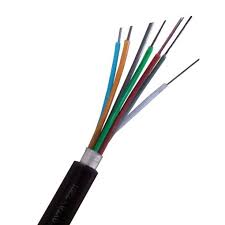
2-24 Core Single Mode Fibre Optic Outdoor Cable in Kenya
KSh 120.00
1 available
Continue shopping2-24 Core Single Mode Fibre Optic Outdoor Cable in Kenya

The 2-24 Core Single Mode Fibre Optic Outdoor Cable is a high-performance optical cable designed for long-distance, high-bandwidth network connections in outdoor environments. Available from 2 Core to 24 Core, it is suitable for telecommunications networks, ISP infrastructure, FTTH deployments, CCTV backbones, enterprise networks, campuses, industrial facilities and building-to-building fibre connections.
Single mode fibre uses a very small optical core—typically around 8–9 µm with 125 µm cladding—allowing light to travel with very low attenuation over considerably longer distances than conventional multimode fibre. G.652.D/OS2 outdoor fibre commonly operates at wavelengths including 1310 nm and 1550 nm, making it highly suitable for modern telecommunications and data networks.
At Fiber Optics Kenya, we supply outdoor single mode fibre optic cables for small, medium and large network projects. Whether your installation requires a simple 2-core connection or a 24-core fibre backbone with additional capacity for future expansion, our team can help you select the appropriate cable, accessories, termination equipment and installation solution.
Key Specifications
| Specification | Details |
|---|---|
| Product Name | 2-24 Core Single Mode Fibre Optic Outdoor Cable |
| Cable Type | Outdoor Fibre Optic Cable |
| Fibre Mode | Single Mode |
| Typical Fibre Category | OS2 |
| Common Fibre Standard | ITU-T G.652.D |
| Other Fibre Options | G.657.A1 depending on cable model |
| Core/Cladding | Approx. 8–9/125 µm |
| Core Range | 2-24 Cores |
| Common Core Counts | 2, 4, 6, 8, 12, 16, 18, 20 and 24 Core |
| Common Wavelengths | 1310 nm / 1550 nm |
| Typical Construction | Loose Tube |
| Outer Jacket | PE/HDPE depending on cable |
| Typical Jacket Colour | Black |
| Water Protection | Water-blocking components depending on construction |
| Armour | Armoured and non-armoured versions available |
| Strength Member | FRP/GRP or metallic depending on construction |
| Installation | Outdoor |
| Typical Installation Methods | Duct, aerial and direct burial depending on cable rating |
| Applications | FTTH, ISP, telecom, CCTV and backbone networks |
| Compatible Connectors | SC, LC, FC and other single mode connectors |
| Delivery | Available across Kenya |
Modern G.652.D outdoor cable specifications demonstrate the low-loss characteristics of single mode fibre. For example, current Corning OS2 G.652.D outdoor constructions specify maximum attenuation around 0.36 dB/km at 1310 nm and 0.22 dB/km at 1550 nm, although the exact performance of the cable supplied should always be confirmed from its individual datasheet.
Available Core Counts
The availability of multiple fibre counts allows customers to select cable capacity according to the size and complexity of their network.
| Core Count | Capacity | Typical Application | Recommended For |
|---|---|---|---|
| 2 Core | Basic | Point-to-point fibre link | Small networks |
| 4 Core | Basic + Expansion | Main link with spare fibres | SMEs and CCTV |
| 6 Core | Medium | Multiple connections | Offices and small campuses |
| 8 Core | Medium | Growing network | Commercial buildings |
| 12 Core | Medium-High | Distribution backbone | Schools, hospitals and hotels |
| 16 Core | High | Multi-service backbone | Enterprises and factories |
| 18 Core | High | Larger distribution networks | Institutions |
| 20 Core | High | High-capacity infrastructure | Large commercial projects |
| 24 Core | Very High | Main fibre backbone | ISPs, campuses and enterprises |
For expandable networks, choosing additional cores during the initial installation can be more economical than installing another outdoor cable later.
Single Mode Fibre Technical Characteristics
| Characteristic | Typical Description |
|---|---|
| Fibre Category | OS2 |
| Common Standard | ITU-T G.652.D |
| Core Diameter | Approx. 8.2-9 µm |
| Cladding Diameter | 125 µm |
| Common Operating Wavelengths | 1310 nm and 1550 nm |
| Attenuation | Very low |
| Transmission Distance | Suitable for long-distance links |
| Bandwidth Capacity | Very High |
| Optical Source | Laser |
| Typical Network Use | Telecom, ISP, FTTH and backbone |
| Outdoor Deployment | Yes, with outdoor-rated cable |
| Long-Haul Suitability | Excellent |
The exact optical characteristics depend on the fibre manufacturer and cable configuration. Corning's G.652.D specifications, for example, show 125 µm cladding and approximately 8.2 µm core diameter for a current OS2 outdoor product.
Construction of 2-24 Core Outdoor Single Mode Fibre Cable

Outdoor fibre cable typically combines optical fibres with several protective components designed to maintain performance in demanding environments.
| Component | Function |
|---|---|
| Single Mode Optical Fibre | Transmits optical signals |
| Fibre Coating | Protects the glass fibre |
| Loose Tube | Houses and protects fibres |
| Tube Filling/Water Blocking | Helps prevent moisture migration |
| Central Strength Member | Provides mechanical support |
| Cable Fillers | Maintain cable geometry |
| Water-Swellable Material | Provides additional moisture protection |
| Armour | Adds mechanical protection where specified |
| Ripcord | Assists during cable preparation |
| PE/HDPE Outer Sheath | Protects internal cable components |
| Cable Markings | Identify cable and fibre specifications |
Outdoor loose-tube constructions can use water-swellable tapes or yarns together with a polyethylene jacket, while armoured versions add additional mechanical protection. Not every outdoor cable has the same construction, so armour and direct-burial capability should always be confirmed for the exact model.
Mechanical and Environmental Characteristics
| Characteristic | Typical Description |
|---|---|
| Installation Environment | Outdoor |
| Outer Sheath | PE/HDPE depending on construction |
| UV Protection | Outdoor-rated designs |
| Water Blocking | Available |
| Moisture Resistance | Designed for outdoor applications |
| Tensile Strength | Cable-model dependent |
| Crush Resistance | Cable-model dependent |
| Minimum Bend Radius | Cable diameter/model dependent |
| Armour | Available on selected models |
| Rodent Protection | Enhanced with appropriate armoured designs |
| Duct Installation | Yes, with suitable construction |
| Aerial Installation | Yes, with appropriately rated cable |
| Direct Burial | Only when specifically rated |
| Operating Temperature | Manufacturer/model dependent |
For perspective, one current 12-fibre Corning outdoor OS2 cable specifies 2,000 N maximum installation tensile strength, 1,500 N/10 cm crush resistance, a 140 mm minimum installation bend radius and 70 mm operational bend radius. These figures illustrate the capabilities of one construction and should not be treated as universal specifications for every 2-24 core cable.
Key Benefits of Single Mode Outdoor Fibre Cable
Long-Distance Transmission
Single mode fibre is designed for significantly longer transmission distances, making it ideal for ISP, telecommunications, campus and metropolitan network infrastructure.
Low Optical Attenuation
Low signal loss enables optical signals to travel over long fibre links efficiently.
High Bandwidth Capacity
Single mode fibre provides excellent capacity for current high-speed applications and future network upgrades.
2-24 Core Flexibility
Different core configurations make the cable suitable for everything from simple connections to extensive fibre distribution networks.
EMI Immunity
Because data is transmitted optically, fibre is immune to electromagnetic interference.
Future-Ready Infrastructure
Additional unused fibre cores can be reserved for future connections, redundancy and network expansion.
Watch 2-24 Core Single Mode Fibre Optic Outdoor Cable
Watch 2-24 Core Single Mode Fibre Optic Outdoor Cable on YouTube
The 2-24 Core Single Mode Fibre Optic Outdoor Cable is particularly suitable for networks where high bandwidth must be transmitted over longer distances. Its low attenuation makes it an excellent choice for telecommunications infrastructure, ISP networks, FTTH deployments, CCTV backbones, enterprise connections and links between buildings. Outdoor construction also provides the physical protection required when optical fibres leave the controlled environment of a server room or building.
With fibre counts ranging from 2 to 24 cores, network designers can match cable capacity to project requirements. A 2-core or 4-core cable may be sufficient for a straightforward point-to-point connection, while 12-core and 24-core cables provide considerably greater capacity for multiple services, redundant connections and future expansion. This flexibility makes multicore single mode cable particularly useful for growing networks.
Choosing the correct outdoor cable construction is equally important. Duct, aerial and direct-burial installations can have different mechanical requirements, and not every outdoor cable is suitable for every installation method. Fiber Optics Kenya can help customers identify the appropriate core count, cable construction and accessories for the intended network environment.
Applications of 2-24 Core Single Mode Fibre Optic Outdoor Cable
1. Internet Service Provider Networks
Single mode fibre is ideal for ISP backbone, distribution and access infrastructure where data needs to travel efficiently across substantial distances.
2. FTTH Networks
The cable can form part of fibre distribution infrastructure serving residential developments, apartments, estates and commercial premises.
3. Telecommunications Networks
G.652.D single mode fibre is extensively suited to telecommunications applications requiring low attenuation and long-distance transmission.
4. Building-to-Building Connections
Connect offices, warehouses, factories and other buildings across large compounds without the short-distance limitations associated with many copper links.
5. CCTV Surveillance Networks
Single mode fibre provides an excellent backbone for large IP CCTV systems with network switches distributed over extensive sites.
6. Campus Networks
Connect administration buildings, classrooms, libraries, laboratories, hostels and data centres across university and institutional campuses.
7. Industrial Networks
Factories and industrial facilities can use fibre for long-distance data transmission while avoiding electromagnetic interference.
8. Data Centres
Single mode fibre is suitable for high-capacity connections within and between data-centre facilities.
9. Government Networks
Suitable for scalable network infrastructure connecting departments, offices and facilities.
10. Hotels and Commercial Properties
Large properties can use single mode fibre for network, CCTV, Wi-Fi and communications backbone infrastructure.
Single Mode vs Multimode Outdoor Fibre
| Feature | Single Mode | Multimode |
|---|---|---|
| Typical Core Size | Approx. 8-9 µm | 50 µm for OM2/OM3/OM4 |
| Cladding | 125 µm | 125 µm |
| Transmission Distance | Long | Shorter |
| Bandwidth Potential | Extremely High | High |
| Typical Wavelengths | 1310/1550 nm | 850/1300 nm depending on application |
| Common Fibre Category | OS2 | OM2/OM3/OM4 |
| Typical Applications | ISP, FTTH, telecom, backbone | LAN, campus, data centre |
| Long-Distance Networks | Excellent | Limited compared with single mode |
| Network Expansion Potential | Excellent | Excellent |
| Outdoor Networks | Excellent | Suitable for shorter links |
Choosing the Right Core Count
| Project Requirement | Recommended Starting Point |
|---|---|
| Basic point-to-point connection | 2 Core |
| Main link with spare capacity | 4 Core |
| Small distribution network | 6 Core |
| Growing network | 8 Core |
| Medium backbone | 12 Core |
| Large enterprise network | 16 Core |
| High-capacity distribution | 18-20 Core |
| Major backbone infrastructure | 24 Core |
For new network infrastructure, consider spare capacity before selecting the final fibre count. Installing additional cores initially can simplify future expansion.
Armoured vs Non-Armoured Single Mode Fibre Cable
| Feature | Armoured Cable | Non-Armoured Cable |
|---|---|---|
| Mechanical Protection | Higher | Standard |
| Rodent Protection | Enhanced with appropriate armour | Limited |
| Weight | Higher | Lower |
| Flexibility | Generally lower | Higher |
| Duct Installation | Yes | Yes |
| Direct Burial | When rated | Only when specifically rated |
| Protected Conduit | Suitable | Excellent |
| Cost | Generally higher | Generally lower |
| Best Application | Harsh outdoor routes | Protected pathways |
Some modern dielectric armoured outdoor G.652.D cables are specifically rated for both duct and direct-buried installations, while others are designed only for particular environments.
Compatible Fibre Optic Accessories
Fiber Optics Kenya can supply the cable alongside the accessories required to complete the network.
| Accessory | Purpose |
|---|---|
| Optical Distribution Frame (ODF) | Fibre termination and distribution |
| Fibre Patch Panel | Organizes fibre connections |
| SC/UPC Pigtails | Fibre termination |
| SC/APC Pigtails | Common in FTTH/PON applications |
| LC Pigtails | Network equipment termination |
| SC-SC Patch Cords | Fibre equipment connections |
| LC-LC Patch Cords | Switch and equipment connections |
| LC-SC Patch Cords | Mixed connector environments |
| Fibre Adapters | Connect compatible connectors |
| Fusion Splice Sleeves | Protect fibre splices |
| Fibre Joint Closures | Protect outdoor splices |
| SFP Modules | Optical interfaces for network switches |
| SFP+ Modules | Higher-speed optical connections |
| Media Converters | Convert copper Ethernet to fibre |
| PLC Splitters | Optical signal distribution in PON networks |
| Fibre Termination Boxes | Organize fibre endpoints |
Why Buy from Fiber Optics Kenya?
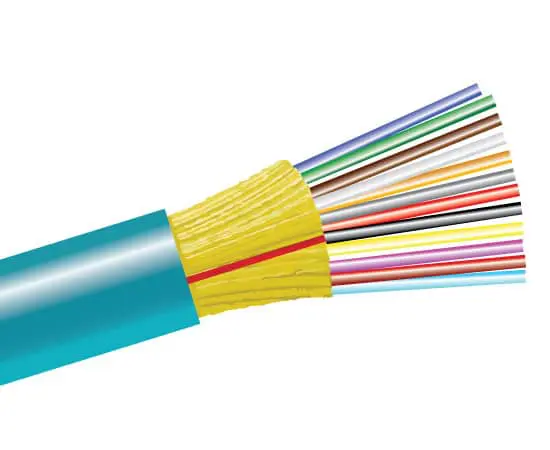
Fiber Optics Kenya provides more than the fibre cable itself. Customers can source the cable together with compatible termination, splicing, distribution and network accessories required to complete a professional installation.
| Why Choose Fiber Optics Kenya? | Customer Benefit |
|---|---|
| 2-24 Core Options | Choose the right capacity for your project |
| Single Mode OS2 Options | Suitable for long-distance networks |
| Technical Assistance | Help selecting appropriate cable |
| Complete Fibre Solutions | Cable and accessories from one supplier |
| Competitive Pricing | Solutions for different budgets |
| Bulk Supply | Suitable for contractors and major projects |
| Professional Installation | Installation support available |
| Fusion Splicing | Professional fibre jointing |
| Fibre Testing | Verify link performance |
| Project Support | Suitable for small and large deployments |
| Nationwide Delivery | Supply across Kenya |
Frequently Asked Questions
What is 2-24 Core Single Mode Fibre Optic Outdoor Cable?
It is an outdoor fibre cable containing between 2 and 24 single mode optical fibres designed for high-speed and long-distance optical communications.
What single mode fibre type is commonly used?
OS2 G.652.D is widely used for outdoor telecommunications and network infrastructure. Some cable products also combine G.652.D and G.657.A1 compliance.
What core counts are available?
Common configurations include 2, 4, 6, 8, 12, 16, 18, 20 and 24 cores.
What wavelengths does single mode fibre use?
Common transmission wavelengths include 1310 nm and 1550 nm. G.652.D specifications can additionally include performance at 1383 nm.
Is single mode fibre suitable for long distances?
Yes. Long-distance transmission is one of the primary advantages of single mode fibre.
Can I use it for FTTH?
Yes. Single mode fibre is widely used throughout FTTH and PON infrastructure.
Can it be used for CCTV?
Yes. Single mode fibre is particularly suitable for CCTV installations where cameras and switches are spread across large sites.
Can I connect two buildings?
Yes. Outdoor single mode fibre is an excellent solution for building-to-building network connections.
Can it be installed underground?
Yes, but direct burial requires a cable specifically rated for direct burial. Other outdoor cables should be installed through suitable ducts or conduits.
Is armoured single mode cable available?
Yes. Armoured versions provide additional mechanical protection for demanding outdoor installations.
Which is better: 2 Core or 4 Core?
A two-core cable can support a conventional duplex link, while four cores provide additional capacity for backup or future connections.
Should I choose 12 Core or 24 Core?
It depends on the number of current and planned connections. A 24-core cable provides more capacity and is particularly attractive for large or expanding backbone networks.
Do you provide fibre installation?
Yes. Professional fibre installation, termination, fusion splicing and testing can be provided depending on project requirements.
Do you deliver outside Nairobi?
Yes. Fiber Optics Kenya supplies fibre optic cables and networking accessories to customers across Kenya.
Contact Fiber Optics Kenya
Fiber Optics Kenya
Lyric House
7th Floor, Room S9
Kimathi Street
Nairobi
Phone: +254 704 991 492
Email: info@fibreopticskenya.co.ke
Order 2-24 Core Single Mode Fibre Optic Outdoor Cable in Kenya

Choose Fiber Optics Kenya for quality 2-24 Core Single Mode Fibre Optic Outdoor Cable, compatible accessories and professional technical support.
Contact Fiber Optics Kenya today for competitive pricing, bulk orders, installation support and nationwide delivery across Kenya.