Best Fiber Optic Installation Company in Kenya: The Complete 2026 Guide
Meta Description: Looking for the best fiber optic installation company in Kenya? Discover what sets Fiber Optics Kenya apart, from certified technicians to nationwide coverage, and how to choose the right partner for your home or business.
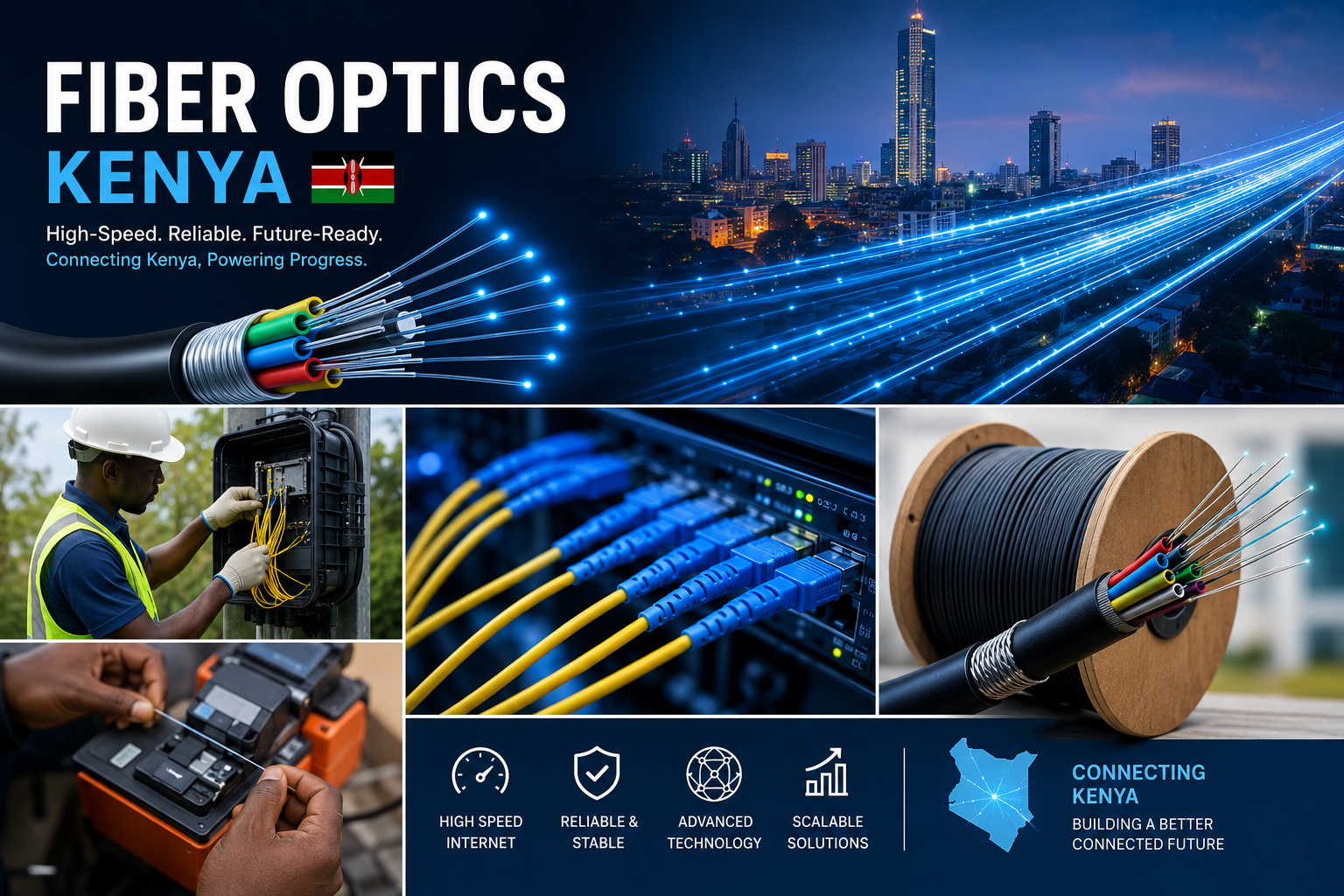
 Image 1: A certified technician performing fiber optic splicing — precision work that separates a good installer from a great one.
Kenya's internet story has moved fast. In just over a decade, the country went from relying almost entirely on expensive satellite bandwidth to becoming one of Africa's most connected nations, anchored by undersea cables landing in Mombasa and thousands of kilometers of terrestrial fiber crisscrossing the country. Fixed broadband subscriptions in Kenya <cite index="8-1">surged 42.9% to 2.14 million by June 2025</cite>, and <cite index="8-1">fiber-to-the-home connections alone now account for over 1.1 million subscriptions</cite>. Businesses are following the same trend, with <cite index="8-1">fiber-based enterprise services growing steadily to more than 101,000 subscriptions</cite>.
Behind every one of those connections is a physical installation — cables laid, splices fused, routers configured, and signals tested. And that is where the real difference between a mediocre internet experience and a rock-solid one is made. Choosing the best fiber optic installation company in Kenya is not just about who can get you online fastest; it's about who does it correctly, safely, and in a way that will keep working for years.
This guide walks through everything you need to know about fiber optic installation in Kenya today: how the technology works, what to look for in an installer, the step-by-step process, realistic cost expectations, and why Fiber Optics Kenya has become a trusted name for homeowners, offices, and institutions across the country.
Why Fiber Optic Internet Is the Gold Standard in Kenya
Before comparing installation companies, it helps to understand why fiber has become the connectivity option of choice for anyone who's serious about speed and reliability.
1. Unmatched Speed and Bandwidth
Fiber optic cables transmit data as pulses of light through strands of glass or plastic, rather than electricity through copper wire. This allows fiber to carry vastly more data over longer distances without the signal degradation that plagues DSL or coaxial connections. While Kenya's <cite index="6-1">median fixed internet download speed stood at around 15.44 Mbps at the end of 2025</cite>, fiber connections routinely deliver 20 Mbps to 1 Gbps or more to a single premise — more than enough for 4K streaming, cloud backups, video conferencing, and multiple simultaneous users.
2. Reliability in All Weather
Fiber optic cable is immune to electromagnetic interference and far less susceptible to the corrosion and signal loss that affects copper cabling during Kenya's rainy seasons. For businesses that cannot afford downtime — banks, hospitals, hotels, data centers — this reliability is non-negotiable.
3. Future-Proof Infrastructure
Once fiber is laid to a premise, upgrading speeds is usually a matter of changing equipment at each end, not re-laying cable. This makes fiber a long-term investment rather than a short-term fix.
4. Falling Costs, Rising Competition
Kenya has historically had some of the priciest broadband in the region — <cite index="7-1">the average cost of fixed broadband internet in Kenya was reported at roughly US$48.11</cite>, higher than Tanzania, Rwanda, and Ethiopia. But increased competition among ISPs, plus government-backed infrastructure projects, are gradually pushing prices down and expanding access, making professional fiber installation more attainable for households and small businesses than ever before.
5. Government-Backed Infrastructure Expansion
The Communications Authority of Kenya is actively financing rural fiber expansion, with a <cite index="3-1">2,500-kilometer fiber project spanning nineteen counties, already 50% complete at 1,300 kilometers laid</cite>, aimed at connecting <cite index="3-1">3,800 public offices and institutions</cite> to reliable internet. This national backbone (NOFBI) means that professional last-mile installation companies now have more fiber capacity to tap into than ever before, even outside Nairobi.
 Image 2: Kenya's national fiber backbone continues to expand, bringing high-speed connectivity to more counties every year.
What Makes a Fiber Optic Installation Company "The Best"?
Not all installers are created equal. Fiber optic work is a specialized trade that blends electrical safety, precision engineering, and structured cabling standards. Here's what genuinely separates a top-tier installer from a fly-by-night operator.
1. Certified, Experienced Technicians
Fiber splicing — the process of fusing two glass fiber strands together with a precision splicer — requires training and calibrated equipment. A poor splice introduces signal loss (attenuation) that can cripple your connection speed even if your ISP plan promises high bandwidth. The best companies employ technicians certified in fiber optic installation, testing, and structured cabling standards, and they use fusion splicers and Optical Time-Domain Reflectometers (OTDRs) to verify every joint.
2. End-to-End Service Offering
A top installation company doesn't just pull cable. Look for a provider that can handle the full scope of a project:
- Site survey and network design – assessing the building, distance requirements, and cable routing
- Structured cabling – for offices needing a mix of fiber backbone and Cat6/Cat6a horizontal cabling
- Fiber splicing and termination – fusion splicing, connectorization, and patch panel setup
- Testing and certification – OTDR and power meter testing to confirm signal integrity
- CCTV and network integration – many modern installers also handle surveillance and smart-building cabling
- Ongoing maintenance and support – SLAs, fault response times, and proactive monitoring
3. Proven Track Record Across Residential, Commercial, and ISP Projects
The best companies have handled diverse projects — from single-family homes and apartment blocks to corporate offices, hotels, schools, and even ISP backbone and last-mile deployment work. This breadth of experience means they can anticipate challenges specific to your property type, whether that's routing cable through a high-rise's existing conduit or trenching across a compound.
4. Nationwide Coverage
Kenya's fiber demand isn't confined to Nairobi. Mombasa, Kisumu, Nakuru, Eldoret, Thika, and increasingly rural counties are all seeing rising demand for professional installation. A company with teams and logistics capable of serving multiple regions — not just the capital — is a strong signal of scale and reliability.
5. Transparent Pricing and Clear Contracts
Reputable installers provide detailed, itemized quotes covering labor, materials (cable, connectors, patch panels, conduit), and any recurring maintenance fees. Be wary of vague verbal quotes or companies unwilling to put timelines and deliverables in writing.
6. Genuine Customer Reviews and Case Studies
Look for testimonials, before-and-after project photos, and references you can actually verify — not just star ratings on a homepage.
7. Warranty and After-Sales Support
Fiber installations should come with a workmanship warranty. Cables get accidentally cut during renovations, connectors loosen, and equipment fails — a company that stands behind its work with a clear support process gives you peace of mind long after installation day.
Why Fiber Optics Kenya Stands Out
Fiber Optics Kenya has built its reputation on exactly the criteria above: technical precision, broad service coverage, and dependable customer support. Here's a closer look at what the company brings to the table.
Comprehensive Residential and Commercial Installation
Whether it's a single apartment unit in Nairobi's Kilimani, a gated residential estate, or a multi-floor commercial building in the CBD, Fiber Optics Kenya designs installations around the specific layout and usage needs of each property. For homes, this typically means clean, minimally invasive cable routing and a properly terminated ONT (Optical Network Terminal) positioned for convenient router placement. For commercial spaces, it often involves structured cabling that supports dozens or hundreds of users, VoIP systems, and networked security equipment.
 Image 3: Enterprise-grade structured cabling supports growing offices, data centers, and multi-tenant buildings.
Precision Fiber Splicing and Termination
Signal loss is the enemy of a good fiber connection. Fiber Optics Kenya's technicians use fusion splicing equipment to achieve minimal insertion loss at every joint, then verify performance with OTDR testing before signing off on a job. This attention to detail is what ensures that the speeds you pay your ISP for are the speeds you actually experience at your device.
ISP Infrastructure and Last-Mile Support
Beyond individual homes and offices, Fiber Optics Kenya works on the backbone side of the industry too — supporting internet service providers with last-mile connectivity projects, aerial and underground cable deployment, and network maintenance. This dual experience, working both "upstream" with ISPs and "downstream" with end customers, gives the company a rare, holistic understanding of how fiber networks actually perform in the real world.
Structured Cabling for Businesses
Modern offices need more than just an internet connection — they need a cabling infrastructure that supports phones, security cameras, access control systems, and Wi-Fi access points, all running smoothly on a shared network backbone. Fiber Optics Kenya designs and installs structured cabling systems that are organized, labeled, and documented, making future troubleshooting and expansion far easier than in a poorly planned network closet.
CCTV and Security System Integration
Because fiber and structured cabling projects often go hand-in-hand with surveillance needs, Fiber Optics Kenya also offers CCTV installation and integration — allowing businesses and homeowners to combine connectivity and security into a single, coordinated project rather than hiring separate contractors.
Maintenance and Support Contracts
Fiber networks, like any infrastructure, need occasional maintenance — from re-splicing a cable damaged during construction to troubleshooting a drop in signal quality. Fiber Optics Kenya offers after-installation support so that clients aren't left stranded once the initial project wraps up.
Nationwide Reach
While much of Kenya's fiber demand is concentrated in Nairobi and other major towns, connectivity needs are growing in secondary towns and rural centers as well, spurred by national backbone projects. Fiber Optics Kenya's ability to mobilize teams beyond the capital positions it well to serve this expanding market.
The Fiber Optic Installation Process: Step by Step
Understanding what a professional installation actually involves helps you evaluate quotes and hold your chosen company accountable. Here's what a well-run project typically looks like.
Step 1: Site Survey and Consultation
A technician visits the property (or reviews building plans for larger projects) to assess cable routing options, distance from the nearest access point, obstacles like walls or existing conduit, and the client's bandwidth and equipment needs.
Step 2: Network Design and Quotation
Based on the survey, the company designs a cable path and equipment list, then provides an itemized quote covering cable length, connectors, patch panels, labor, and any additional hardware such as routers or switches.
Step 3: Cable Procurement and Preparation
Fiber cable, connectors, and supporting hardware (conduit, trunking, cable ties, junction boxes) are sourced and prepared. For outdoor or underground runs, this stage may include arranging for trenching or aerial pole access.
Step 4: Cable Installation and Routing
Technicians run the cable along the planned path — through walls, ceilings, trunking, or underground ducting — taking care to avoid sharp bends that could damage the glass fiber strands (fiber has a minimum bend radius that must be respected to avoid signal loss or breakage).
Step 5: Splicing and Termination
At each end, technicians either fusion-splice the fiber to a pigtail connector or mechanically terminate it, depending on the application. This is the most technically demanding stage of the process and the one most likely to separate skilled installers from amateurs.
Step 6: Testing and Certification
Using an OTDR and optical power meter, technicians measure signal loss along the entire link and confirm it falls within acceptable industry thresholds. Any excessive loss triggers troubleshooting and re-splicing before the job is considered complete.
Step 7: Equipment Setup and Configuration
The ONT, router, and any switches or access points are installed and configured, and the client's devices are connected and speed-tested.
Step 8: Client Walkthrough and Handover
A reputable company walks the client through the finished installation, explains how to troubleshoot basic issues, and provides documentation (cable maps, test results, warranty terms) for future reference.
 Image 4: OTDR and power meter testing confirm that every fiber link meets performance standards before handover.
Factors That Affect Fiber Installation Costs in Kenya
Pricing varies widely depending on several factors, and understanding them helps you evaluate whether a quote is fair:
- Distance from the nearest fiber access point – longer runs mean more cable, more labor, and potentially more trenching or aerial work
- Type of property – a single house is generally simpler and cheaper than a multi-floor office requiring structured cabling throughout
- Indoor vs. outdoor/underground routing – trenching or aerial pole installation adds cost compared to straightforward indoor cabling
- Number of connection points – more rooms, desks, or access points mean more cable runs and hardware
- Equipment requirements – routers, switches, access points, and UPS backup power all affect the total project cost
- Ongoing maintenance needs – some clients opt for a support contract covering periodic checks and rapid-response repairs
Because <cite index="7-1">Kenya's average fixed broadband costs remain relatively high compared to regional peers like Tanzania and Rwanda</cite>, getting the installation right the first time — rather than paying for repeat callouts and re-splicing — is one of the best ways to keep your total cost of ownership down over the life of the connection.
Residential vs. Commercial Fiber Installation: What's Different?
Residential Installations
Homeowners typically need a single, clean fiber drop from the street or building entry point to a conveniently located router. Priorities include:
- Minimizing visible cabling and wall damage
- Positioning the router for optimal Wi-Fi coverage throughout the home
- Protecting the cable entry point from weather and pests
- Fast turnaround, often same-day or next-day installation
Commercial Installations
Businesses require more planning and typically involve:
- Structured cabling connecting multiple floors or departments
- Redundant links or backup connections for critical operations
- Integration with VoIP phone systems, CCTV, and access control
- Documentation and labeling for IT staff to manage long-term
- Compliance with building codes and, in some cases, landlord approval for cable routing
A company experienced in both categories — like Fiber Optics Kenya — can scale its approach appropriately rather than applying a one-size-fits-all method to every job.
Common Fiber Installation Challenges in Kenya (and How Professionals Solve Them)
Physical Damage During Construction
Fiber cables, particularly underground or aerial runs, are vulnerable to accidental cuts during nearby construction or landscaping work. Professional installers use proper conduit and marked routing to minimize this risk, and they maintain splicing capability to quickly repair damage when it happens.
Signal Loss from Poor Splicing
As mentioned earlier, amateur splicing is one of the most common causes of underperforming fiber connections. This is precisely why testing and certification should never be skipped, regardless of how minor the installation seems.
Weather and Environmental Exposure
Kenya's varied climate — from Nairobi's cooler highlands to Mombasa's humid coast — means outdoor cabling and junction boxes need to be weatherproofed appropriately for the region.
Landlord and Building Management Approval
For rental properties and commercial buildings, installers sometimes need to coordinate with property management for approval to run cabling through shared spaces. Experienced companies know how to navigate this process smoothly.
Last-Mile Access in Underserved Areas
While Nairobi and other major towns are well served, more remote areas still face limited fiber access, though this is <cite index="3-1">improving as the Communications Authority continues its rural fiber expansion program</cite>. In these cases, professional installers can advise on the best available alternative, such as fixed wireless, while the fiber footprint continues to grow.
 Image 5: Professional installation teams coordinate cable routing across residential estates with minimal disruption to residents.
DIY vs. Professional Installation: Why Expertise Matters
It might be tempting to cut costs by having an unlicensed technician or even a well-meaning friend attempt a fiber installation. However, fiber optics is fundamentally different from copper networking:
- Specialized tools are required. Fusion splicers, cleavers, and OTDRs cost thousands of dollars and require training to operate correctly. Without them, a "installation" is really just cable-pulling with unreliable, hand-made connections.
- Glass fiber is fragile. Improper handling, excessive bending, or dirty connectors can introduce micro-fractures or contamination that degrade performance in ways that aren't immediately obvious but cause ongoing frustration.
- Safety matters. Aerial installation near power lines, rooftop work, and underground trenching all carry real safety risks that trained technicians are equipped to manage.
- Warranty and accountability. A professional company stands behind its work. A DIY job leaves you troubleshooting alone when something goes wrong.
In short, the money saved on a DIY or unlicensed installation is often spent many times over in slow speeds, dropped connections, and eventual professional repairs anyway.
Frequently Asked Questions
How long does a typical fiber installation take? A straightforward residential installation can often be completed in a single day, provided fiber access is already available near the property. Commercial or multi-point installations may take several days to weeks depending on scope.
Do I need to own the building to get fiber installed? No, but tenants typically need permission from the landlord or building management, especially for cabling that runs through shared walls, ceilings, or risers.
What internet speeds can I expect after installation? This depends on your ISP plan rather than the installation itself — a correctly installed fiber link can support anywhere from a few Mbps to a full Gbps, so choose a plan that matches your household or business needs.
Can fiber be installed in rural areas? It depends on proximity to existing fiber infrastructure. Kenya's <cite index="10-1">National Optic Fibre Backbone Initiative has laid thousands of kilometers of terrestrial fiber across the country's regions</cite>, and rural coverage continues to expand, but availability should be confirmed for your specific location before committing to a plan.
What's the difference between FTTH and FTTO? FTTH (Fiber-to-the-Home) refers to residential fiber connections, while FTTO (Fiber-to-the-Office) refers to dedicated fiber links for business premises, typically with higher bandwidth and service-level guarantees. <cite index="8-1">Kenya's fixed broadband market shows strong growth in both categories</cite>, reflecting rising demand from households and businesses alike.
How do I know if my fiber installation was done correctly? Ask your installer for OTDR test results and documentation. A properly installed and certified link should show minimal signal loss across its full length.
Does Fiber Optics Kenya offer maintenance after installation? Yes. Ongoing support and maintenance are part of a complete, professional installation package, ensuring that any post-installation issues — from accidental cable damage to equipment faults — are resolved quickly.
Choosing the Right Partner for Your Fiber Installation
Kenya's digital economy is only accelerating. With <cite index="6-1">internet penetration reaching 40.5 percent of the population by the end of 2025</cite> and fixed broadband subscriptions growing faster than almost any other segment of the ICT sector, reliable connectivity is no longer a luxury — it's the backbone of how Kenyans work, study, run businesses, and stay connected.
Choosing the best fiber optic installation company in Kenya comes down to a simple test: can they demonstrate technical expertise, a track record across different property types, transparent pricing, and genuine after-sales support? Fiber Optics Kenya checks each of these boxes, offering end-to-end service from initial site survey through splicing, testing, and long-term maintenance — for homes, offices, and ISP infrastructure alike.
If you're planning a new installation, upgrading an existing network, or simply want a second opinion on a quote you've received, reach out to Fiber Optics Kenya for a consultation. A properly installed fiber network, done right the first time, is one of the best long-term investments you can make in your home or business connectivity.
Image placement note: Replace the five placeholder image tags above with original, licensed photography (e.g., your own installation project photos) before publishing. Suggested file names and alt text have been written with target-keyword variations for SEO — update the descriptive alt text to match your final images, and compress each image to under 200KB for fast page loading.